

This Awful Live-Action Superhero Series Isn't Tied To X-Men, Despite A Misleading Title
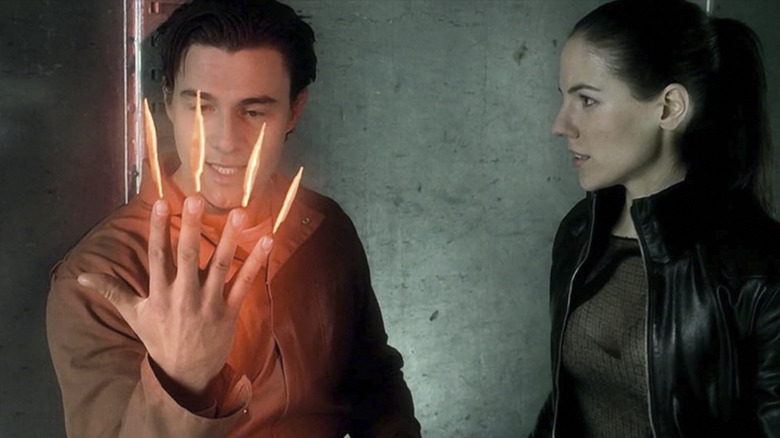
Marvel Comics first published the title "Mutant X" in 1998, and it had a novel premise. Thanks to an explosion involving a time machine, Havok — from "X-Factor" comics — found his soul inexplicably shunted into a parallel universe and into the body of one of his parallel selves. Havok initially wants to return to his native dimension, but ultimately decides to stay and take command of The Six, a superhero group consisting of parallel versions of his old teammates or other notable Marvel characters. Storm is there, but she is now Bloodstorm. Beast is there, but he is now Brute, etc.
"Mutant X" wasn't meant to run as long as it did, but after it became such a huge hit, its initial 12-issue run was extended. This extension was announced in the letters column of "Mutant X" #12.
"Mutant X" was adapted into a live-action TV series in 2001. The "Mutant X" TV series was released by Marvel and created by Avi Arad, the Chief Creative Officer of Marvel Entertainment at the time.
Actually, that last paragraph isn't entirely true. While there was a 2001 live-action superhero TV series called "Mutant X," and it was released by Marvel and overseen by Avi Arad, it technically wasn't an adaptation of the "Mutant X" comics. The TV series was created with a license from Marvel, but has no similarities to the comic whatsoever. None of the characters are the same, and there are no explicit allusions to the X-Men. There are superpowered mutants in "Mutant X," of course, but they are the result of artificial genetic tinkering, and not natural mutants like in the X-Men comics.
Mutant X had nothing to do with the Marvel Comic with the same title
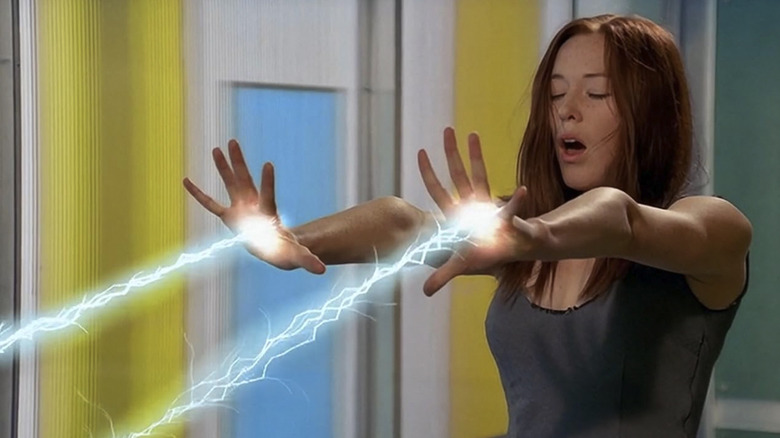
The "Mutant X" show and the original comics were very different, though Marvel did eventually publish a few TV tie-in comics called "Mutant X: Origins" and "Mutant X: Dangerous Decisions" in 2002, which only muddied the waters.
The premise of TV's "Mutant X" surrounded a group of escapees from a secret government program who had been genetically altered to have superpowers. The leader of the group was a rogue geneticist named Adam Kane (John Shea), who aimed to track down the victims of the experimentation that had all fled out into the world. He sought to let them know they were safe and help them control their powers. With Kane are Jesse Kilmartin (Forbes March), who could alter the density of his own body; Shalimar Fox (Victoria Pratt), a "feline feral;" Emma DeLauro (Lauren Lee Smith), who can read minds; and Brennan Mulwray (Victor Webster), who has electrical powers.
It was a superhero show with a shadowy, conspiracy-heavy tone, sort of like "X-Men" meets the essential '90s series "The X-Files." This all sounds very cool, and is a legit premise for a mid-budget syndicated sci-fi series. There aren't many reviews of "Mutant X" out there, but it has a bad reputation; while it doesn't have a critics score on Rotten Tomatoes, the audience score there is only 45%. Sean Axmaker, writing for the Stream on Demand website, said that the series started weakly and ended weakly, but had a pretty good second season, with a good variety of adventures and monster-of-the-week stories. Axmaker also noted, however, that "Mutant X" "looks kind of cheesy and awfully primitive next to the high bar set by the current shows on network, cable, and streaming services." It seems that "Mutant X" is a relic.
Fox sued the makers of Mutant X over its similarities to the X-Men
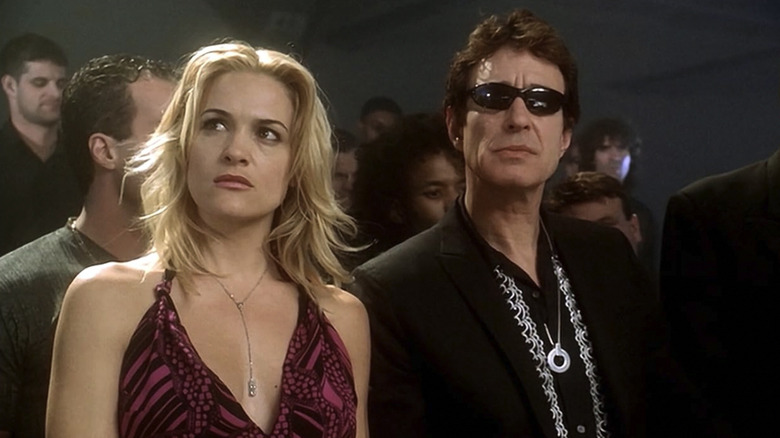
In a bizarre turn of events, Fox actually sued Marvel and the makers of "Mutant X" over its similarities to an existing movie. It didn't matter that "Mutant X" was created under a Marvel Comics license; Fox took them to court anyway. "Mutant X" debuted the year after Fox released the hit Bryan Singer feature film "X-Men," and Fox felt the show was a "copycat" of the film.
Fox sued Marvel Enterprises, Tribune Entertainment, and Fireworks Entertainment, all overseeing "Mutant X." All the details of the case are available on the Open Jurist website. Although the show was very different from the Marvel Comics it took its name from, Fox still maintained that it was too close for comfort. As far as Fox was concerned, "Mutant X" was a cheap X-Men knockoff. And, to be fair, it looks that way from a distance.
Marvel disagreed and actually countersued, saying that "Mutant X" was its own thing with its own characters. The case occurred while "Mutant X" was in production, and the judge said the series could only resume filming if it contained no explicit references to the X-Men. The case eventually settled.
The most astonishing thing about this story is the modest success of "Mutant X." The series ran for 66 episodes over its three seasons, lingering in the background of the pop consciousness while Fox stayed in the spotlight to make more "X-Men" movies.