

Tupac Shakur's Acting Debut Was In An Infamous Chevy Chase Box Office Bomb
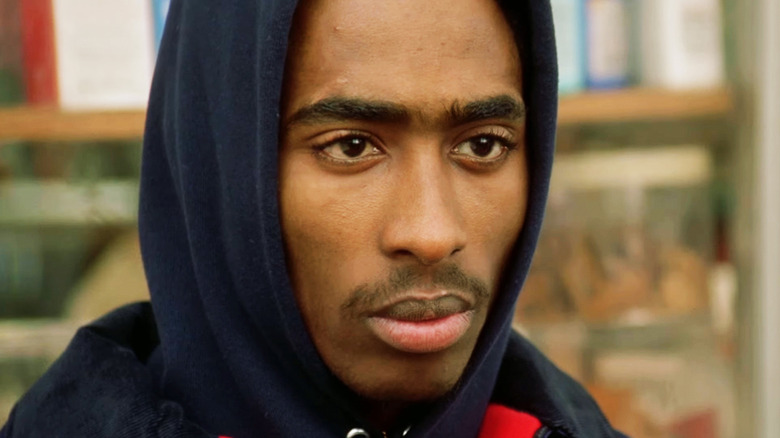
In 1991, Dan Aykroyd made his directorial debut with "Nothing but Trouble," a curious horror comedy that was light on laughs and a little too heavy on horror. But it was notable for featuring rap group Digital Underground, who at the time counted Tupac Shakur as a member. In fact, the legendary rapper, who also went on to forge a successful acting career, made his screen debut in "Nothing but Trouble."
Part of Shakur's enduring appeal has to do with the fact he was flawed and contradictory. The same man who proudly declared that his .44 Magnum would ensure his enemies' children "don't grow" was also the man who gave us "Brenda's Got A Baby," one of the most striking socially conscious Hip Hop tracks ever penned. Throughout his career, Shakur oscillated between tough guy bluster and disarming compassion until his murder in 1996, and fans of the rapper have been compelled by this paradox since he came to prominence in the early '90s.
That emergence was, itself, as fascinatingly incongruous as the rest of his career. The young rapper debuted in 1991 as part of Digital Underground, announcing his arrival alongside Shock G and Money B in "Same Song." Though he'd recorded music with his crew, Strictly Dope, prior to joining Digital Underground, "Same Song" was the first major release to feature him as an artist. What's more, it indirectly kicked off his acting career when it landed him a brief appearance in "Nothing but Trouble." Yes, the originator of the Thug Life ethos made his screen debut in a comedy horror which prompted Roger Ebert — who that same year also walked out of an Oscar-winning movie — to remark, "I have nothing but sympathy for all of the actors and even more sympathy for the audience."
Digital Underground are the least weird thing about Nothing but Trouble
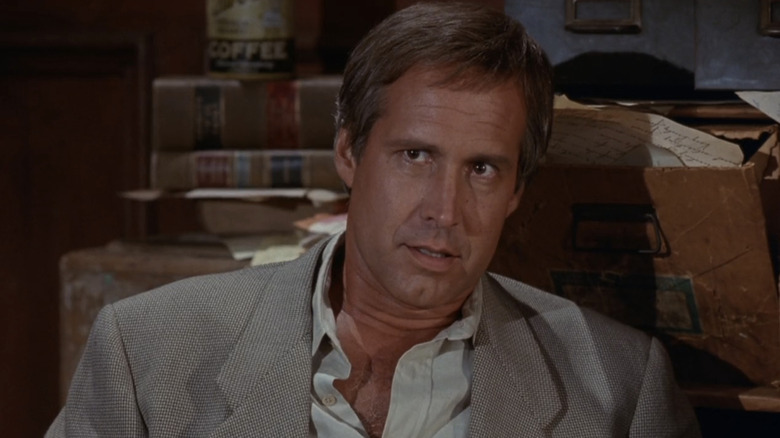
The 1980s and '90s were packed with movies that seem as if they simply wouldn't get made today. These were big movies, too. Dan Aykroyd's own supernatural experience gave us "Ghostbusters," for instance, which seems like too muddled and strange an idea on paper — a comedy about a bunch of ghost hunters in New York. In fact, the original "Ghostbusters" script was vastly different and even more weird. But not only did it work, the film's unlikely mix of comedy and light horror made for something that Hollywood has been unable to replicate ever since. 1991's "Nothing but Trouble" was also a horror comedy that starred Aykroyd and his buddies, but it failed to capture any of the magic that made "Ghostbusters" such an enduring success.
Aykroyd directed and starred in the movie as 106-year-old judge Alvin "J.P." Valkenheiser, who presides over all legal matters in the dump of a village known as Valkenvania. Chevy Chase plays wealthy Manhattanite Chris Thorne, who while on a business trip with lawyer Diane Lighton (Demi Moore) is brought before the decrepit judge for speeding while passing through the town. Aided by his police officer grandson, Dennis Valkenheiser (John Candy) Valkenheiser is merciless in his judgments, feeding the condemned into grotesque contraptions with names like the Gradertine and Mr. Bonestripper. Unfortunately for Thorne, Judge Valkenheiser has a special dislike for the wealthy.
If it sounds sort of bizarre, it is. "Nothing but Trouble" was marketed as a wacky comedy but the film is pretty dark throughout and that incoherence permeates the entire thing. With that in mind, I suppose it makes some sort of weird sense that Digital Underground show up mid-way through for some reason.
Nothing but Trouble was bad, but it gave us Tupac's first big screen appearance
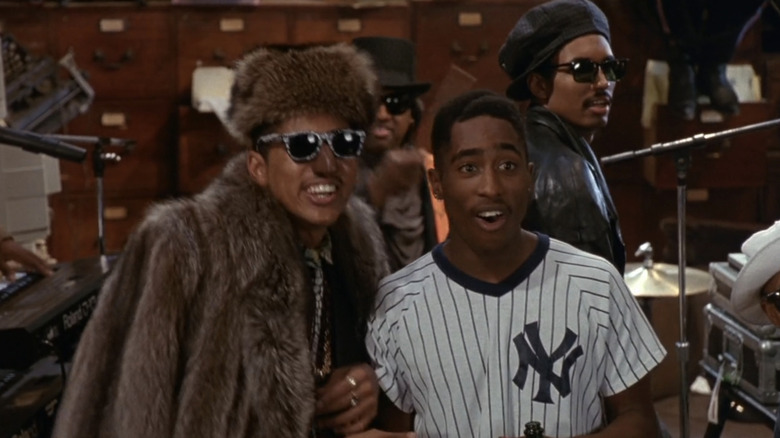
In "Nothing but Trouble," Digital Underground are brought before Dan Aykroyd's Judge Alvin Valkenheiser after being arrested for speeding. The judge asks them to prove they are, in fact, musicians, prompting them to launch into a rendition of "Same Song." This single was included on the "Nothing but Trouble" soundtrack and introduced mass audiences to Tupac Shakur, who raps the final verse. He's also present in the film, but why any of this happens in the first place is just one of many questions arising from "Nothing but Trouble."
"Nothing but Trouble" made $8.4 million on a $40 million budget and was savaged by critics. Vincent Canby of the New York Times dubbed the film "a charmless feature-length joke about the world's most elaborate speed trap." The Chicago Tribune's Dave Kehr went even further when he described it as "the sort of film that can only be watched in stunned disbelief, as it lumbers from one misfired, unpleasant sequence to the next."
While Chevy Chase never really recovered from the box office flop that was "Nothing but Trouble," Shakur (who could have gone on to play Mace Windu in "Star Wars: The Phantom Menace") immediately turned things around the following year when he starred as Roland Bishop in "Juice." He'd continue to impress with roles in "Poetic Justice," and "Above the Rim," ensuring "Nothing but Trouble" became barely a footnote in an otherwise impressive, if tragically short filmography. In a way, though, having Dan Aykroyd's misguided little horror comedy as his first acting credit was apt for a man who spent the next five years confounding expectations and living the kind of wonderfully contradictory life that ultimately allowed him to ascend to legendary status.