

Gwyneth Paltrow's Controversial Best Picture Oscar Winner Is A Streaming Hit On Netflix
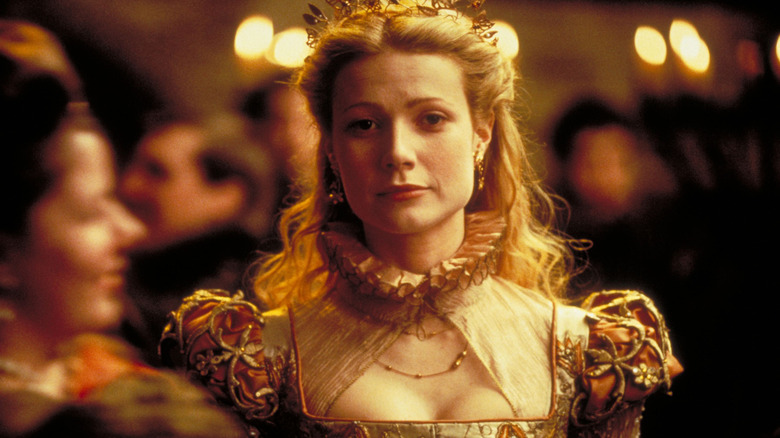
Let's get this out of the way: "Shakespeare in Love," the 1998 Best Picture winner that's currently doing great streaming numbers on Netflix, is a very funny and charming movie that at the very least deserved a Best Original Screenplay nomination for the late Tom Stoppard's sparklingly witty, reference-packed dialogue. I do not, however, believe it deserved a Best Picture nomination in a year that gave us "Out of Sight," "The Truman Show," "Rushmore," "Bulworth," and "A Simple Plan." Really, of the five eventual nominees, only "The Thin Red Line" and "Saving Private Ryan" were worthy.
Initially, it didn't look like it was going to be much of a competition. When Steven Spielberg's "Saving Private Ryan" stormed into theaters in late July, the World War II epic stunned viewers with its brutally realistic Omaha Beach opening. It was hailed by many as one of the greatest war movies ever made, if not the greatest. Indeed, by the time awards season kicked into gear, there was a sense that the Academy could save everyone a lot of time and campaign money by simply giving "Saving Private Ryan" the Best Picture trophy ahead of time.
And yet there was something about "Shakespeare in Love," a well-directed, expertly cast romantic comedy about The Bard falling in love with the lead of his latest play, "Romeo & Juliet." Joseph Fiennes was solid as the legendary playwright, but the film belonged to Gwyneth Paltrow as the enchanting Viola. It was her first great lead performance, but she seemed destined to lose Best Actress to Cate Blanchett spellbinding work in "Elizabeth." Then Miramax studio head (and convicted sex offender) Harvey Weinstein orchestrated a pair of shocking upsets.
Miramax waged a PR war against Saving Private Ryan
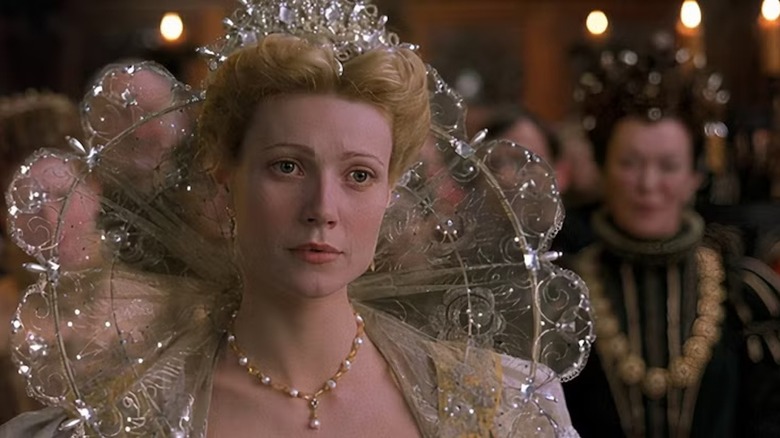
If "Saving Private Ryan" had a weakness as an Oscar contender, it's that it was released in the middle of the summer. This shouldn't have mattered, though, because, domestically, it was 1998's highest-grossing movie; meanwhile, that opening was utterly unforgettable, as was the closing battle sequence. Harvey Weinstein, however, aggressively pushed the narrative that Steven Spielberg's film was just a typical war flick after the Omaha Beach set piece. And given that the Academy's actors branch accounts for the most votes, he leaned into "Shakespeare in Love" as a love letter to acting and the creative process.
Once the nominations were in ("Shakespeare in Love" amassed 13, while "Saving Private Ryan" earned 11), Weinstein bullied the cast and crew to do countless media appearances. In a 2017 Vanity Fair article about the campaign, one publicist said, "He really was kind of a beast." When he hired consultants to trash-talk "Saving Private Ryan" to voters, DreamWorks publicist Terry Press informed Spielberg what was happening. According to Press, "Steven said to me, 'I do not want you to get down in the mud with Harvey.'"
Weinstein's narcissism was out of control. Coveting a competitive Oscar for himself, he gave himself a producing credit even though he had no real creative input into the making of "Shakespeare in Love." And then there was Weinstein's prior sexual harassment of Paltrow during the filming of 1996's "Emma." Almost no one knew about this at the time, but in retrospect, it makes the campaigning and Weinstein's fawning over the actor absolutely sickening. (And don't get me started about Judi Dench winning Best Supporting Actress for eight unremarkable minutes of screen time as Queen Elizabeth I.)
For the first time in his career, Harrison Ford was not Steven Spielberg's good luck charm
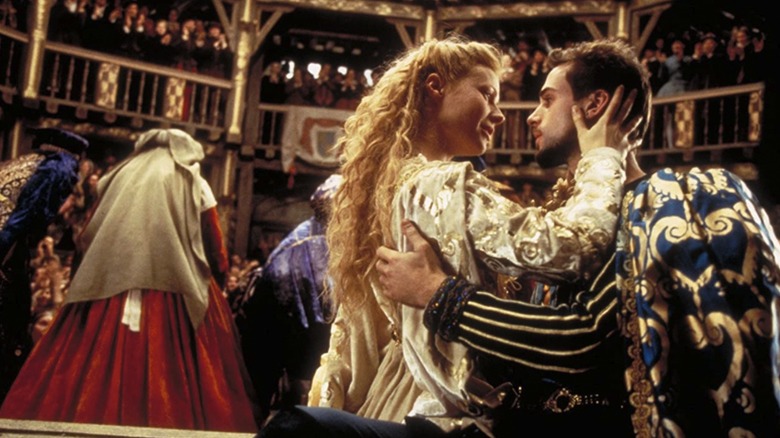
By Oscar night, Gwyneth Paltrow had supplanted Cate Blanchett as the Best Actress favorite (which the former won), but Best Picture was a coin flip. When "Saving Private Ryan" took home the Producers Guild's top award in early March, the film gained a bit of momentum. "Saving Private Ryan" picked up additional steam when Steven Spielberg won the Oscar for Best Director, for which John Madden was also nominated, but no one in their right mind ever expected Madden to pull an upset over one of the most powerful and beloved filmmakers in Hollywood.
Still, the Academy was confident enough about the outcome to enlist Spielberg's buddy Harrison Ford as the Best Picture presenter. So there were plenty of gasps in the Dorothy Chandler Pavilion when Ford uttered the wrong three words: "Shakespeare in Love." Harvey Weinstein's PR blitz worked, and he preened like a jackass while grasping that ill-gotten Oscar in his meaty, malignant paw. Again, I enjoy "Shakespeare in Love," but the win had less to do with quality (The Hollywood Reporter polled over 100 Academy voters in 2015, and found that the majority of them would now vote for "Saving Private Ryan"), and much more to do with Weinstein coercing the nominated talent into doing free campaigning.
I'm not surprised "Shakespeare in Love" is doing bang-up numbers on Netflix (it is, after all, Oscar season), but my guess is that a lot of people who are watching it for the first time are wondering how the hell this nice little movie won Best Picture over "Saving Private Ryan." And, well, now you know!