

10 Best Movies That Take Place In Real Time, Ranked
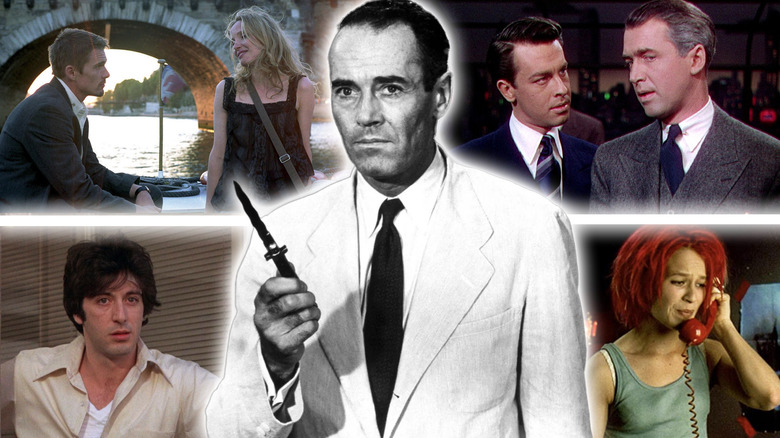
There is a certain engaging quality to stories that unfold in real time, as opposed to weaving tales over days and years for their characters. This distinction carries over to the cinematic medium, though movies that take place in real time are actually something of a rarity. But the movies that are set in a relatively unbroken linear progression always feel more urgent and vital, with audiences experiencing the story at the same pace as the characters. And some absolute enduring classics have masterfully used this storytelling style, holding the audience's attention as the narrative progresses.
Whether it's taut thrillers keeping viewers at the edge of their seats or tightly focused dramas, there are plenty of movies that utilize this pacing technique. With this emphasis on dialog, these movies could often work just as beautifully as stage plays, highlighting the strength of the performances rather than visual effects trickery. And some absolute masters of the cinematic craft have lent their talents in bringing these types of stories to life. These are the 10 best movies that take place in real time (keeping viewers riveted until the end), ranked.
10. Buried
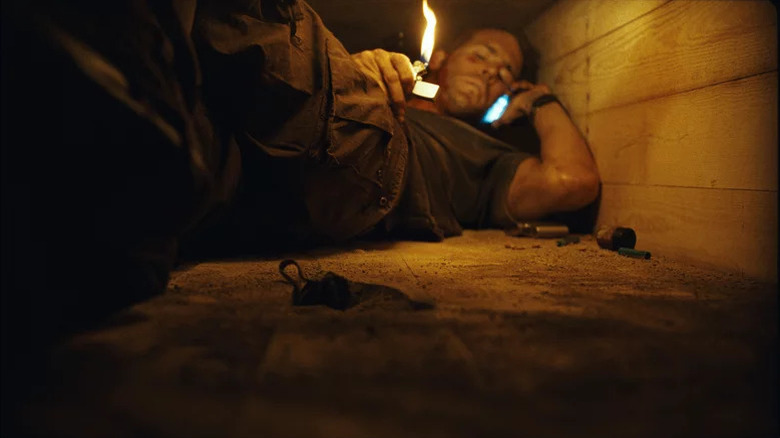
Though Ryan Reynolds appears to have settled into a lucrative career as a big studio funnyman, he's an effective dramatic actor when he wants to be. With that in mind, Reynolds' greatest serious performance is in the 2010 thriller "Buried." There, he plays Paul Conroy, an American civilian working in Iraq in 2006. Kidnapped by terrorists, Conroy is buried alive in a coffin somewhere in the desert with only a handful of objects, including different means to provide light and a mobile phone. As Conroy takes calls from the Americans looking to rescue him, one of his captors taunts him, demanding that he film himself accomplishing demeaning tasks while threatening his loved ones.
One of the most claustrophobic movies in recent memory, "Buried" provides Reynolds with an acting showcase like none that he's ever had before or since. The sense of panic and desperation grows as Conroy's coffin begins to fill with sand, giving the story a clear ticking clock to work against. Through it all, Reynolds is the only performer actually on-screen, with other actors periodically calling in to speak to his trapped character. A one-man show admirably carried by its star, "Buried" demonstrates a fuller range from its lead actor and remains one of Reynolds' best movies.
9. Russian Ark
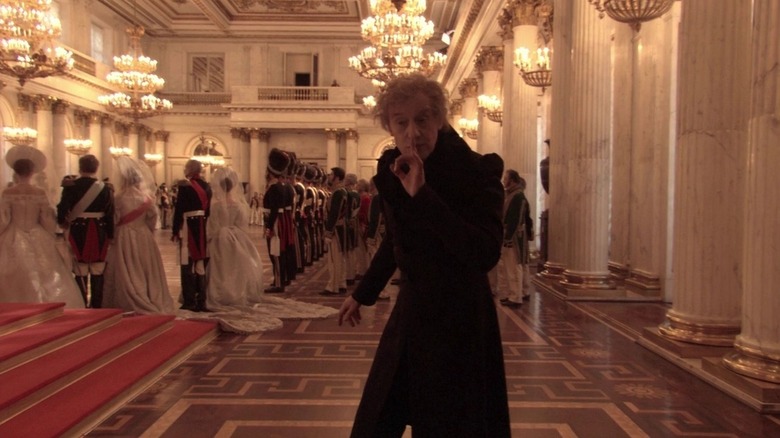
The most unique entry on this list is 2002's "Russian Ark," a surreal fantasy touring 300 years of Russian history. The movie follows an unnamed narrator (Alexander Sokurov) as he moves through the Winter Palace in St. Petersburg, as filmed in a single, continuous take. Wandering through the rooms of the palace, the narrator, strongly implied to be a ghost, encounters various historical figures in each room. Joining the narrator for this tour is a 19th century French diplomat, who's known simply as the European (Sergey Dreyden) and comments on the different eras they glimpse.
Encompassing centuries of Russian history in an 87-minute story, "Russian Ark" is one of the most ambitious movies of its kind. Even viewers with only a cursory familiarity of the world history that it covers will be hooked by its mesmerizing presentation and single-take technique. This gives the movie a dream-like feeling as it guides the audience through the regal residence and its various occupants. A surreal dance through the famous points of the country's evolution, "Russian Ark" is one of the finest films to come out of Russia.
8. My Dinner with Andre
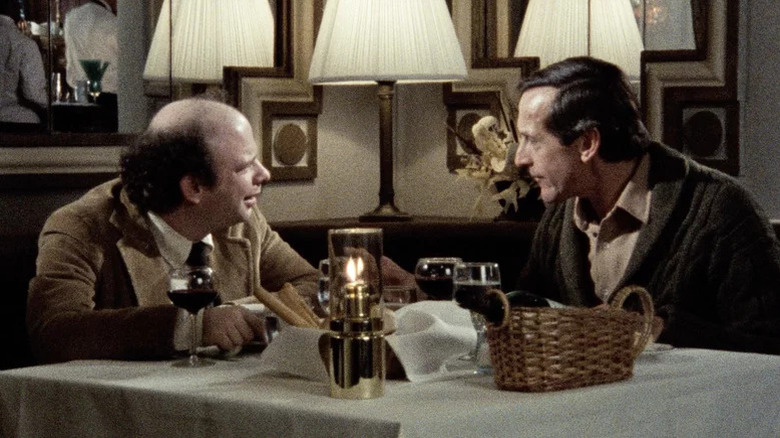
Wallace Shawn and André Gregory star as fictionalized versions of themselves in the 1981 dramedy "My Dinner with Andre." Shawn is a struggling playwright who is worried that he's more focused on commercial success than artistic achievement, whereas Andre gave up his career as a theater director. Reuniting for dinner at the Café des Artistes in Manhattan, the old friends share their insights on life as they get older. Despite contrasting views on how to appreciate daily comforts and embrace the possibilities of existence, the conversation remains a friendly one between the two men.
So much of the appeal in "My Dinner with Andre" is seeing the genuine friendship and rapport between its two main characters. Shawn and Gregory play well off one another, and, as its title suggests, the movie keeps its story going in real time over a quiet dinner. Comparatively, Shawn is the more grounded and humanistic of the pair, while Gregory provides the more ethereal perspective, allowing their characters to nicely complement each other. A beautiful portrait of the cinema of conversation, "My Dinner with Andre" is as existentially insightful as it is straight-forward and low-key.
7. Rope
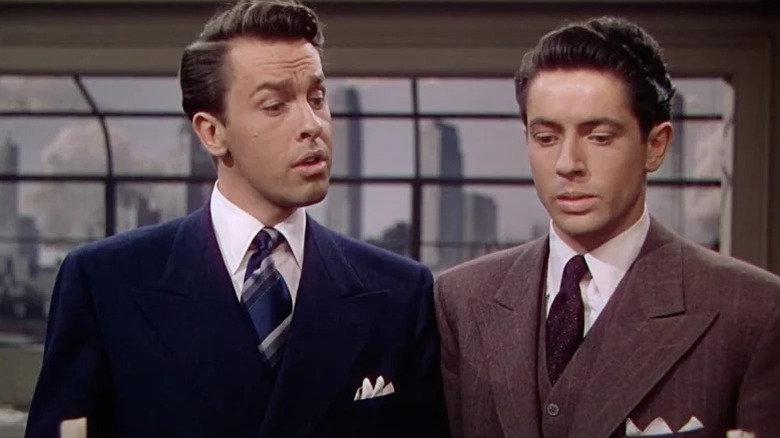
Filmmaking master of suspense Alfred Hitchcock crafted a thriller from a singular setting playing out in real time with 1948's "Rope." The movie opens with Brandon Shaw (John Dall) and Phillip Morgan (Farley Granger) murdering one of their classmates as part of an intellectual exercise. After hiding the body, the duo hold a dinner party, which includes their mentor Rupert Cadell (James Stewart), with Brandon perversely delighting in the deception. The pair's contrasting behavior and continued absence of their victim makes Rupert suspicious as he starts to deduce the truth.
"Rope" started out as a stage play by Patrick Hamilton in 1929,and its singular setting premise is effectively retained for the film adaptation. Hitchcock goes one step further by making the movie appear as though it's filmed in one continuous take, using cinematography tricks to hide the camera stopping to change film reels. These behind-the-scenes tricks aside, the cast all deliver fantastic performances (though his role took a toll on Stewart). A tightly focused thriller, "Rope" is Alfred Hitchcock's experimental masterpiece and saw the filmmaker push himself, and his collaborators, creatively.
6. United 93
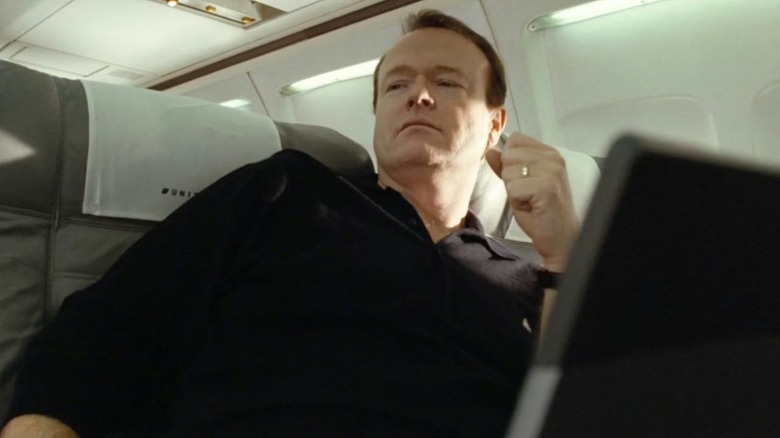
Filmmaker Paul Greengrass provided a searing recreation of the September 11 terrorist attacks with his 2006 movie "United 93." As alluded to by its title, the movie chronicles the hijacking of United Airlines Flight 93 on the morning of September 11, 2001, by al-Qaeda assailants. While the other hijacked planes hit their targets, the passengers of United 93 move to retake control of the airliner before it can reach its own major civilian target. This is juxtaposed with the air traffic controllers and government officials on the ground monitoring and reacting to the situation as best as they can.
Greengrass presents a compelling look at the terrorist attack from within the plane and on the ground with unflinching authenticity. This includes getting several of the real-life figures involved in the tragedy to play themselves in the movie. This commitment to historical accuracy extends to having the events largely play out in real time as the terrorist attacks shock the world, right down to United Airlines Flight 93 crashing in Pennsylvania. Utterly gut-wrenching in its memorial to the passengers of its titular flight, "United 93" is a clear-eyed look at everyday heroism in the face of horrendous events.
5. Dog Day Afternoon
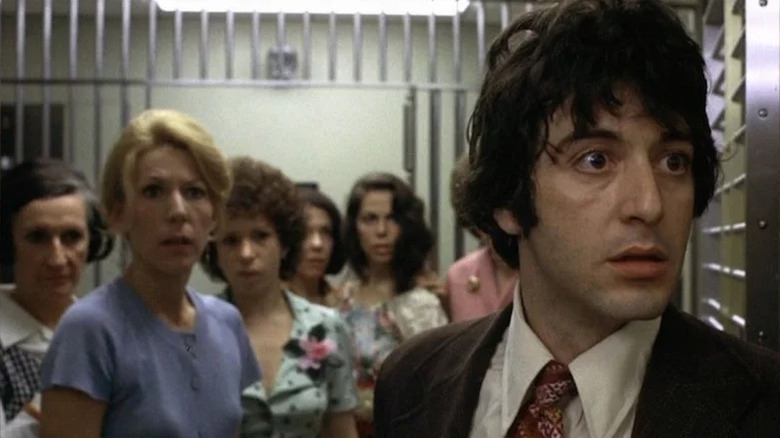
Director Sidney Lumet started his career in theater before he shifted to film in the 1950s, and he retained his storytelling sensibilities by doing strong character work across both mediums. This includes 1975's "Dog Day Afternoon" which was inspired by a true story about a pair of crooks that attempted to rob a bank to pay for a gender-affirming surgical procedure in 1972. The movie follows robbers Sonny Wortzik (Al Pacino) and Sal Naturile (John Cazale) as their Brooklyn bank heist turns into a hostage situation. With a media frenzy escalating outside the bank, Wortzik draws sympathy from onlookers as he and Naturile list their demands and try to escape.
Compared to the real-life incident, the movie effectively condenses its plot to just over two hours, all the while maintaining a sense of authenticity. Indeed, Lumet even sacrificed the original "Dog Day Afternoon" score to better maintain the film's naturalistic and grounded feel. Elsewhere, Pacino gives an all-time standout performance as Wortzik, his intensity growing as the situation around him starts to play out in increasingly unpredictable ways. One of Lumet's best movies, "Dog Day Afternoon" is elevated by keeping audiences in the thick of its ongoing hostage situation.
4. Run Lola Run
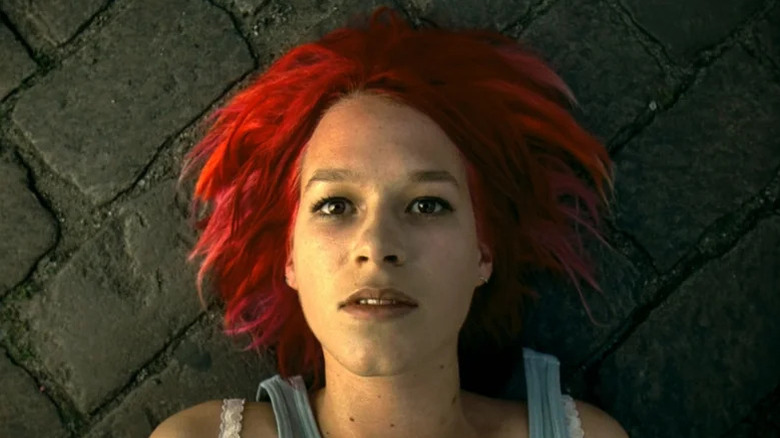
The 1998 German film "Run Lola Run" gives audiences three versions of the same story, each playing out in real time with different variations affecting their outcomes. In each one, Lola (Franka Potente) learns that a bag containing a small fortune intended for a criminal drop-off by her boyfriend Manni (Moritz Bleibtreu) has gone missing. With only 20 minutes to pay off his boss, Lola and Manni try to recoup the lost money through desperate means. This leads to scenarios where small differences in Lola's initial run affect the way their situation plays out, with the film rewinding to the start of its story each time their efforts result in disastrous failure.
"Run Lola Run" is a case study for the butterfly effect, where seemingly innocuous changes cause wider ripple effects to how things unfold. The movie is a crime thriller, but it's one that's stylishly executed and has a very human core. A lot of that comes down to the sharp writing and directing from filmmaker Tom Tykwer, as well as the star-making performance from Potente. One of the best time loop movies ever made, "Run Lola Run" is an entertaining ride in triplicate.
3. Before Sunset
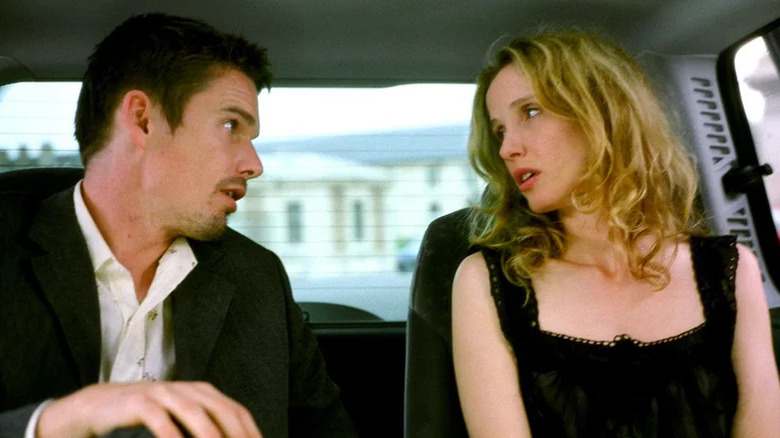
The middle installment of filmmaker Richard Linklater's "Before" trilogy, 2004's "Before Sunset" revisits protagonists Jesse (Ethan Hawke) and Céline (Julie Delpy). Nine years after striking up a brief romance in Vienna, the couple reunites in Paris while Jesse is promoting his latest novel at a local bookstore. In the time Jesse has before he needs to catch a flight back to his family in New York, he and Céline reconnect as they walk through Paris the following afternoon. This culminates in an ending where Jesse decides to miss his plane in order to rekindle his love with Céline.
Presented as one long conversation between Jesse and Céline as they catch up and reignite the romantic spark between them, "Before Sunset" is the pinnacle of its trilogy. The pair revisit the events of "Before Sunrise" in a way that makes this movie accessible for those who missed its 1995 predecessor. And like any organic conversation, the couple touch on a wide range of topics as they reaffirm their deep connection to one another and longstanding longing. Arguably the best movie Linklater has made to date, "Before Sunset" proves love can survive the passage of time and aging of its participants.
2. High Noon
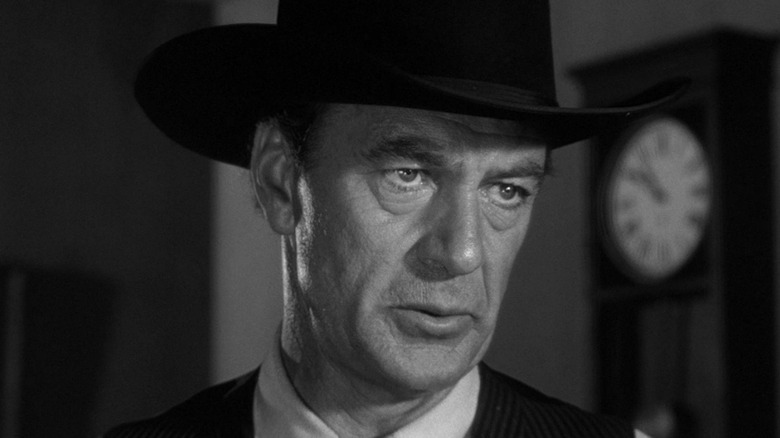
Rather than focusing on the type of fearlessly un-compromised protagonists seen in Westerns from the genre's classic period, 1952's "High Noon" centers on a more conflicted and nuanced main character. Gary Cooper stars as Will Kane, a U.S. Marshal in the New Mexico frontier town of Hadleyville who's preparing to retire to enjoy a more peaceful life with his bride, Amy Fowler (Grace Kelly). However, this happy send-off is interrupted with news that the notorious outlaw Frank Miller (Ian MacDonald) has been released from prison and is coming to Hadleyville to take revenge on Kane. Wrestling whether he should flee town with his wife and with no one in the community willing to help him, Kane prepares to face Miller and his gang alone.
"High Noon" is both a certified classic and an early revisionist take on the Western. The story plays out in real time as Kane awaits the arrival of the town's noon train, which will bring Miller and his accompanying cronies to Hadleyville. That also lends a sense of urgency as Kane's desperation grows with every tick of the clock bringing the inevitable showdown in a community that's turned its back on him. One of the best Gary Cooper movies ever made, "High Noon" moves at a taut pace as it subtly deconstructs its genre.
1. 12 Angry Men
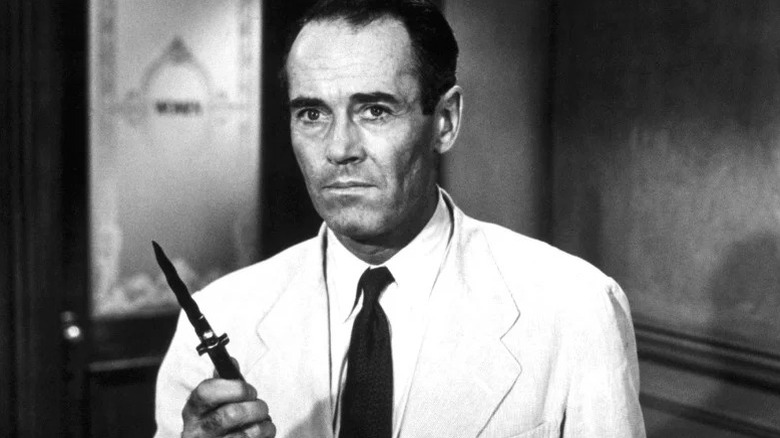
Another stone-cold classic directed by Sidney Lumet, 1952's "12 Angry Men" started out as a teleplay written by Reginald Rose. The movie follows a group of 12 jurors as they deliver a verdict on what seems to be a routine murder case involving a young man killing his father. However, Juror 8 (Henry Fonda) remains unconvinced that the defendant is guilty beyond a reasonable doubt and implores his fellow jurors to debate the evidence further. This leads to a heated discussion as the group tries to make a unanimous decision on whether to convict or acquit the accused.
It's wild to think that "12 Angry Men" is Lumet's feature directorial debut, seeing as its a masterclass in filmmaking in virtually every aspect. Set entirely within the courtroom and its accompanying jury room, the film maintains its audience's attention not through cheap thrills but riveting debate. Fonda was rarely better than he was leading this movie's ensemble, taking advantage of its immaculate script and staging along the way. One of the best legal thrillers in cinema history, "12 Angry Men" set a high bar for Lumet that he arguably never quite matched again.