

I Was A Professional Movie Theater Projectionist For Six Years. Here Is Why Movie Presentation Is A Dying Art
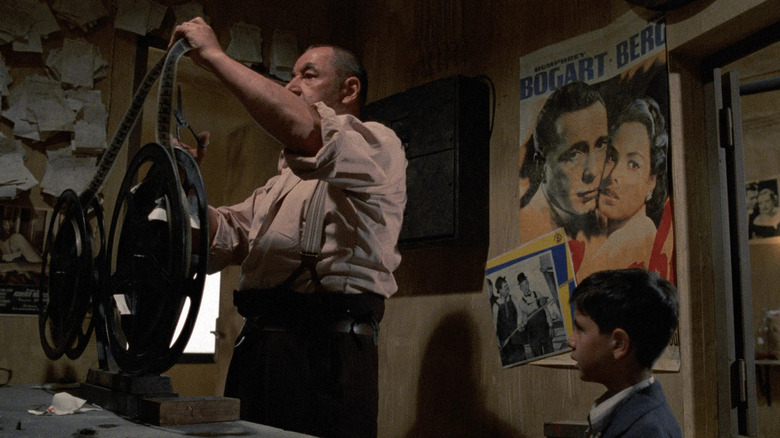
From 2015 until 2021, I worked regularly as one of the projectionists at the New Beverly Cinema in Los Angeles, California. The New Beverly Cinema is a repertory cinema that is owned by filmmaker Quentin Tarantino, and he has a large hand in constructing the theater's calendar of films. For the most part, the NewBev (as we called it) runs a different double bill every 48 hours, but it will sometimes have singularly long features running on their own. In addition, the NewBev shows one of Tarantino's movies (either as writer, director, or producer) every Friday at midnight. I encourage you to look up its current calendar.
Because Mr. Tarantino is a purist when it comes to film presentation (and an obsessive collector to boot), every single movie at the NewBev is presented on either 35mm or 16mm film. There is no digital projector in the booth. This means that a skilled cadre of projectionists must be carefully trained on the fineries of film projection.
Film projection is a very complex affair. There are a hundred details to remember with every single presentation. Films must be threaded through a projector in a very specific fashion and each print requires a specific lens. There is a lot of focus, lens shifting, and framing involved. And you need to have a basic understanding of the evolution of film stock types and how a print's age can affect its color and shrinkage.
Memorizing myriad details of film projection ensures that the audience gets an impeccable presentation with every single show. Sadly, with modern automated digital equipment, the fineries and knowledge of the physical projection equipment has fallen into ignorance. It's hard to present a film well when you don't work with the projector closely on a daily basis.
Film projection is a massively meticulous art
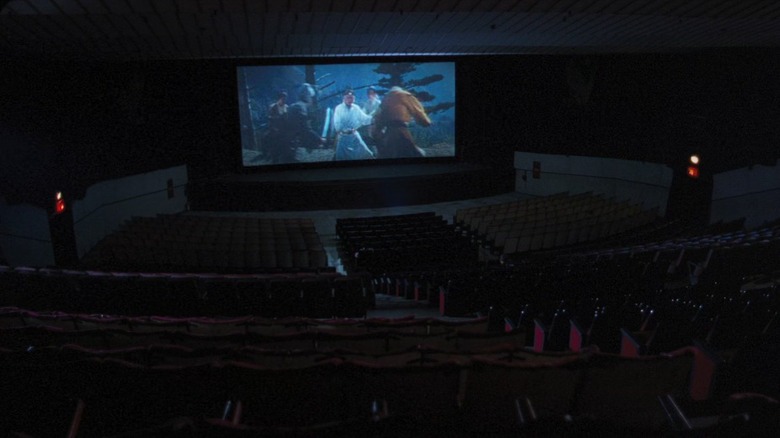
I should pause to note that projecting 35mm film prints is definitely more complicated than operating a standard 2K digital projector. At the New Beverly, all films are run reel-to-reel, which means that a projectionist has to seamlessly change over from one projector to the next every 20 minutes or so. 35mm prints are typically shipped in large metal cases on a series of 20-minute reels. Multiplexes build the prints up onto giant singular reels and then load them onto a projector on vast horizontal platters. The NewBev, because it deals with older prints and sometimes even archive prints, keeps the films on the 20-minute reels.
Dealing with a wide variety of prints allows us projectionists to appreciate the many details that go into film presentation. We know what lens is required for a film that's meant to be in a 1.35:1 aspect ratio or the 1953-era 2.39:1 Cinemascope aspect ratio. We also know how a print is supposed to sound, while skilled projectionists can eyeball a sound format just by looking at a print. Frankly, I could fill a book with what I know about film projection, and I'm not nearly as much of an expert as many old-world projectionists. I'm just a guy who was trained to project films as best he could.
But I have enough skill to notice immediately when a film presentation is going wrong, which happens a lot in modern cinemas. Because digital projectors are automated, there isn't someone standing by to fix problems as they arise. And if there's no one in the projection booth to adjust focus or alter volume levels, getting those things fixed often requires a long conversation with many different theater employees.
Presentation, as a result, has sauntered vaguely downward for years.
Modern projection has fewer projectionists ... and fewer people to fix problems
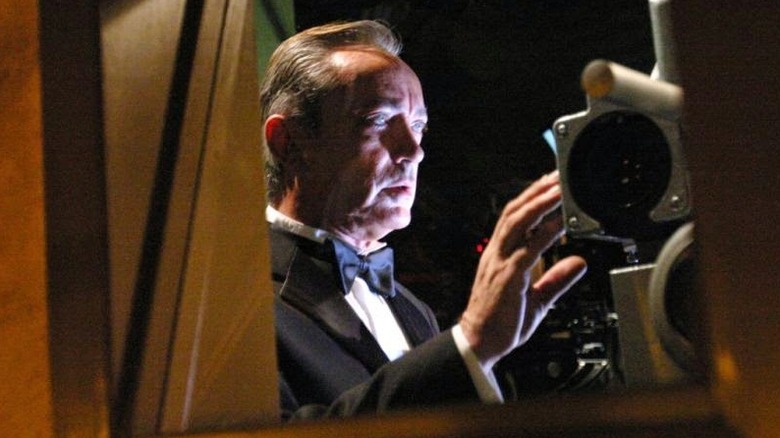
The shift to digital projection was slow, although one could've watched digitally projected movies as early as 2001. George Lucas pushed digital projection forward by insisting his 2002 film "Star Wars: Episode II — Attack of the Clones" be projected digitally in certain theaters. The final push to make all projectors digital, however, didn't happen until 2011. These days, only specialized theaters still have actual film projectors on site.
Digital projectors have been incredibly streamlined since 2011, becoming brighter, crisper, and capable of the same level of detail as 35mm film. Some digital projectors are so small now that they're mounted on a theater's wall. These projectors are activated with iPads by theater employees who have never seen the inside of a projection booth.
The biggest disadvantage of this system is the inability to troubleshoot. If there's an issue, there's no way to provide a quick fix on the fly like there would be with a 35mm presentation. I recently saw the film "Mercy" (a movie so awful, it's bad for society), and the 3-D lenses were accidentally reversed on the projector. No one stopped the film to fix the lenses, so I had to watch the whole movie with my 3-D glasses upside-down. I can't tell you how many times I've seen a digital presentation where the focus was off, and remained off, because no one at the theater was skilled enough to simply make the proper adjustments.
35mm isn't perfect either, of course, and comes with a host of its own unique issues. But it's nice to have a hard-working, likely over-caffeinated movie warrior in the booth to oversee issues when they arise. With newer projection formats, sadly, that has fallen by the wayside.