

The Shawshank Redemption's Allen Greene Tribute Explained
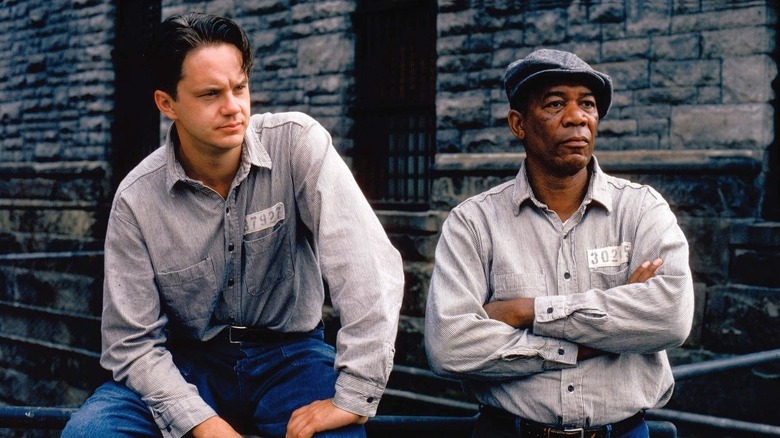
As far as feature filmmaking debuts go, it's hard to top Frank Darabont's "The Shawshank Redemption." Though he was a working screenwriter when the film commenced principal photography in 1993, he was primarily known as a genre specialist via his scripts for "A Nightmare on Elm Street 3: Dream Warriors," "The Blob," and episodes of "The Young Indiana Jones Chronicles." Yes, "The Shawshank Redemption" was based on a Stephen King novella, but it was a thoughtful, character-driven prison tale. Giving Darabont $25 million to realize this commercially iffy project was a leap of faith for Castle Rock Entertainment.
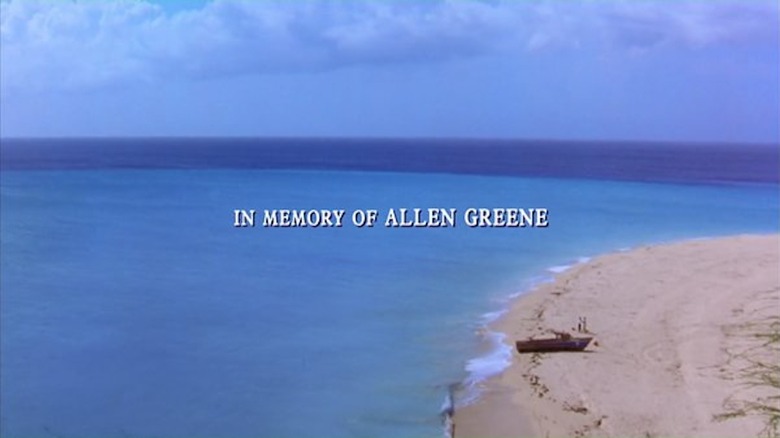
That greenlight was a long time coming, and "The Shawshank Redemption" might've never gone before cameras with Darabont at the helm without the efforts of Allen Greene, who receives an honorary credit at the end of the film. Greene was Darabont's literary agent and friend, and his stout support was integral to getting the writer his first major screenwriting credits, as well as helping him purchase the rights to King's novella (titled "Rita Hayworth and the Shawshank Redemption"). Sadly, Greene died of complications from AIDS in 1989 and, thus, never got to see his friend's masterpiece. But it speaks to Darabont's decency and loyalty that he led off his film's end credits with a tribute to Greene.
Frank Darabont did Allen Greene proud on several levels
Frank Darabont getting the rights to Stephen King's novella was one thing. Convincing Castle Rock to let him direct the movie was quite another. When the screenplay landed at the Columbia-based production company, its co-founder, the late Rob Reiner, was smitten with it. The filmmaker, who was on an all-time Hollywood heater — he'd made six critically acclaimed hits in a row, the most recent being "A Few Good Men" — was determined to direct it. His passion for the material made sense. He'd scored big with two King adaptations ("Stand By Me" and "Misery"), and named his production company after the city in which many of the author's stories are set.
According to Darabont (in a Vanity Fair retrospective on the film), Reiner offered him "a s***load of dough" to step aside and let him direct the movie. Darabont, a working but still struggling screenwriter, seriously considered the offer. But "The Shawshank Redemption" was his baby. He'd been scrambling to get it made for years. So he turned down Reiner's offer, which, in many cases, could've damaged his reputation in the industry. He'd be labeled "difficult." Instead, Reiner threw his support behind Darabont and acted as something of a mentor as he set out to make one of the most beloved movies of all time.
Darabont delivered above and beyond what anyone could've expected. Allen Greene would've been so incredibly proud — not just that his friend made a great movie, but that he stuck to his principles when he could've sold out.