

Avatar: Fire & Ash's Costume Design Oscar Nomination Isn't Just Based On Digital Costumes
James Cameron has always been annoyed that people dismiss the "Avatar" movies as glorified animated films, but he's never more aggressively refuted this misguided notion than he has with the release of the franchise's third installment, "Avatar: Fire and Ash." There's a two-part "Avatar" documentary on Disney+ that goes into fascinating detail about the challenges of making the second film, "Avatar: The Way of Water," as well as featurettes on YouTube that show how different production departments help bring Pandora and its inhabitants to vibrant, tangible life.
And yet, despite Cameron's efforts, some people were still up in arms that "Avatar: Fire and Ash" earned an Oscar nomination for Best Costume Design. Again, Cameron anticipated this, so if you're one of those fuming over an alleged "cartoon" getting a design nod, there's a five-minute featurette that shows off the meticulous level of physical craftsmanship that went into creating the attire of the Na'vi. It is well worth your time.
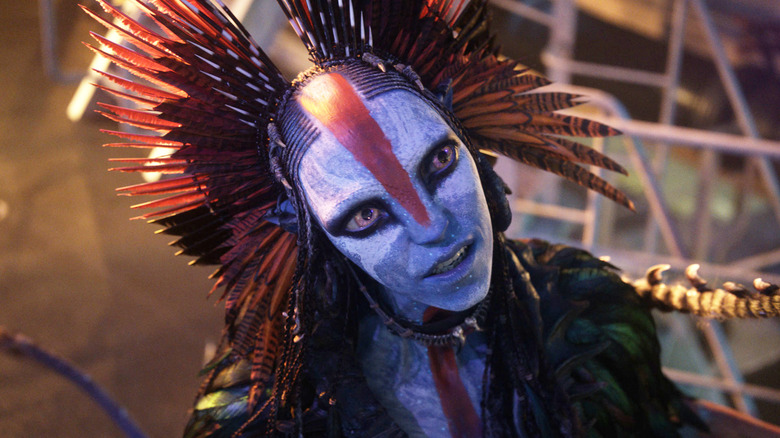
The creation of these costumes was overseen by Deborah L. Scott, who won an Academy Award 28 years ago for her historically accurate (and uncomfortable) work on Cameron's "Titanic," and it shows how her crew crafted over 2,000 items for the production. In the featurette, we see them doing old-school loom weaving, woodcarving, and leather working. For this film, Scott's team were thrilled to throw themselves into the colorful clothing of the Mangkwan (aka the Ash People). Varang (Oona Chaplin), the leader of this tribe, is particularly striking with her peacock-like headdress and intricate braids, which combine to make her appear alternately beautiful and fearsome. Like Pandora's other tribes, their look is dictated by their environment. It's stunning work, and it allows the film's visual effects team to make this moon feel startlingly real.
Deborah L. Scott's Avatar: Fire & Ash costumes are an invaluable visual reference
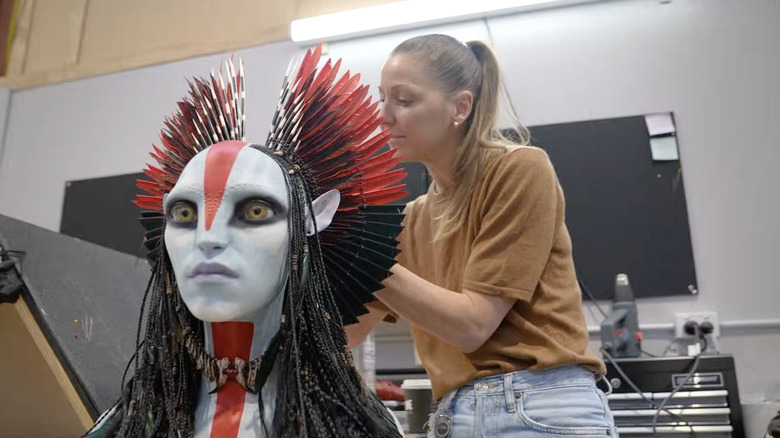
Just because these costumes are ultimately used as visual references in "Avatar: Fire and Ash" does not in any way diminish Deborah L. Scott and her team's work. If anything, it heightens their level of creativity. They have to think about how these costumes will flutter as the characters wearing them ride large flying beasts through the skies of Pandora or undulate underwater. And while I didn't really connect with James Cameron's franchise until "Avatar: The Way of Water," I have to say that its creatives' commitment to detail has always allowed me to feel fully immersed in Pandora. It all looks absolutely real to me.
There was some concern that the success of the original "Avatar" would unleash a spate of performance-capture movies, but that hasn't really happened. This is because very few filmmakers possess Cameron's astonishing assortment of skills, and just about no one else could convince a studio to spend north of $400 million on a movie. I imagine executives still sweat it a little when they see a perfectionist like Cameron go over budget to make sure every little detail of his films meets his exacting standards, but when you watch these behind-the-scenes docs, you can only be blown away by his passion and the fullness of his vision. And he couldn't get there without brilliant collaborators like Scott.
"Avatar: Fire and Ash" is now playing in theaters.