

The Pitt Season 2 Addresses A Controversial Development In U.S. Healthcare
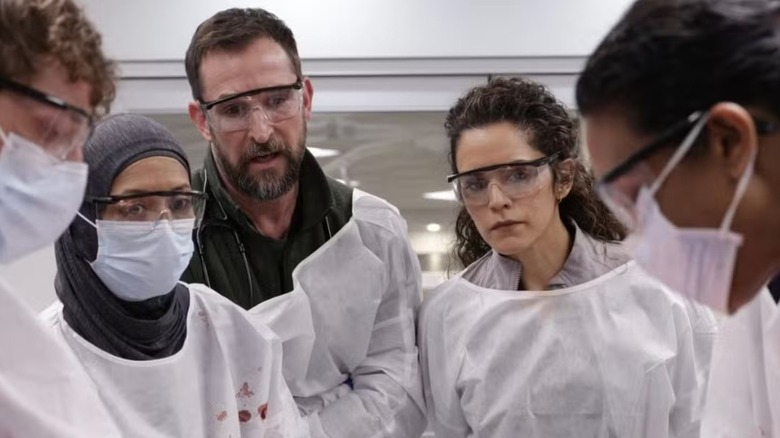
R. Scott Gemmill's "The Pitt" is known for paying attention to medical accuracy and exploring the issues that affect the U.S. healthcare system. The story takes place in an understaffed hospital where everything moves a mile a minute, forcing the doctors to contend with an ever-revolving door of patients with unique needs — an approach real-life medical professionals have praised for its authenticity. However, the series also chronicles the systematic side of the profession, such as its AI — a topic explored in "The Pitt" season 2 (read our review here).
In the second installment of HBO Max's hit medical drama, newcomer Dr. Al-Hashimi (Sepideh Moafi) uses AI tools to help with her tasks. This includes experimenting with an app that transcribes a patient's dialogue in episode 2, but it isn't entirely accurate, as her colleagues kindly point out. Be that as it may, Al-Hashimi believes that the app gets most of the facts correct, and that's still better than writing up reports from scratch — provided that the AI's so-called facts are checked for accuracy. Dr. Roby (Noah Wyle) seems less enthused about doctors using AI, however, as he's the old-school type. Is this shaping up to be a central conflict in season 2?
Much has been written about AI butchering our favorite movies, but how is it affecting the U.S. healthcare system? Well, it's a polarizing and controversial subject, and this storyline in "The Pitt" season 2 reflects what's happening in some real-world medical institutions.
AI is expanding in the healthcare system
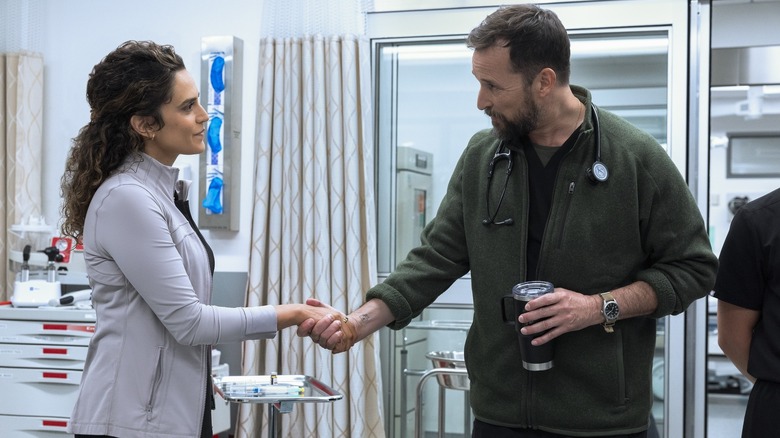
It seems that there are many real-life medical folks who agree with Dr. Al-Hashimi's methods on "The Pitt." A survey published by the American Medical Association revealed that 66% of physicians reported using generative AI for administrative tasks in 2024 — a significant rise from 2023's 38%.
Proponents of AI being used in medicine believe that it will ultimately help healthcare workers by preventing them from burning out. This is due to them cutting down time spent on administrative tasks — the same argument Al-Hashimi makes on "The Pitt." Conversely, the naysayers and doubters argue that AI is prone to errors and malfunctions, meaning that it could prove to be very costly in the long run. Of course, errors and inaccurate information could have a negative impact on patients, especially if medical personnel forget to double check the information provided.
"The Pitt" seems keen to explore all sides of the AI debate. While speaking to the Los Angeles Times, R. Scott Gemmell noted that the goal is to ask questions about how these tools will ultimately impact the healthcare system. As he told it:
"Like any other tool, it has potential to be used wisely and potential for disaster. We're not really exploring the disastrous side of it yet but just what the realities are. The fear is that it will make the doctors more efficient, especially with things like charting, but then will that time go back to the patients or will they just have to see more patients?"
It remains to be seen what type of stance "The Pitt" takes on AI. That said, by making it a prominent topic in season 2, it's clear that the show's creators want to address it with some nuance and sufficiency.