

Stranger Things Series Finale: Vecna's Cut Final Words Explained By Jamie Campbell Bower
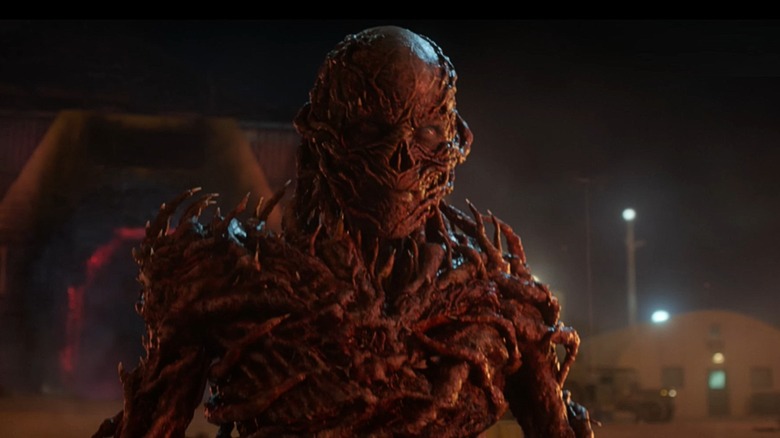
In the grand finale episode of Netflix's "Stranger Things," the Duffer Brothers made some surprisingly bold choices in how they wrapped up the series. One of these choices involved the character of Vecna, aka Henry Creel, aka One, aka Mr. Whatsit, played by Jamie Campbell Bower. For the majority of the show, Vecna has been portrayed as unapologetically villainous and a true force for evil. However, it's become common in serialized genre stories to try to humanize the antagonist, something which has happened often enough to become a trope. While it's long been conventional wisdom amongst actors and other storytellers that no villain sees themselves as the villain, this trope most likely became popularized thanks to the babyface turn of Darth Vader, aka Anakin Skywalker, in "Return of the Jedi."
As such, when this fifth and final season of "Stranger Things" began to reveal more about Henry's past, it seemed like the show might be headed toward just such a turn for the character. Fortunately, this was one area where the Duffers and Bower went in an unpredictable direction and pointedly had Vecna confirm his villainy, despite his traumatic origins. However, making this choice meant that they needed to maintain a tonal balance with the character. Vecna's death couldn't be too sympathetic, as it needed to be more of a cathartic moment for the heroes of the show. Yet Bower recently revealed that Henry was attempting to say "Please, don't" during those final moments, and had the dialogue stayed, it may have tipped the balance more toward sympathy for the Upside Down devil.
Jamie Campbell Bower played the hurt within Vecna's final moments
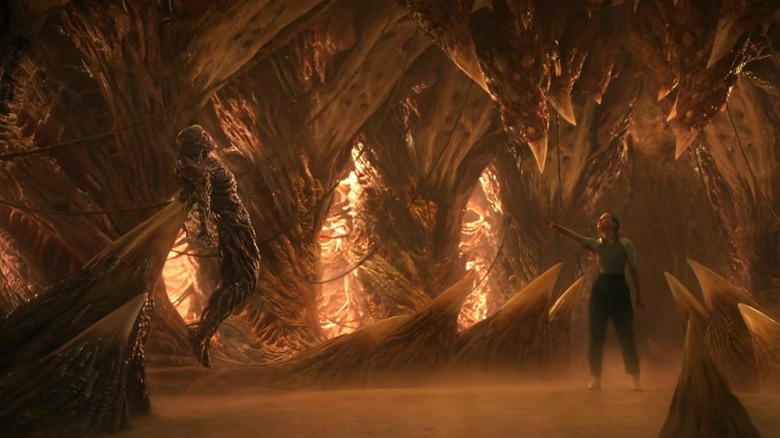
After Eleven, aka Jane (Millie Bobby Brown), Vecna, the Mind Flayer, and the rest of the Hawkins hero squad have their climactic final battle, the man once known as Henry has been impaled on a giant spike. Though he likely doesn't have long to live anyway, he's still alive when Joyce Byers (Winona Ryder), the woman who knew him as just another boy in town in their youth, approaches him with an axe. Remembering all the innocent victims of Vecna, Joyce wails on the monster with the weapon, decapitating him. It's a beautifully purgative scene, both for the characters and the series, with the focus solely on Vecna getting his just desserts.
However, Jamie Campbell Bower chose not to portray the character's last scene with malice. Instead, as he explained to Tudum, he wanted to highlight Henry's vulnerability and humanity:
"As I'm coughing up this bile, yes, I'm coughing, but the feeling that I want to convey and the words that I'm trying to get out are just, 'Please don't.' It was one of the more human moments of playing Vecna."
It's a strong and appropriate acting choice on Bower's part, as it doesn't betray the person beneath all the monstrous vines and evil deeds on the way to his last breath. That said, it's probably a good thing that the actual scene doesn't focus on this, as it would uncomfortably complicate the stronger emotional beat with Joyce that's already happening. In other words, while it's correct that Henry deserves to have his truth, it's for the show's greater benefit that it be muted.
Jamie Campbell Bower does a fantastic job of making Henry human without losing his villainy
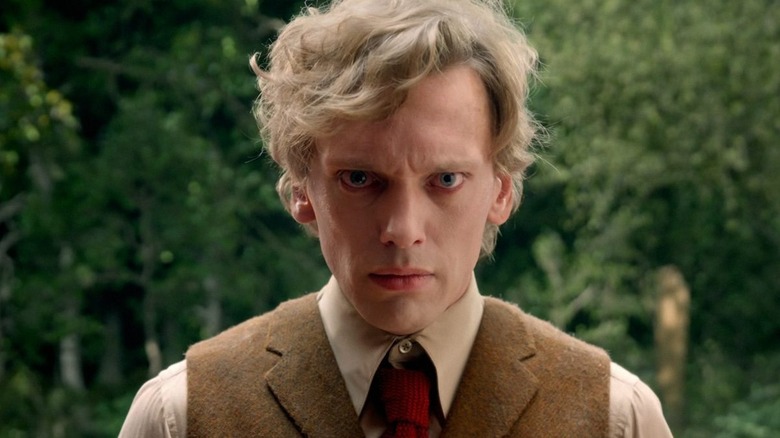
While Vecna didn't need or deserve more humanity at the end of his life, Jamie Campbell Bower and the Duffer Brothers afforded him a great deal earlier in the episode. Henry faces a memory that he's been blocking for years, one regarding his encounter with a man known as the Rogue Doctor (Frederick Koehler). As a boy (a literal Boy Scout, which is a sly allusion to "Indiana Jones and the Temple of Doom"), Henry killed the Doctor in crazed self-defense, then explored a mysterious rock, which allowed the piece of the Flayer to burrow inside of him. This leads to the revelation that Henry has been manipulated by the Mind Flayer all along. However, the Duffers and Bower take pains to state that while this does make Henry a victim, he eventually took ownership of his actions. As Bower explained:
"It's the reason he lost his youth, his childhood, his love, his heart ... It was the first moment in season 5 I truly felt human again and understood him. I felt like I've been wanting to protect him all this time because I felt like all the people just hate him. And it was in that moment that I was like, 'Now you see. Now you see why I am.'"
All of this makes Vecna a far more compelling and well-rounded villain than he might've been if he were a one-note monster. It also allows "Stranger Things" to feel more whole, as the entire series is about people either overcoming the darkness within and without themselves, or, in Vecna's case, succumbing to it.