

A Classic '60s Sci-Fi Show Is Perfect For Fans Of Apple TV's Pluribus
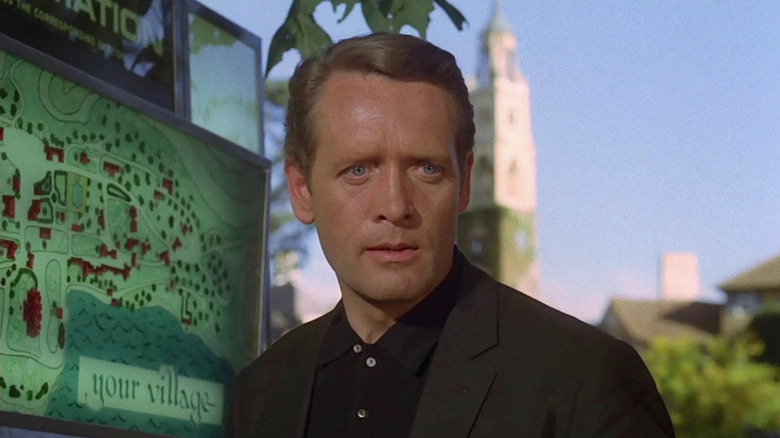
Vince Gilligan's new sci-fi series "Pluribus" has a fun premise: a strange radio signal from space contains the recipe for a mysterious virus that, after being mishandled by the Earth scientists who received it, spreads across the globe and alters everyone's brainwave patterns. Suddenly, almost every single citizen of Earth shares a group consciousness, with everyone now bearing the memories and experiences of everyone else. This launches an era of peace on Earth, and everyone seems to have happily renounced their individuality in exchange for placid pacifism.
Only a small handful of people are immune to the virus, including the show's main character, Carol (Rhea Seehorn), who struggles to retain her independence in a world of blank-faced helpers. An additional wrinkle: when she gets too angry, it overwhelms the brains of the people around her and kills them. Carol, a cantankerous, alcoholic misanthrope, has to keep her temper in check or face being a mass murderer. It's a battle, essentially, against happiness. That premise is clearly alluring to many, as "Pluribus" has quickly become the most-watched show in Apple TV's history, surpassing even "Ted Lasso" and "Severance."
If the idea of a singular cantankerous holdout in a village full of suspiciously placid weirdos appeals to you, might I recommend the 1967 British miniseries "The Prisoner?" Starring Patrick McGoohan, "The Prisoner" is a spy series that stumbles through the looking glass into a surreal, isolated world of wild color, strawberry ice cream, and psychological torture. Some fans have figured that "The Prisoner" is a spinoff of the spy series "Danger Man," which also starred McGoohan, but it's more like the nightmare you have after binge-watching "Danger Man," as well as repeat viewings of "Yellow Submarine."
The Prisoner is one of the best sci-fi shows ever
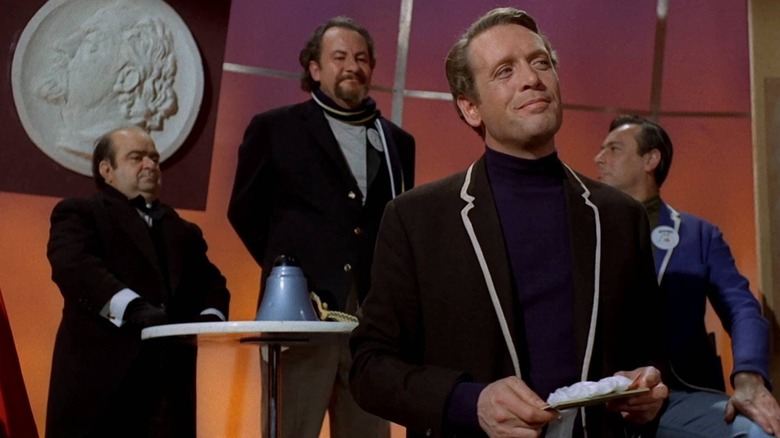
The premise of "The Prisoner" is explained by the show's opening sequence. McGoohan plays an unnamed spy who, for reasons unknown, abruptly and angrily quits his job one morning. He is followed home by a mysterious cloaked figure, gassed, and rended unconscious. He awakens in a surreal fantasy land known only as The Village. It is sunny and pleasant, everyone plays games all day, and they all seem to be doped up on happy drugs. No one has names in the Village, only numbers. McGoohan is told that he is Number Six. The Village is surrounded by bizarre living (?) balloons that can attack anyone who attempts to leave and smother them to death.
In the first episode, Number Six is brought to one of the people in charge of the Village, who calls himself Number Two. The actor who plays Number Two changes throughout the series, although Leo McKern played the role for three episodes. Number Two explains that the entire Village has been constructed as a means to manipulate Number Six into divulging his reason for quitting the spy agency. Number Six, being a cranky and clever sort, does everything he can to stymie the 17-episode interrogations at hand. He often screams at his captors that he is not a number — he is a free man.
As the interrogations continue, Number Six tries to subtly counter-interrogate his captors in order to figure out where on Earth the Village might be, and the mysterious identity of the never-seen Number One. He sometimes finds other conspirators trapped in the Village who claim to want to help him, but they are either secretly working for Number Two or are captured by the insidious balloon Rovers.
The Prisoner was eventually remade
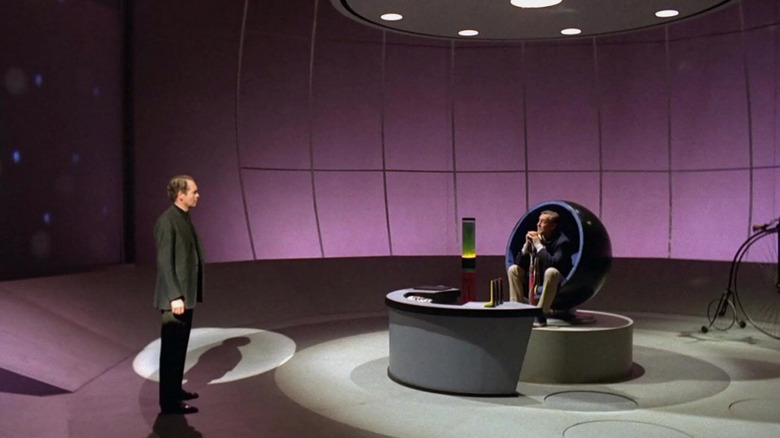
No one knows which of the Village denizens are prisoners, and which ones are guards. "The Prisoner" is a deliciously paranoid acid-thriller that actively turns spy tropes inside out. One might see "The Prisoner" described as a spy series or espionage thriller, but it's so much weirder than that. The whole show is divorced from reality. One can see this in the show's production design, which is on surrealism overdrive. The officials interrogating Number Six sit in ultra-modern spherical chairs in the middle of bubbly, spacious lounges that serve no known function. People ride pennyfarthings and spin rainbow umbrellas. Even the language and gestures are not quite normal.
The single angry person among a bunch of kooky placid children is definitely a vibe evident in "Pluribus," and fans of 1990s sci-fi might also be reminded of the 1995 Bruce Greenwood series "Nowhere Man." This kind of show pops up every few decades.
Indeed, there was a remake of "The Priosoner" in 2009, although it didn't cause much of a stir. In the remake, Jim Caviezel played Number Six, and Ian McKellen played Number Two. The twist this time is that Number Six cannot remember who he was prior to his time in the Village, and he seems to be getting leaked information psychically via his dreams. There is a lot of silly mental rigmarole in the remake of "The Prisoner" that didn't improve it. Ridley Scott once talked about remaking "The Prisoner" a second time, but those plans seems to have ended.
One should, however, definitely seek out the 1967 original. Know, though, that the ending will leave you with more questions than answers. Who is Number One?