

Kevin Bacon And Josh Brolin's Cult Sci-Fi Horror Movie Is A Netflix Hidden Gem
Paul Verhoeven's ability to use science fiction to hone in on timely issues is remarkable. Verhoeven's directorial run from "Robocop" to "Starship Troopers" is insanely impressive, considering how clear (and cogent) his vision is for the genre. Even his erotic dramas, "Basic Instinct" and "Showgirls," have earned some form of cultural significance, and his provocative "Benedetta" was a tonally complex return to form.
Let's keep this stellar track record in mind when we evaluate the outright negative critical reception of "Hollow Man," Verhoeven's 2000 sci-fi horror about a man turned invisible, which is currently streaming on Netflix. Although lauded for its convincing use of visual and special effects, the film's uneven handling of uncomfortable themes contributed to its less-than-ideal public perception at the time. "Hollow Man" simply did not feel like a Paul Verhoeven film, which is a sentiment that the director came to share later, despite its overwhelming success at the box office.
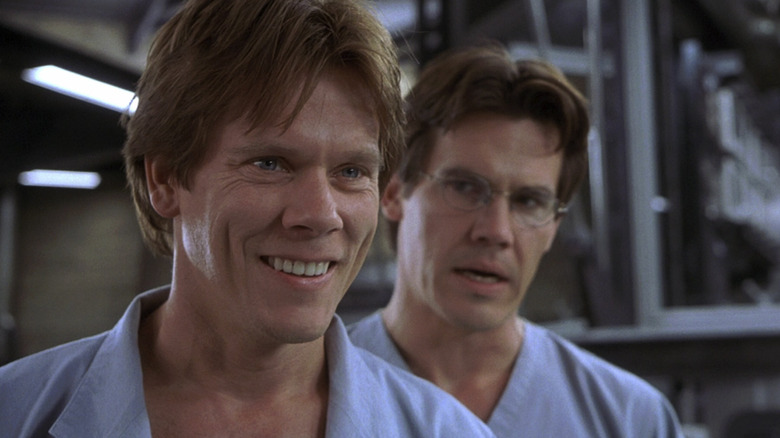
As thematically aggressive as the film feels, "Hollow Man" perfectly underlines the gross power play inherent in a patriarchal society, especially when a man veers into abject cruelty without repercussions. Or so he thinks, as antagonist Sebastian Caine (Kevin Bacon) gets what he deserves in the end, with his arc unfolding like an intense morality drama about sexual violence and voyeurism. There's a pulpiness to this premise, as Verhoeven rarely indulges in subtlety. But beneath such brazen swings lies a thematic complexity to Caine, painting a portrait of a gifted scientist drunk on hubris, even before he undergoes the procedure to render himself invisible. After being unable to reverse his condition, Caine surrenders himself to his worst instincts, which seem to have been trapped beneath the surface all along.
Paul Verhoeven's Hollow Man is a scathing examination of toxic masculinity
Spoilers for "Hollow Man" ahead.
"Hollow Man" is a loose adaptation of H.G. Wells' "The Invisible Man," much like Leigh Whannell's 2020 sci-fi horror of the same name (which explores similar themes to chilling effect). Both versions are pretty bleak in their portrayal of misogynistic abuse, but Caine's urge to harm others feels more ruthless/indiscriminate as the film progresses. Once Caine undergoes the invisibility procedure, he uses it to his advantage by pulling pranks on his team, which includes his ex-girlfriend Linda (Elizabeth Shue) and her lover, Matthew (Josh Brolin). Caine's antics take a despicable turn when he molests his coworker, Sarah (Kim Dickens), while being invisible. This prompts his team to initiate a reversal procedure, but it fails due to a technical error.
Given Caine's misogynistic view of women, his prolonged invisibility heightens this problematic situation, culminating in a deeply frightening sequence involving his female neighbor. His lack of ethics also extends to scientific experiments, as Caine is egotistic enough to test an unauthorized invisibility serum on himself. What he doesn't anticipate is the failure to reverse the process, as it underlines a flaw in his professional genius and makes him feel intellectually hollow. Even his anguished isolation doesn't inspire sympathy — he is no Seth Brundle from "The Fly," as whatever pathos Caine expresses is immediately undercut by his overt monstrosity.
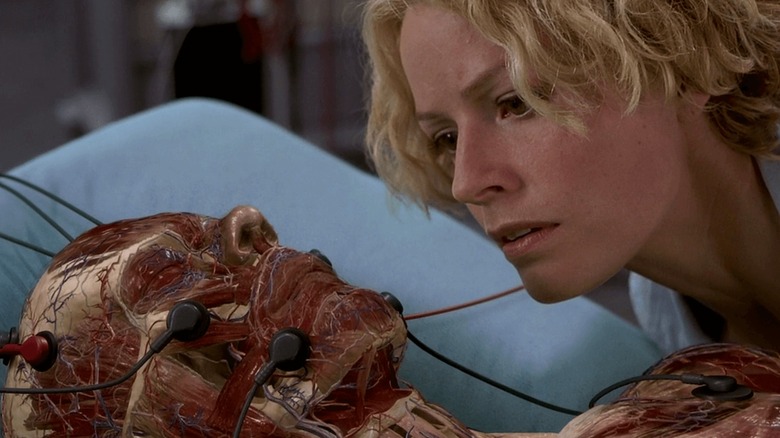
The film's slasher undertones might not appeal to everybody, especially if you're expecting a psychologically layered experience. But this aspect works well with the special effects in the invisibility scenes, or ones where only Caine's face is visible thanks to a creepy latex mask. The rest might feel hit or miss, but you can decide that for yourself by streaming "Hollow Man" on Netflix.