

Isaac Asimov Teamed Up With A Star Trek: The Next Generation Writer For A Short-Lived Detective Series
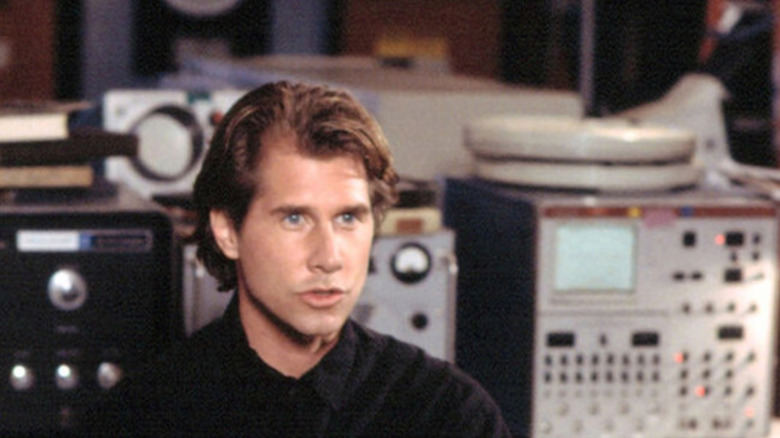
The 1988 TV series "Probe" is a nerd's dream. The main character is Austin James (Parker Stevenson), one of the most intelligent people on the planet. He has a photographic memory, and is constantly building new pieces of computer technology in his lab. He is the head of a think tank called Serendip, but he's usually so busy with his inventions that he misses meetings regularly. Austin is also, because of his vast intelligence, somewhat alienated from the rest of humanity. He has no patience for the fineries of social interaction, making him something of a misanthropic recluse. Austin James is essentially an updated, tech-forward rendition of Sherlock Holmes.
His Watson was Mickey Castle (Ashley Crow), a woman who was assigned to be Austin's secretary after he had fired the last dozen. Mickey isn't a scientist, but she did have the uncanny ability to call out Austin's rude behavior. She also was able to offer Austin emotional insight into people when his logic failed him. She has good instincts, which Austin doesn't believe in. Mickey balanced Austin perfectly, providing him with humanity, even though he pisses her off on a daily basis.
As one might expect, Austin and Mickey were often called up by government agencies and police departments to help them solve unusual murders. As a pair, Austin was able to assemble the means of a crime, while Mickey was much better about assembling a motive. There was scientific detail in "Probe" more complex than your typical crime series, making it super nerdy in an appealing way.
And, nerdier still, "Probe" was co-created by celebrated sci-fi novelist Isaac Asimov and writer Michael Wagner, who briefly served as an executive producer on "Star Trek: The Next Generation."
Probe was a detective series for nerds
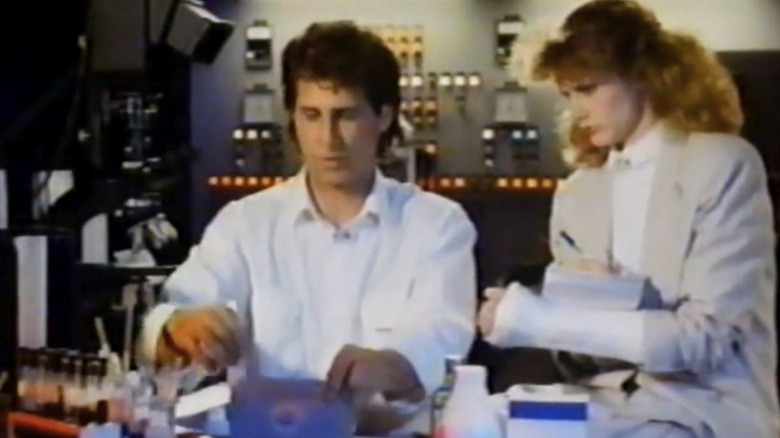
The premise of "mismatched investigators" is as old as the detective genre, of course, and "Probe," in its character inception, merely tapped into an already-successful formula. Austin was a cold brain, and Mickey was a warm heart. They each brought different talents and observations to a crime scene and would, if operating correctly, teach each other things. The twist with "Probe" came with how assertively scientific it was. This was many years before the days of "CSI" and "Bones," when pathology wasn't always a front-and-center aspect of investigation shows. "Probe" allowed for stories that could skew brainy. This was a sure sign that a speculative sci-fi writer like Asimov was in charge, along with someone overseeing the ultra-stuffy, diplomatic world of "Star Trek: The Next Generation."
The series was rounded out by Jon Cypher, who played Howard, the man in charge of Serendip. Howard was exasperated by Austin (everyone was, really), and was a human touchstone for Mickey. Yes, Howard would say to Mickey, Austin is a weirdo. Clive Revill also turns up as Howard's successor, and he had a much less friendly relationship with Austin.
The stories on "Probe" involved unusual death, natch. In the pilot episode, someone froze to death in a room warmer than they are. In the second episode, Austin and Mickey had to examine a body from a distance, as it was trapped inside a nuclear reactor. In a rather amusing plot, one murder seems to have been committed by a hyper-intelligent ape with a gun. While Asimov and Wagner sought to give "Probe" a science bent, they clearly also had a weakness for B-Movie silliness.
Probe didn't last very long
Audiences didn't tune into "Probe," however. It served as a mid-season replacement on ABC in March of 1988, and it only lasted seven episodes, including its two-hour pilot. Perhaps Austin was too off-putting for mainstream audiences. Perhaps former "Hardy Boys" star Parker Stevenson wasn't completely convincing as a hard-nosed super-intellectual misanthrope. Perhaps "Probe" didn't find its tone soon enough. The character dynamic between Austin and Mickey was great, but the stories were sometimes silly. For a show that seemed to sell itself on intellectual rigor, it tipped into sci-fi fantasy a little too often; one story involved potential space aliens.
"Probe" was also frustratingly insular. A lot of the crimes in question happened on Serendip property, and solving them meant that Austin's corporation would be off the legal hook. It seems likely that a mass audience wouldn't care about the dubious responsibilities a think tank would take for accidents on its own property. It would have made the show more conventional, but it would have helped to see some more run-of-the-mill crimes of passion.
"Probe" isn't available to stream anywhere, but resourceful internet sleuths can likely find the whole series lurking somewhere online. The series was never rerun, albeit for a quick revisitation on Syfy (then called the Sci-Fi Channel) in 1990. It also never saw a VHS or DVD release, making "Probe" wholly obscure. One might think that Asimov's name on the series would, at the very least, draw some kind of attention on the sci-fi market. Although Asimov is only credited as the co-creator. It was Michael Wagner who did the most writing for the series, penning two episodes, including the pilot.
Check it out, if you can. It's worth a look.