

5 Best Pluribus Fan Theories We Hope Come True

This article contains spoilers for "Pluribus" season 1, episode 8 — "Charm Offensive"
Vince Gilligan's "Pluribus" is doing some heavy lifting on the appointment viewing front, with every episode revealing a new piece of the puzzle — both to the eternally aggravated Carol Sturka (the superb Rhea Seehorn) and the audience alike. In a world where all but a handful of people have been turned into a blissful hive mind, anything can and often does happen ... but fans wouldn't be fans if they weren't constantly speculating on where the show will go next. Of course, it's impossible to accurately predict all the directions a show as outlandish as "Pluribus" might take, but hey, it's the internet — people are going to keep guessing anyway.
As with everything else in life, some fan theories are better than others. In fact, some of the ones out there are so good that we at /Film actually find ourselves hoping that "Pluribus" would go in the direction they propose, if only to see what happens. Here, I've collected five of the finest "Pluribus" theories out there, and examined precisely why they'd make sense for the show to actually adapt. The ball's on your court, Mr. Gilligan.
The hive mind might be irreversible
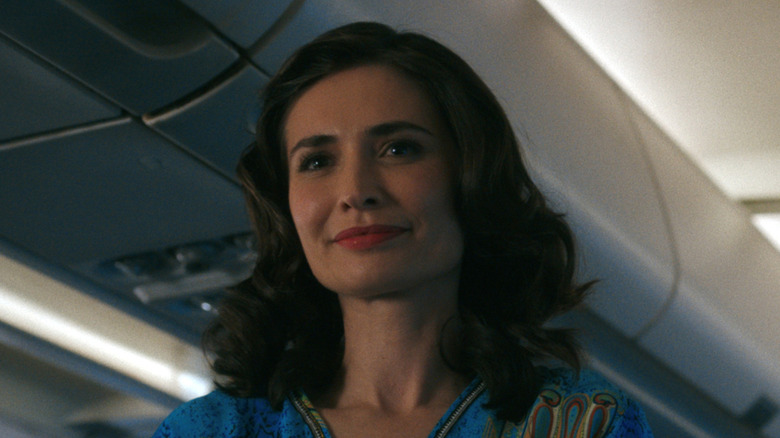
In the grand scheme of things, one of the darkest fan theories out there is also the simplest: That the hive mind condition can't be reversed. This would mean that the situation introduced in the "Pluribus" season 1 premiere, "We Is Us," is simply the new status quo, and everything Carol and fellow anti-hive mind champion Manousos Oviedo (Carlos-Manuel Vesga) are fighting for is in vain.
Yes, the show has offered hope that it may be possible to sever people from the hive mind. Carol's experiments unnerve the hive so much that they temporarily evacuate her immediate vicinity, while Manousos' mysterious radio frequency experiments and his determination to seek out Carol heavily indicate that he has his own world-saving tricks up his sleeve. However, this theory suggests that the people who end up severed might not be individiduals anymore — they'd just be empty husks devoid of a mind of their own.
This theory would work best if the show saved it for a bit later in the game, since the main tension in the story currently comes from finding potential ways to undo the Joining. Still, imagine the shock impact if Carol and/or Manousos finally managed to sever a prominent Other like Zosia (Karolina Wydra) from the hive, only to find out that her own mind is irreparably gone .
The aliens are on Earth, and Carol is one of them

The things that are explicitly known about the plot of "Pluribus" are as follows: The hive mind virus is of alien origin; It's designed to affect every human being on Earth; Yet, Carol Sturka and a few others are immune to it. Why?
According to one theory, there's a very specific reason Carol isn't affected by the Joining: The RNA sequence that causes it is designed to alter humans, and Carol Sturka isn't quite human. She's actually an alien in disguise, and quite possibly incredibly peeved about other aliens crashing her party and contaminating her human playground with their hive mind antics. This particular idea actually comes from Vince Gilligan's revelation about the main character's name in an interview with The Hollywood Reporter:
"The Sturka comes from Fritz Weaver's character name, William Sturka, in an episode of The Twilight Zone, 'Third from the Sun.'"
The noteworthy thing about this is, of course, that the William Sturka in question is a human-like alien who's escaping the destruction of his own planet to Earth. Revealing that the show does have aliens after all and that Carol is one of them would be a truly whiplash-inducing twist. Sure, it might seem a little far-fetched ... but then again, isn't "far-fetched" the show's entire deal?
The hive mind is a weapon against humanity

Perhaps the least surprising twist in a hive mind story would be the revelation that the hive has been evil all along. However, instead of making the Others a hostile species like the Body Snatchers or the Borg, "Pluribus" could get away with this with a very simple tweak on the premise: By making the hive mind an alien weapon.
In this scenario, the RNA-altering mystery message from the planet Kepler-22b would be less of a gift to humanity (as well as whatever other directions the planet was casting its transmission) and more of a weapon of mass destruction. We already know that the Joining has caused hundreds of millions of casualties. The Others are so thoroughly averse to taking animal or plant lives that they're forced to turn dead bodies into a protein product just to survive, and are at serious risk of starving to death. In other words, the hive mind may be blissful but it has also all but doomed humanity. If we approach the situation with the assumption that the Joining was a weapon intended to destroy the planet's most advanced species, it all tracks surprisingly well.
The real question here is why the senders of the signal would do that. Unless they have faster than light travel at their disposal, it'd take a hot minute for them to reach Earth and claim it as its now-dominant species — after all, Kepler-22b is 635 light years from Earth. Then again, maybe they're simply playing the long game, casting their RNA virus nets all across space and waiting for some poor planet with sufficient technology to bite.
The hive mind keeps the unaffected around to stave off boredom
According to this theory, the hive mind's efficient, wordless operations and constant connection might be constantly blissful, but they're also absurdly boring. With everyone aware of everything that a human can know, there's nothing to stir the pot, which would leave even a massive global consciousness the potential to become bored. So, what if the Joining has been specifically designed to spare a few humans as a sanity barrier of sorts?
Carol and some of her fellow survivors are incredibly high-maintenance, and even an isolationist like Manousos can provide entertainment in a "Truman Show" sort of way. This might aid the hive mind by providing enough unpredictability to keep it sharp and stave off loneliness. After all, Koumba Diabaté's (Samba Schutte) elaborate fantasy scenarios alone can provide plenty of entertainment for the hive. Put all the other unaffected folks in the mix, and there's plenty of outside stimulation for the hive to enjoy ... at least, before it follows its calling and converts them, too.
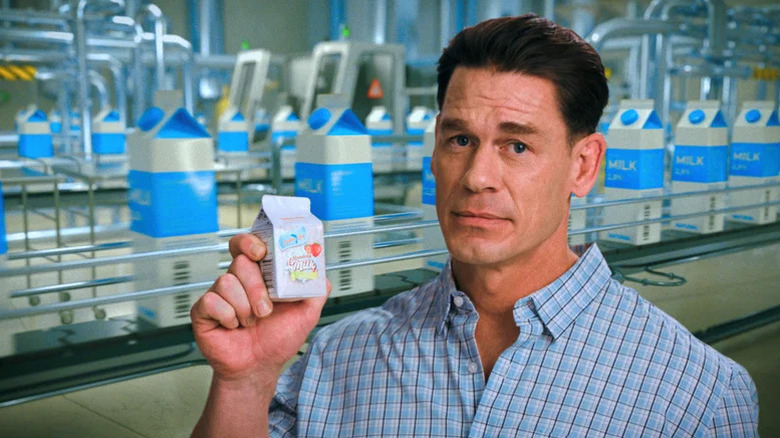
This theory is fascinating because the hive mind does often seem to go the extra mile to keep things interesting for everyone involved. Sure, John Cena's "Pluribus" cameo in season 1, episode 6 ("HDP") happened because Koumba had asked to meet him and he was handy, but using a world-famous actor and pro wrestler for a scientific explainer video is still a pretty wild flex. Interestingly, the hive's wish to avoid boredom might also make Zosia's excitement over Carol writing again and providing new reading material in episode 8 ("Charm Offensive") genuine, instead of the cynical tactical choice the show presents it as.
Earth is being used to refine the hive mind virus

The show's pilot, "We Is Us," specifically notes that the transmission that delivered the building block codes for the alien virus has been going on for a while, and may have been sent to places other than Earth. According to one fan theory, the somewhat violent way the virus spreads — not to mention its various intriacies –are all part of the (possibly sentient) alien virus' plan to refine itself and spread further.
Per the theory, the hive mind virus isn't as perfect as it seems, and is actively looking to make itself better. This is why it's so keen on converting the remaining unaffected people, and why it's so keen on avoiding Carol when it figures out the author is prepared to hurt it to sever the connection. It's also why the hive mind is looking into stem cell procedures to convert everyone: The virus needs to be 100% contagious and perfect to truly succeed, which it isn't just yet.
Strong negative emotions can hurt the hive, and the Joining process is difficult and comes with a massive death toll, thanks to the convulsing blackouts that precede the conversion. Perhaps the hive mind has been ironing out these kinks for a while — on Kepler-22b and who knows how many other planets — and is now nearing completion on Earth, hoping to finally become perfect.
"Pluribus" is streaming on Apple TV.