

Mike Flanagan Broke One Of His Directing Rules To Remake Stephen King's Carrie
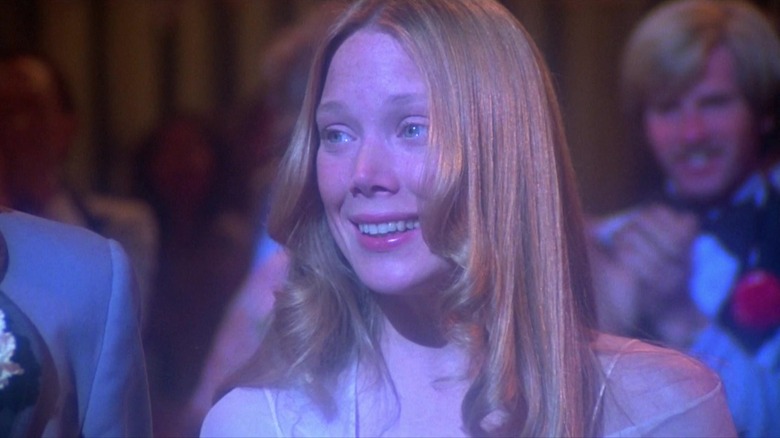
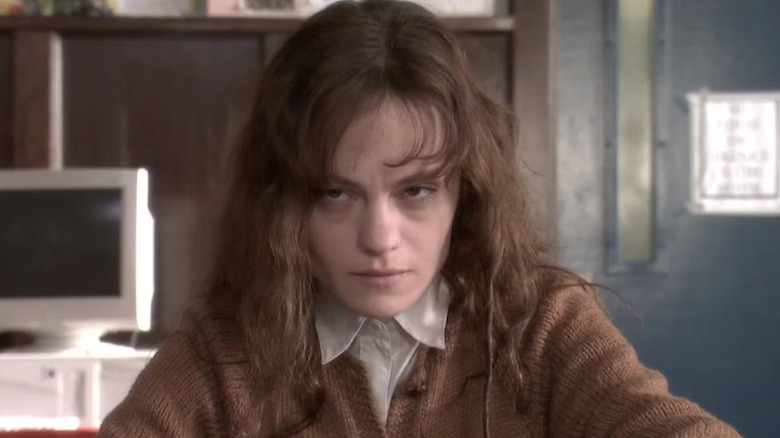
It's astonishing how many times Stephen King's 1974 novel "Carrie" has been adapted to other mediums. In 1976, Brian De Palma turned the book into a successful feature film starring Sissy Spacek in the titular role. Then, in 1988, "Carrie" was adapted into "Carrie: The Musical," one of the least successful Broadway stage shows in the history of the Great White Way. 11 years later, Katt Shea directed a 1999 sequel to De Palma's film titled "The Rage: Carrie 2." After that, Bryan Fuller penned David Carson's 2002 TV movie version of "Carrie" starring Angela Bettis. Finally, in 2013, Kimberly Pierce directed a straight-up remake of "Carrie" starring Chloë Grace Moretz.
Including King's book, that's six high-profile renditions of "Carrie." Only Dracula gets more attention. Something about the story of a bullied girl taking psychic revenge on her abusers resonates with folks. And the train continues to roll even now, as writer/director Mike Flanagan is currently working on a TV miniseries version of "Carrie," with Summer H. Howell leading the way as Carrie White.
"Carrie" will mark the fourth time Flanagan has adapted a novel by Stephen King (following his film versions of "Gerald's Game," "Doctor Sleep," and "The Life of Chuck"), so the storyteller is intimately familiar with the author. "Carrie" is an odd project for Flanagan, however, as the story has been told so many times before. Indeed, as Flanagan explained to Empire Magazine for its January 2026 issue, he used to have a hard-and-fast, self-imposed "no remakes, no sequels" rule to his filmography. That meant he had to break that rule to adapt "Carrie," his reasoning being that he found a new angle on the material.
Mike Flanagan never wanted to make sequels or remakes
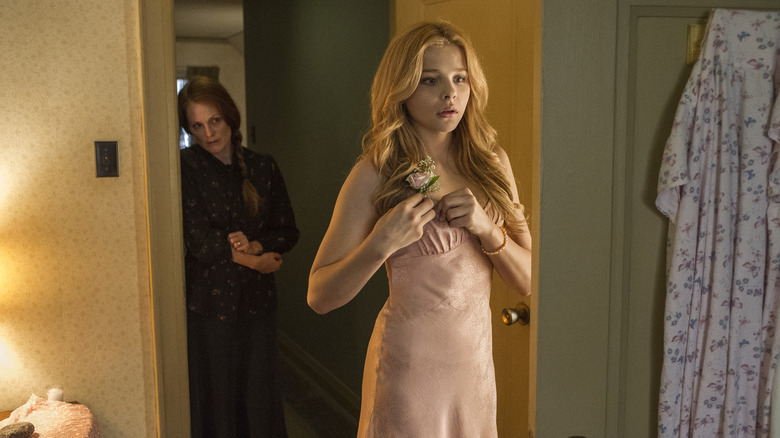
Because it's been remade so many times, the "Carrie" story should be familiar to most people. Carrie White is a teenager growing up in a religiously oppressive and abusive environment overseen by her cruel, Christian zealot mother, on top of being tormented at school due to her shy, awkward, and generally weird demeanor. Carrie, however, finds that she is developing nascent telekinetic powers, allowing her to move things with her mind. The story climaxes with Carrie being declared prom queen at her high school, only for pranksters to dump a bucket of pig's blood on her head during the event. This final affront unleashes Carrie's wrath, and she uses her powers to murder hundreds of people in revenge.
Flanagan, as mentioned, doesn't typically like remakes or sequels, and he never wanted to make one himself. He had to bend that rule, though, to adapt King's novel "Doctor Sleep" to the big screen in 2019. "Doctor Sleep" was written as a sequel to "The Shining," and Flanagan's movie didn't just adapt King's book, it also sequelized Stanley Kubrick's 1980 film version of "The Shining." As Flanagan explained:
"I've really enjoyed chasing the things that hadn't already been done, and trying to find new ways into them. [...] ['Doctor Sleep'] threw that in my face. [...] It proved to be irresistible. [...] 'The Shining' is a story about alcoholism, and because Steve wrote this sequel of sorts that is a story about recovery, it presented this thing of, 'Oh, we're painting the second side of the same coin; we're completing a story.'"
Hence, he could kind of wiggle out of his no-sequels rule with "Doctor Sleep," even if it was something of a follow-up to "The Shining."
Mike Flanagan has technically made several remakes
Concerning his "Carrie" remake, Flanagan claimed to have a fresh take on the well-worn material, stating, "A new way presented itself, something that felt very timely and new." Time will reveal what this brand-new take might be, as the exact plot has not yet been revealed at time of writing.
That said, Flanagan has technically broken his "no remakes, no sequels" rule multiple times over at this point. Admittedly, his 2016 horror movie "Oujia: Origin of Evil" is a prequel rather than a sequel to Stiles White's 2014 film "Ouija," so that one doesn't strictly count. At the same time, both seasons of Flanagan's "Haunting" TV anthology, "The Haunting of Hill House" and "The Haunting of Bly Manor," are loose adaptations of Shirley Jackson's novel "The Haunting of Hill House" and Henry James' novella "The Turn of the Screw," respectively. Those books had each been adapted for the screen several times prior to that, most famously as Robert Wise's 1963 movie "The Haunting" and Jack Clayton's 1961 film "The Innocents," in turn.
Similarly, in 2023, Flanagan made "The Fall of the House of Usher," a miniseries that loosely adapts Edgar Allan Poe's short story of the same name, combining it with several other Poe tales. Poe's "The Fall of the House of Usher," of course, had previously been adapted for the screen many times going all the way back to the late 1920s. And while one could argue that Flanagan wasn't simply adapting a famous work of literature with any of these projects (all of which take sizable liberties with their source material), one could just as easily make the case that they count as remakes as well.