

Two 2025 Movies Covered The Same Difficult Topic, And One Did It Much Better
Content Warning: This article discusses sexual assault.
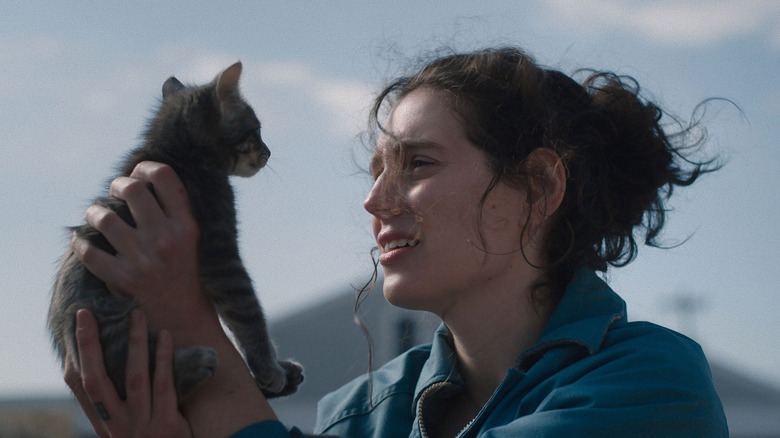
At first glance, "Materialists" and "Sorry, Baby" don't seem to have that much in common. "Materialists" is the long-awaited second film from Oscar-nominated writer and director Celine Song after her astounding 2023 feature debut "Past Lives," and "Sorry, Baby" is an intimate tour de force and directorial debut from actor, writer, and director Eva Victor. They both center around the same thing, though; both movies feature a devastating sexual assault as a major plot point, and where "Materialists" fails in its messaging and apparent mission, "Sorry, Baby" succeeds.
Sorry to talk numbers, but it's unavoidable in this context. According to the National Sexual Violence Research Center, 81% of women and 43% of men have experienced sexual assault or other forms of sexual violence; that's one in three women and a quarter of men. This is, heartbreakingly, a relatively common experience. As such, it seems like it should be represented and depicted in the art we consume, even when it's difficult to deal with — even if just to bring awareness to the issue, particularly as the 2017 #MeToo campaign has faced years of backlash to that backlash. In one of these movies, though, sexual assault is used for shock value, and in the other, it's the centerpiece of the film.
Let me back up a bit. "Materialists," which stars Dakota Johnson, Pedro Pascal, and Chris Evans, follows Johnson's matchmaker Lucy Mason as she tries to choose between a wealthy suitor (Pascal) and her ex-boyfriend (Evans). "Sorry, Baby" spends all of its time with Agnes (Victor), a woman recovering from severe trauma who manages to do so with humor and heart. So how do each of these films handle and feature sexual assault in the first place?
Materialists and Sorry, Baby tackle the same difficult topic
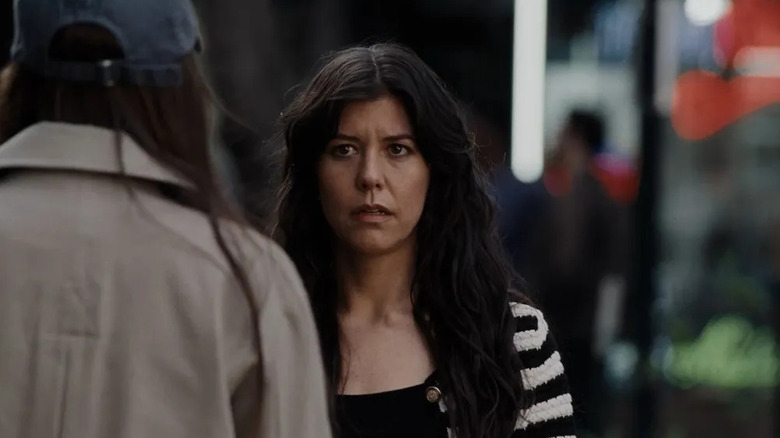
At the start of "Materialists," Lucy gets a genuinely messed-up call from one of her male clients, complaining about a date he went on with one of her female clients, Sophie ("Succession" standout Zoë Winters), and how he was disappointed by the fact that she was ... older than he'd hoped. Undaunted, Lucy keeps trying to find the perfect match for Sophie, a beautiful and soft-spoken woman who's willing to work with Lucy to find love. Partway through the film's story, though, everything changes. Even though Lucy gets a phone call from a client named Mark (who never appears on screen but is voiced by Celine Song's "Past Lives" star John Magaro), who went on a date with Sophie and claimed they had a great time, it's ultimately revealed that Sophie is suing Lucy's matchmaking agency because Mark sexually assaulted her. When Mark shows up at Sophie's home after the assault, Sophie, despite her anger at Lucy, calls her for help, and Lucy and John (Chris Evans) rush to her rescue.
Conversely, in "Sorry, Baby," Eva Victor's Agnes — the film's protagonist — is the one who experiences the assault before the story begins, though we see the moments surrounding her assault in the movie's non-linear timeline. Agnes, who ends up getting a job as a professor at a college in remote New England, is assaulted by her own professor, novelist Preston Decker (Louis Cancelmi), while visiting him at his house. Literally the entire plot of "Sorry, Baby" centers around Agnes' attempts to move past this horrifying incident and regain some agency in her own life, and that's precisely why "Sorry, Baby" handles this issue in a way that works and "Materialists" just doesn't.
Materialists uses assault as a plot device while Sorry, Baby keeps it at the center of the story
The way that "Materialists" handles Sophie's assault is a problem because it's simply a plot device to force change in Lucy. Even though Zoë Winters is given a truly astounding monologue when Sophie comes face to face with Lucy in the aftermath of the assault, Sophie continues to involve Lucy, her hired matchmaker, in her ongoing problems with the invasive Mark, which never really rings true.
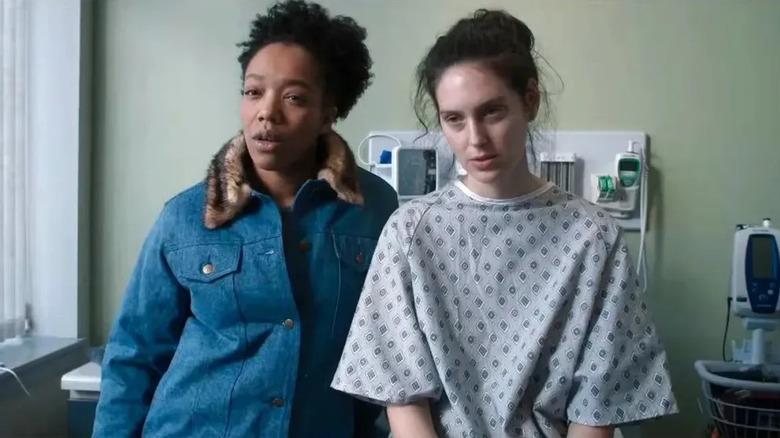
I'll be honest: I didn't love the way "Materialists" handled this issue when I first saw the film, but I was willing to more or less let it go until I sat down and watched "Sorry, Baby," which is a truly spectacular portrait of a woman who was assaulted. There's a particularly striking scene where Agnes and her best friend Lydie (Naomie Ackie) go to see a doctor in the wake of Preston's attack, and the doctor admonishes Agnes for bathing after the assault (when she gets home from Preston's house, Agnes tells Lydie about the incident while she's in the bath). After the doctor tells Agnes that the bath got rid of physical evidence, she wryly tells him she'll remember that "next time," a deeply dark joke that this movie manages to pull off.
There's no easy way to talk about sexual assault, and "Sorry, Baby" isn't easy to watch, but it's richly rewarding. "Materialists," however, rings hollow — and only highlights the strength of "Sorry, Baby." Stories about this must be told, and I hope that, going forward, they're more like the latter.
If you or anyone you know has been a victim of sexual assault, help is available. Visit the Rape, Abuse & Incest National Network website or contact RAINN's National Helpline at 1-800-656-HOPE (4673).