

Netflix's Theatrical Window Plans For Warner Bros Movies Reportedly Revealed

The entertainment world is still reeling from the bombshell announcement last week that Netflix is in talks to buy Warner Bros. Announced on Friday, December 5, the two companies are preparing to close an $82 billion deal that would forever alter Hollywood as we know it. Netflix, the biggest streaming service in the world, would own Warner Bros., one of the most storied movie studios in the world that regularly releases its films in theaters. So, should this deal go through, how would Netflix go about releasing movies in theaters?
We've since learned that Paramount is attempting a hostile takeover of Warner Bros. after losing out to Netflix during the formal bidding process. In a report from Deadline on that topic, it's revealed that Netflix would likely go with a 17-day theatrical window, meaning that Warner Bros. movies would play in theaters for 17 days before presumably arriving on the streamer. Right now, most big theater chains have deals for 45 days exclusivity before studio movies can be made available on a streaming service.
Speaking at a conference (per The Hollywood Reporter), Netflix co-CEO Ted Sarandos shed a little more light on the topic by saying the following:
"I think it's important to note that all we are going to do with this is staying deeply committed to releasing those movies exactly the way they've released the movies today, all three of these new businesses we want to keep operating largely as they are, the theatrical business we have not talked a lot about in the past, about wanting to do it, because we've never been in that business. When this deal closes, we are in that business, and we're going to do it. We didn't buy this company to destroy that value."
Movie theaters are already struggling
One would do well to note that Sarandos avoided discussing for just how long those movies would play in theaters before they head to streaming. One can release movies "exactly the way they've released the movies today" but not necessarily for the same amount of time. Mind you, this is Sarandos, who just earlier this year referred to theaters as "an outdated concept" during the Time100 Summit (via Variety). He also made it clear that he views a 45-day theatrical window as completely outdated, stating:
"What is the consumer trying to tell us? That they'd like to watch movies at home, thank you. The studios and the theaters are duking it out over trying to preserve this 45-day window that is completely out of step with the consumer experience of just loving a movie."
The big difference here is that this wouldn't even be like Universal rushing a movie like "The Fall Guy" to VOD after it disappointed at the box office. This would, presumably, be 17 days in theaters, then right to Netflix, which has over 300 million subscribers worldwide. When/if Netflix absorbs HBO Max, it will be a lot more. That means, more than likely, an awful lot of people would just be content to wait it out.
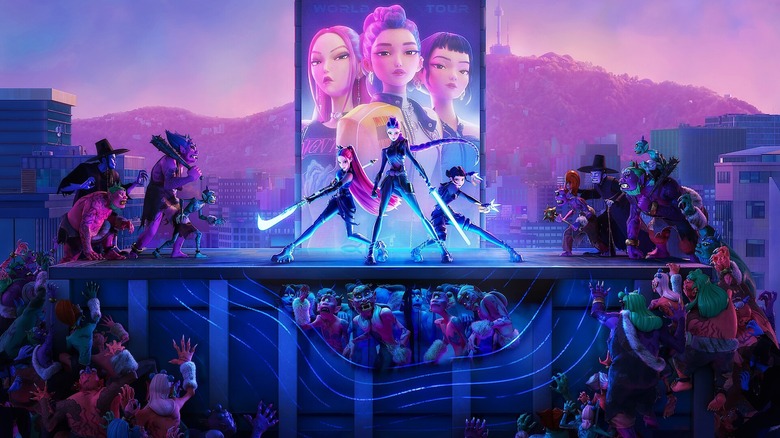
Netflix has experimented with theatrical more recently, with the hit "KPop Demon Hunters" topping the box office with $19 million over the summer. But that was long after the movie had already become a sensation on streaming, with the streamer only allowing it to play for a couple of days. Historically, Netflix generally only releases films in theaters on a limited basis, largely to qualify for awards or as a novelty. It's not core to the company's business.
The box office as we once knew it would never recover
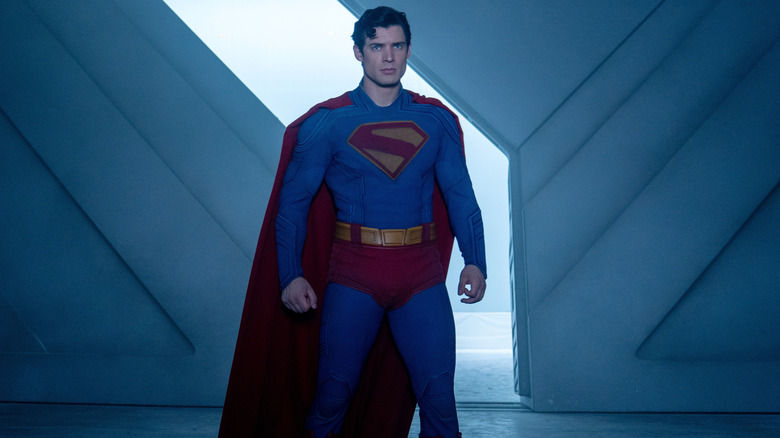
Theatrical would become a much bigger part of Netflix's business model if/when the company owns Warner Bros., but it would be unwise to believe that Sarandos and co. would adopt the current status quo. A 17-day window would be Netflix meeting in the middle. AMC previously refused to play most Netflix movies because of the streamer's refusal to guarantee meaningful, exclusive theatrical windows. While they've since collaborated on certain titles, there remains tension.
Unfortunately, for chains like AMC, the box office has been on wildly uncertain ground ever since the COVID-19 pandemic began. There was already growing evidence that the global box office may never recover to pre-pandemic levels, and that was before Netflix decided it wanted to get even bigger. Warner Bros. currently leads all Hollywood studios with $1.85 billion in total domestic ticket sales this year, with massive hits like "A Minecraft Movie," "Sinners," and "Weapons" to its name.
Under Netflix's possible 17-day plan, should that prove true, these movies would only play for three weekends. "Sinners" made 65% of its money, or $240 million, through its first three weekends. It went on to gross $367.8 million in total. Or take 2022's "The Batman," which made around 77% of its money, or $598.1 million, in that timeframe. It made $772.2 million when all was said and done. That's leaving a lot of money on the table at a time when theaters can ill-afford to do that.
That's not even accounting for the amount of viewers who would simply wait for the movie to hit Netflix instead. There's much to be determined, but if this is what the future looks like with a merged Netflix/Warner Bros. mega-corporation, the box office as we know it would likely never recover.