

What Is Category Fraud? The Oscars Controversy, Explained

People complain about the Academy Awards every year, and sometimes, those complaints have merit. "Green Book" winning Best Picture is obviously insane, and with the utmost respect to Jamie Lee Curtis and her Oscar for "Everything Everywhere All at Once," that performance beating out Angela Bassett's astounding turn in "Black Panther: Wakanda Forever" still feels wrong. The thing too few people are mad about when it comes to the Oscars, though, is category fraud.
What is category fraud, exactly? Basically, in the lead-up to the Oscar nominations every year, major studios throw their weight behind specific performers to try and win one of those coveted nominations, particularly in the lead and supporting acting categories — which, unlike the now-sprawling Best Picture category, is capped at five nominees each. As they try to increase their chances of actually winning one of those Oscars by way of one of these talented lead or supporting performers, studios will sometimes submit someone, based on screen time and the importance of their characters, into the objectively wrong category.
There are some great and very recent examples of this. The 2025 Academy Awards gave supporting statuettes to Kieran Culkin for "A Real Pain" and Zoe Saldaña for (the somewhat hilariously troubled) "Emilia Pérez," but neither of those actors played supporting roles. They were co-leads or even outright leads alongside Jesse Eisenberg in the former film and Karla Sofía Gascón in the latter. What happened here is that the respective studios behind "A Real Pain" and "Emilia Pérez" — Searchlight Pictures and Pathé, respectively — wanted to give Culkin and Saldaña better shots at winning in the supporting categories by avoiding what the studios viewed as the more competitive lead categories. This practice is shady, and it's been happening for decades.
What are some of the most absurd and egregious examples of category fraud at the Oscars?
The wildest thing about category fraud, from my perspective, is that you can't even get mad at the actors providing genuinely wonderful performances for these weird outcomes. I personally loved Kieran Culkin's turn in "A Real Pain," and while I didn't care much for "Emilia Pérez," Zoe Saldaña is the clear highlight of the film and deserved to be crowned. Again, though, category fraud is a decades-long problem. You can find it as far back as 1950's "All About Eve," a movie about an older actress whose throne is in danger of being stolen by a younger ingenue. Bette Davis and Anne Baxter, who play the respective fading star and ingenue, both ended up in the Best Actress race at the Oscars, even though Baxter's role is definitely a supporting one. (Admittedly, it was a really funny move by 20th Century Fox to pit the actresses against each other in real life, too.)
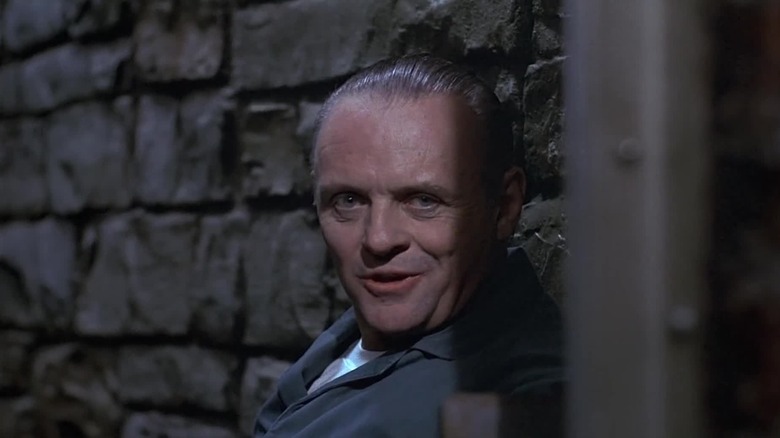
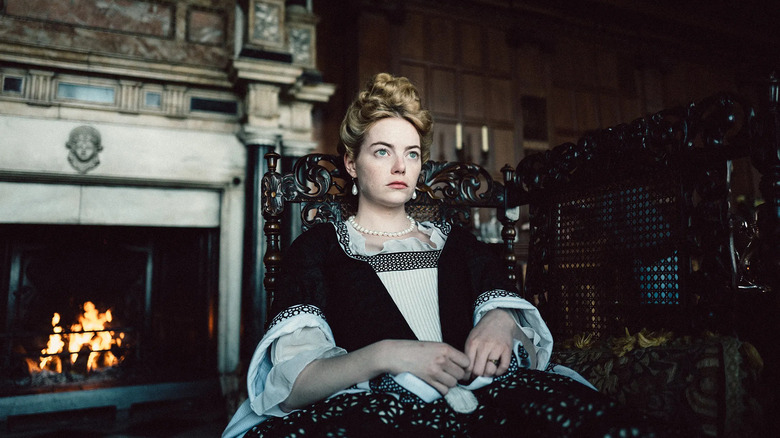
In the 1990s, Anthony Hopkins won his first of two Academy Awards for playing Hannibal Lecter, the infamous serial killer who both helps and toys with Jodie Foster's Clarice Starling. Hopkins appears on screen for less than half an hour, yet he won in the lead actor category, which is patently absurd! This has continued throughout the years, with studios running unchecked as they pick and choose the best strategy to net an Academy Award. Take 2018's "The Favourite" as yet another example: Emma Stone is, without question, the movie's protagonist, and Olivia Colman's erratic and ill-tempered Queen Anne is a supporting role. Stone was nominated for Best Supporting Actress, and Colman ended up in the lead category ... and it worked, because Colman won!
Category fraud is probably here to stay, but recognizing it and calling it out feels vital
Realistically, gaming the system with category fraud is working for a lot of studios. Anthony Hopkins and Olivia Colman, two genuinely phenomenal performers, got their Oscars in totally wrong categories, earned their respective studios some desired Academy gold, and nobody really complained about it very much (except for, you know, myself and a handful of other entertainment writers who do dorky stuff like measure an actor's screen time). I want to also stress again that actors like Lily Gladstone, who was pushed from a supporting category she might have won to lead for "Killers of the Flower Moon" only to lose to Emma Stone's full lead performance in "Poor Things" at the 2024 Oscars, aren't to blame for any of this (and neither, for that matter, is Stone, because both of these women should have won Oscars on the same night).
Category fraud is a feature and not a bug of the Academy Awards at this point. There's nothing material to be done here unless the Academy starts cracking down on screen time from actors, and this problem is so unbelievably specific that, truth be told, it only affects the four acting categories (the Golden Globes put musicals in the drama category and dramas in the comedy/musical category all the time, but that's a different thing and that ceremony is a mess for a bunch of other reasons anyway). Audiences can, though, pay attention to this and be wise to the studios' manipulations, so that, if nothing else, they can be more informed. In a perverse way, I look forward to whatever category fraud nonsense is coming our way next.