

Stephen King's Controversial Take On An '80s Robert De Niro Movie Will Leave You Confused
To the men reading this article: Stop talking up the quality of Martin Scorsese's 1980 film "Raging Bull" to your girlfriend. Remember that scene in Greta Gerwig's "Barbie" where all the Kens are infected by notions of the Patriarchy? Recall how they became really opinionated and ultra-masculine as a sign of their toxicity? Indeed, remember the key signifier of the Kens' insufferable male-ness? Right, it was their dogged critical mansplaining defense of Francis Ford Coppola's "The Godfather." When you talk about "Raging Bull" (or, indeed, many of Scorsese's movies), you sound like Ken. Don't defend "Raging Bull," "Taxi Driver," "Goodfellas," "Casino," or "The Wolf of Wall Street." The same goes for "Scarface," "Fight Club," "Joker," or "A Clockwork Orange."
Not that those are bad movies. Indeed, most of them are indelible classics that one likely studied in film school. Any of the talented /Film writers could choose almost any title from the above list and write an impassioned essay on its dramatic power, its tragic links between crime and masculinity, and its significance in the history of cinema. But there's a difference between loving "Fight Club," and having a "Fight Club" poster on your dorm wall. The former is an expression of admiration. The latter is a red flag.
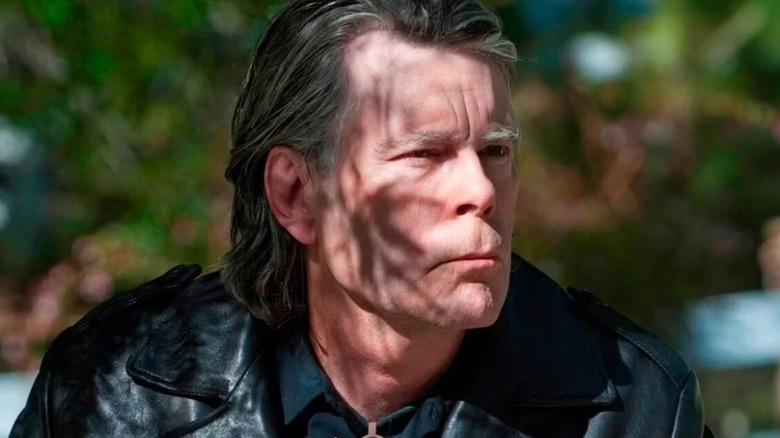
And sometimes, the ultra-masculine classics don't get re-litigated often enough. It's important to revisit your favorite classics from time to time to gauge if they still hold up. While there are many people out there who love "Raging Bull," there is a strong contingent of people out there who loathe the film outright. One of those people is Stephen King. On his Twitter/X account, King answered a poll, asking him what movie he will never be convinced is good. His response? "Raging Bull."
Stephen King hates Raging Bull
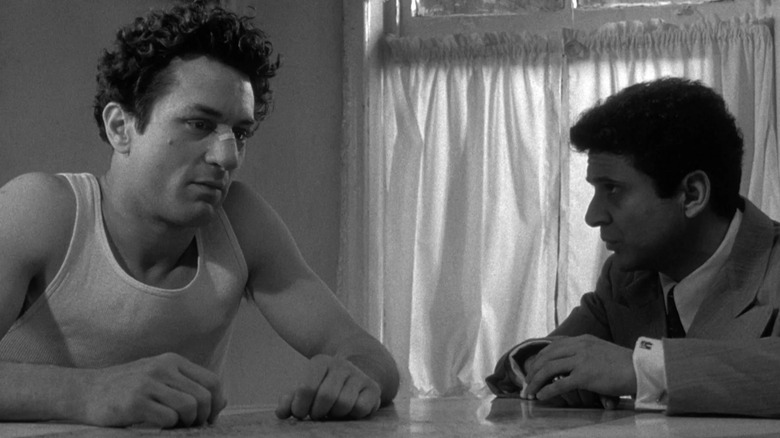
"Raging Bull," for those who haven't seen it, tells the story of real-life boxer Jake LaMotta, a middleweight champion on the boxing circuit back in the late 1940s and early 1950s. He was known for being able to take a punch, thanks to his large jaw muscles, but moreso, he was known for his wild brawling style. His style earned him the nickname of Raging Bull. LaMotta was also a serial criminal who confessed to abusing his wives. He even once admitted that he committed sexual assault. He wasn't a good guy. In the end, LaMotta lost everything.
Scorsese's movie covers LaMotta's life, warts and all. Robert De Niro plays Jake as a hot-headed, abusive a-hole who feels his boorishness is a superpower. He's never wise enough to realize that he's being a villain. In the film's climax, Jake is thrown in prison for one of his many infractions, and his only recourse is to box, punching the wall and wailing in agony. "Raging Bull" is a marvelous character drama, and it earned its eight Oscar nominations. It was up for Best Picture and Best Director. De Niro won Best Actor for his performance, and Thelma Schoonmaker won an Oscar for her editing. "Raging Bull" lost Best Picture to "Ordinary People."
But Stephen King hates it. And it may be easy to see why. Jake, after all, is a scoundrel, but Scorsese focuses the camera on him. His victims are swept up in his fury. The audience may even be invited to feel a twinge of sympathy for Jake's tragic lack of self-control.
Raging Bull has a lot of audiences split
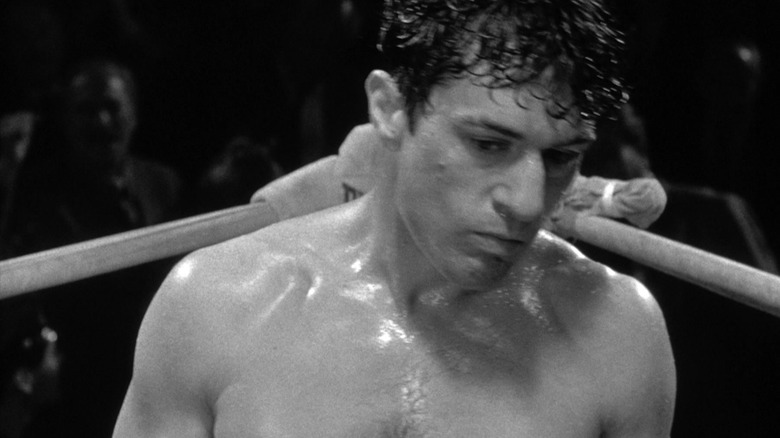
Stephen King didn't elucidate further on his hate for the film, but he's now on record about hating it. And audiences seem to be split on the film. Is it a dark, serious character drama about the fleeting nature of masculine power and how violence is seen as a virtue in a deeply violent, misogynistic, abusive world? Or is it a piece of hero worship, mansplaining that violent men should be allowed to flail and punch all they want, as their violence is a sign of their greatness?
Indeed, one might assume that "Raging Bull" is an apology for Jake's awful behavior. To make an evil man into something of a hero. The film ends with him becoming an entertainer, a hero in his own mind and forgiven by the world at large. But I don't think Scorsese admires Jake LaMotta in "Raging Bull." I would argue that Scorsese likes to examine villains. He seems to be fascinated by the way violent, immoral people are always spawning among humanity. He's not necessarily vaunting them. Does he make their immorality and villainy seem like it would be fun? Well, yes. Because there needs to be something alluring about a life of villainy.
But then, it can often feel like Scorsese is making apologies and celebrations of awful people. "Raging Bull" stays so close to such an awful person for so long, it becomes hard to look at him after a while. As such, a lot of people hate "Raging Bull." Andrew Sarris in Variety noted that "Raging Bull" is exhilarating, but lacks a moral dimension, leaving the film hollow. Maybe that's something King would agree with.