

10 Best '70s Conspiracy Thriller Movies, Ranked
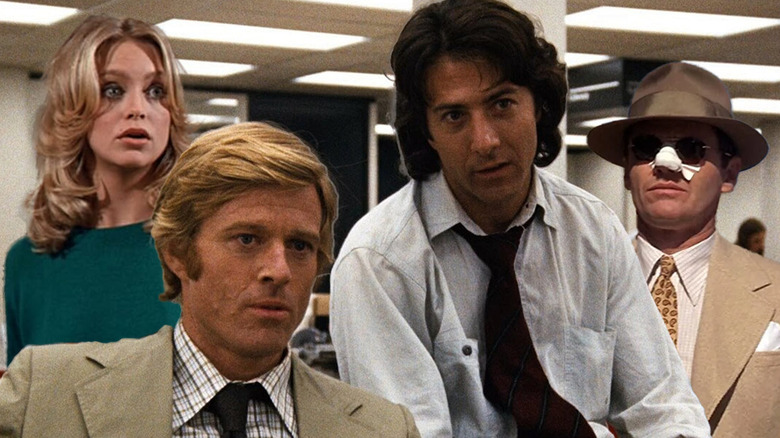
The thriller genre can be pretty broad, as evidenced by our big list of the best thriller movies, but the conspiracy thriller is a very particular subgenre within. There's still a need for thrills, obviously, in the form of suspense sequences, action beats, and an increasing tension, but there are also a few factors specific to the subgenre.
First, someone needs to discover something, either a past misdeed or maybe plans for some future crime. Second, they need to find it difficult to convince anyone of the truth even as they find themselves in some degree of danger over that discovery. And third, while the culprits can just be a small, threatening group of like-minded individuals, they're more likely to represent some government faction or corporate interest. Whatever they are, they're wholly invested in keeping their secret from getting out.
The 1970s gave birth to the best films in the subgenre as Americans exited the Vietnam War and the Nixon presidency with far less trust in the government than they had previously. Two American classics from the 1970s that typically make lists of great conspiracy thrillers are absent from this one, though, as neither really fits the understood criteria above. "The Conversation" and "Marathon Man" are both brilliant, but their thrills aren't derived from conspiracies. The former sees a man whose guilt leads him down a desperate and lonely path, and the latter is about a war criminal killing anyone who threatens his post-war life.
So here's our list of the actual 10 best conspiracy thrillers from the 1970s, ranked.
10. Foul Play
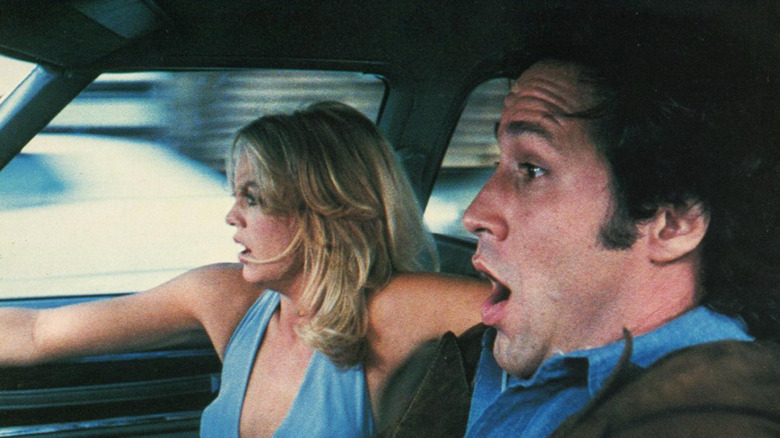
At the risk of losing you right at the start, "Foul Pay" earns a spot on this list as a conspiracy thriller given a comic turn. The film was a big hit back in 1978 but seems to have lost some of its appeal over the years, despite being one of two pitch-perfect pairings of Chevy Chase and Goldie Hawn. (The other is "Seems Like Old Times," and both made our list of the best Chevy Chase films.)
Gloria (Hawn) is a timid, insecure librarian who decides to put herself out there and meets a nice, young man who agrees to a movie date. Unfortunately, he's murdered at the theater and his body disposed of before she can show anyone. Now, targeted by a diminutive assassin, a melanin-deficient killer, a man with a scar, and more dangers, Gloria must convince a skeptical detective that the threats are real and something worse is right around the corner.
Writer/director Colin Higgins — the under-appreciated comic genius behind "Harold and Maude," "9 to 5," and "Silver Streak" — offers up a laugh-forward action/comedy riffing on the everyman thrillers from Alfred Hitchcock like "North by Northwest" and "The Man Who Knew Too Much." The conspirators are aiming to assassinate the pope while he's visiting San Francisco, and they're motivated by organized religions being tax exempt. It's a real issue! There's an absurdity to it all, but Higgins and his cast (which also includes Dudley Moore, Billy Barty, and a terrific Burgess Meredith) are all committed to the bit ensuring a fun, twisty good time.
9. Winter Kills
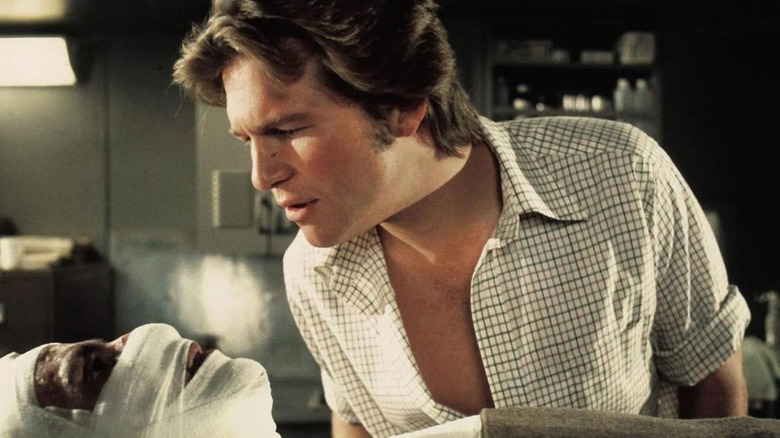
We go from a straight comedy to a film that's... also very funny? "Winter Kills" doesn't exactly feel like a comedy, but its densely convoluted nature and star-studded production give it an off-kilter atmosphere that, like laughing gas, will have you giggling, despite not knowing exactly why.
Nick Kegan's (Jeff Bridges) brother was a U.S. president assassinated nearly two decades ago, but the wound is reopened when a dying stranger tells Nick that he was one of two shooters that day. Soon, Nick is falling face first into an ever-evolving conspiracy behind his brother's murder, a multi-headed collision of theories and suppositions suggesting everyone from the mob and dirty cops to a Hollywood studio and Nick's own father were responsible for the killing. Is the truth nestled somewhere within? The odds aren't great that Nick will find out before threats, blackmail, and the possibility of his own murder get in the way.
The film's production was trouble from the start as two drug dealers — one of whom was murdered before the film's premiere — optioned Richard Condon's Kennedy-inspired novel and had no idea what to do next. Once it got rolling, Bridges was joined by a who's who of actors looking for work — including Anthony Perkins, Sterling Hayden, John Huston, Toshiro Mifune, Elizabeth Taylor, and more — before production was shut down early after running out of money. It resumed nearly two years later, and the film's narrative shows the turmoil. Still, even with those troubles, the resulting film is a weirdly engaging conspiracy thriller commenting on the American way through its own unique lens (that somehow didn't make our list of Jeff Bridges' best films).
8. Soylent Green
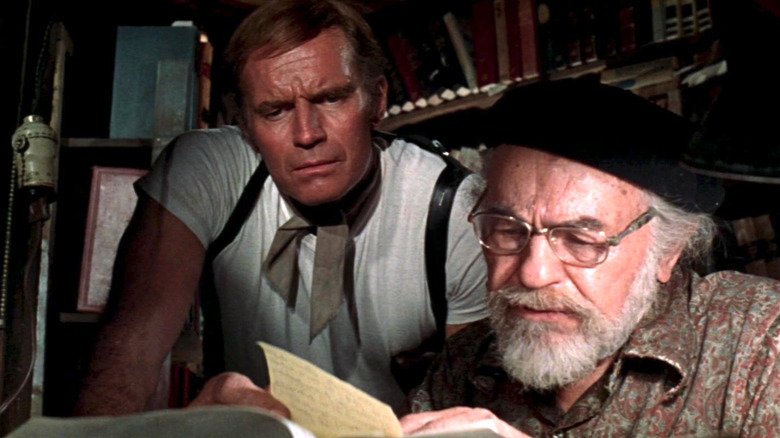
There are a handful of films with endings that are every bit as memorable as the films themselves. Some are so familiar that people who've never even seen the movies still know their endings. "Citizen Kane," "Seven," the original "Planet of the Apes." The star of that last film made another science fiction classic with an unforgettable finale, "Soylent Green," and it also works as an incredibly grim and depressing conspiracy thriller.
It's the year 2022, the future, and life is hell for everyone but the one percent. While the wealthy few live in luxury, the rest of humankind struggles for food, employment, housing, and even the barest scraps of dignity. The Soylent Corporation, a conglomerate responsible for producing most of the population's food supply, has just introduced a new, more nutritious variation of their Soylent wafers called Soylent Green. A detective (Charlton Heston) lands a case involving the murder of a Soylent executive, but the more he digs, the more pushback he receives from both his bosses and some violent strangers. His search for the truth will end with the most disturbing revelation of all.
Skip ahead if you've somehow avoided this final line for the past half century, but Soylent Green, it turns out, is people. That is an incredible downer to end your sci-fi conspiracy thriller on, and it hits just as hard today as it presumably did when released. The conspiracy here is one orchestrated by a corporation and enabled by the rich and powerful, and it's far too easy to see some variation of it becoming a reality in the not-too-distant future.
7. Murder by Decree
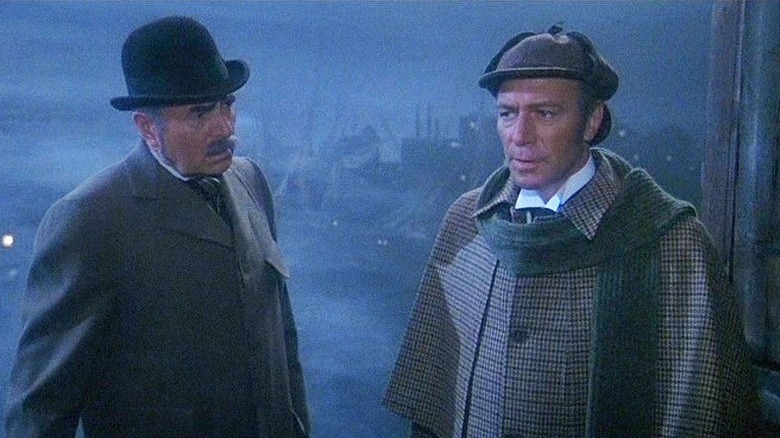
Jack the Ripper is arguably the world's most famous serial killer despite none of us being alive when he was committing his atrocities. He was never captured or officially identified, and that has led to all manner of theories as to his true identity. One of the very best films about one of the most convincing theories is Bob Clark's 1979 classic, "Murder by Decree." Yes, he's the same Bob Clark who directed "Black Christmas," "Porky's," and "A Christmas Story," and that, my friends, is range.
A killer is slaughtering prostitutes in London's Whitechapel district, and with no worthwhile leads to be found, the inimitable Sherlock Holmes (Christopher Plummer) is called in alongside his partner in detection, Dr. Watson (James Mason). The two jump feet first into the grime and blood of the case and soon discover a connection between the victims beyond their occupations. The evidence begins to point them in unexpected directions, and soon they're feeling the pressure from the highest reaches of the British government to squash their investigation or pay a very high price.
As is often the case with the best conspiracy thrillers, this film ends on the bleakest of notes as Holmes and Watson realize they've hit an impenetrable wall. They have all the answers, they can identify the motive, and they're able to name both the killer(s) and the government officials who enabled them — but the journey to those truths comes at the cost of realizing the powerful will not be held accountable. Both Plummer (inexplicably absent from our Sherlock Holmes actor ranking) and Mason do extraordinary work here with typically stoic characters who they allow to feel the pain of their discoveries and failures.
6. Capricorn One
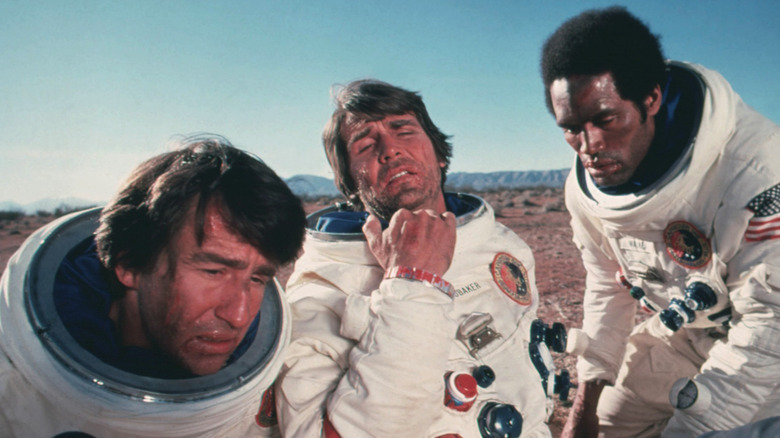
The second of two sci-fi thrillers to make our list of '70s conspiracy thrillers, "Capricorn One" is a film born in a very real conspiracy of the time. (It's also one of five sci-fi entries to make our broader conspiracy thriller list.) Some people apparently believe that our moon landing in 1969 was faked, and while we don't like to give those people oxygen, the idea is given a fantastic turn into conspiracy thriller territory with Peter Hyams' terrific 1977 film.
Astronauts scheduled for a trip to Mars are taken off the rocket while on the launch pad and transported to an unknown desert location. It seems there was an issue with the rocket's life support system, but knowing that another delay would jeopardize funding, NASA instead launches the rocket without the men aboard and plans on faking the astronauts' presence using footage recorded here on Earth. Of course, once they're done, and once the returning craft implodes on reentry, the risk that one of the men will talk is just too great, so a plan is set in motion to silence them forever.
James Brolin, Sam Waterston, Hal Holbrook, Karen Black, Telly Savalas, and the always great Elliott Gould star, and all of them are doing stellar, fun work in a fairly propulsive thriller. The conspiracy angle is played well, from the outrage of the incident to the lengths that the government will go to protect their image and bottom line, and Gould's portrayal of a dogged reporter calls back to simpler times when the press could be relied upon to find the truth no matter the cost. Save this one for after you've seen one too many depressing conspiracy thrillers, as it ends on a satisfying note.
5. I... for Icarus
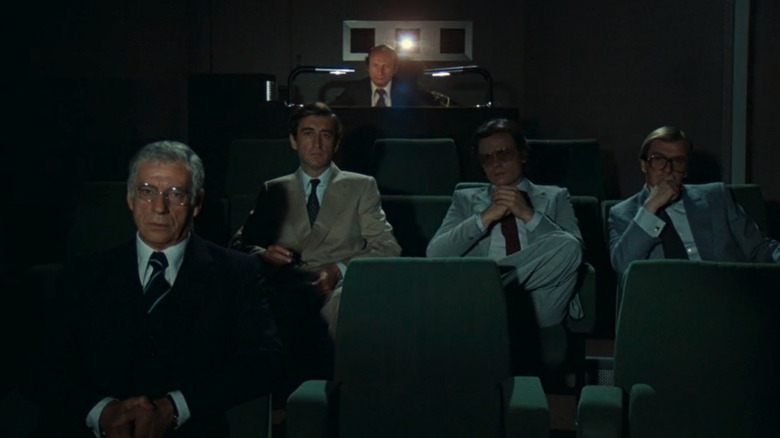
The assassination of John F. Kennedy remains a watershed moment in not just American history, but world history, so it makes sense that the mythology and mystery of it all has creeped beyond U.S. borders. "I... for Icarus" is a French conspiracy thriller that very clearly riffs on the Kennedy killing and the suspicious details of the subsequent investigation.
President Marc Jarry, a popular leader of an unnamed country, is assassinated before his second term. The official investigation reaches its conclusion with a single dissenter, state attorney Henri Volney (Yves Montand), and he immediately sets out to find the truth. As he and his office dig through the mountains of evidence and testimony, they begin to piece together a story that differs greatly from the official finding. Now he just has to get that truth out to the world.
Like 1973's "The Day of the Jackal," a French co-production, this film unfolds via an extremely meticulous structure and pacing as the team moves through evidence, follows leads, explores theories, and explains its findings. It's not quite documentary-like, but director Henri Verneuil crafts an experience that's drier than a stack of saltines. Against all odds, it's no less captivating and suspenseful for it, though, as each new discovery pumps blood into Volney's desire for the truth. The film builds to an incredibly tense sequence of a man alone in his office — you don't expect to be watching it while clenching your armrest or holding your breath, but that's just what you'll be doing.
4. Chinatown
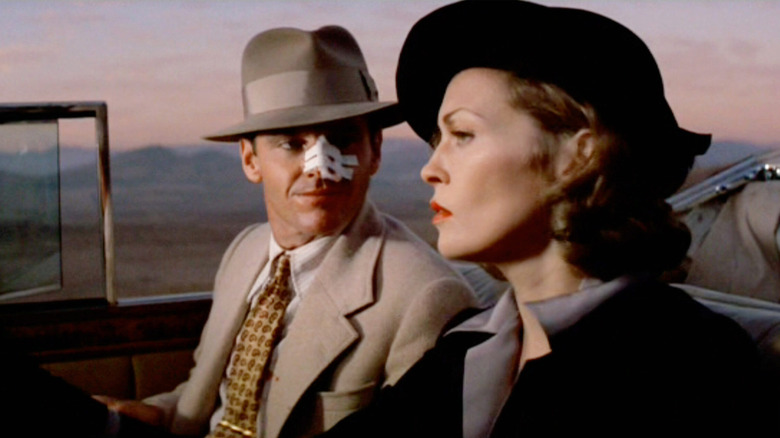
The resources required for life are far from limitless, but while some people work to ensure they'll still be here for later generations to use, others work solely to ensure personal profit. It's a cynical truth that gets explored with haunting, powerful effect in 1974's "Chinatown" leading to a bleak whopper of an ending.
Jake Gittes (Jack Nicholson) is a private investigator in Los Angeles who works primarily in the infidelity game. His latest case sees him made a fool of, and as he digs deeper in for answers, he discovers there's far more at play here than the simplicity of a cheating husband or a wandering dame. The truth involves choices made to benefit the few at the expense of the many, crimes destined to go unpublished and unpunished, and a horribly depressing secret about an unthinkable violation.
Gittes' investigation leads him into real trouble with the big bad's (John Huston) henchmen and the police who are ultimately in his pocket. He finds the truth, but if it comes too late, does it really even matter? Add this to the list of conspiracy thrillers that leave protagonist and viewers alike feeling helpless in the face of the reveal. The film is a masterful neo-noir (and made our list of the best), a painful character piece, and a sadly prescient commentary on the lengths the rich and powerful will go to profit off other people's misery and needs. It's a beautiful film too, taking real advantage of the sprawling Los Angeles landscape, but the ugliness of man slowly seeps into the image until only the darkness remains.
3. Three Days of the Condor
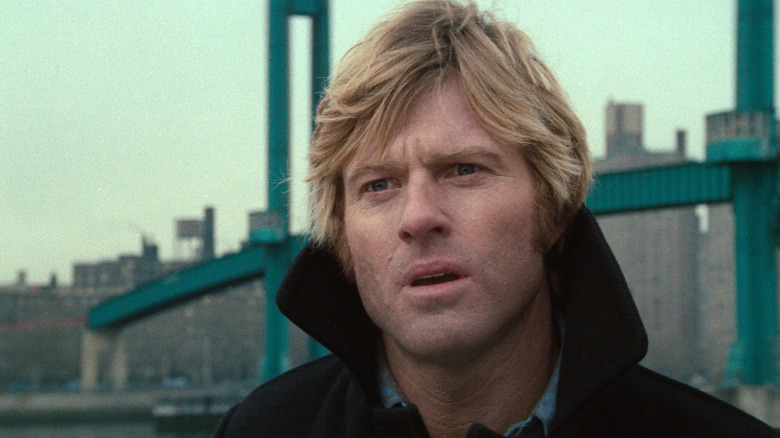
It's just another day at the office for Joe Turner (Robert Redford) that sees him reading books, taking notes, writing reports, but things change when he steps out for lunch. He returns to find all of his coworkers have been murdered. It's worth noting that Joe is a CIA agent whose station is charged with combing through written works for hidden codes, but even that doesn't quite explain the massacre. His search for answers puts a target on his back even as he realizes the threat is coming from inside his own organization.
While most conspiracy thrillers see an outsider make the big discovery that puts their life in jeopardy, "Three Days of the Condor" takes the opposite route. It's an interesting angle that sees the narrative shift towards a whistleblower scenario that may or may not ever see the light. That's even the note the film ends on — will the truth come out? Will anyone even care? It's a cynical knife edge pressed against a Hollywood thriller headlined by dreamy stars like Redford and Faye Dunaway.
Interestingly, just as people like to fan-fiction their way into thinking that Gene Hackman's playing the same character in "The Conversation" and "Enemy of the State," the same is often done for Redford in "Condor" and 1992's "Sneakers." (See where they both land on our list of Redford's best films.) It makes for an entertaining game of "what if?" that, not coincidentally, puts an optimistic spin on this film's somewhat depressing ending.
2. The Parallax View
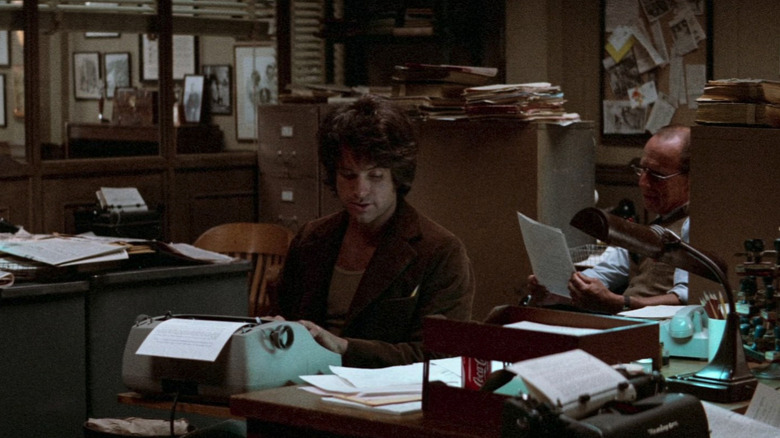
Director Alan J. Pakula made three insanely great paranoid thrillers in the 1970s, and two of them have earned a spot on this list. The third, "Klute," is incredibly good, despite not being a true conspiracy thriller. The two remaining form an interesting pair bearing similarities in character while veering apart in consequence, and together they form an idealized image of the press.
A senator is gunned down, the work of a lone gunman, but in the years that follow, witnesses to the event begin dying at an unusual rate. Joe Frady (Warren Beatty) is a reporter who catches wind of things when someone he knows joins the body count, so he decides to investigate. What he finds is a vast conspiracy involving a private corporation, dark government interests, and a methodology that results in the pure convenience of "lone gunmen."
"The Parallax View" is an absolute stunner that lands with a real gut punch of an ending. Getting there is an equally fascinating journey as the film's first half plays fast and loose with its thrills and heartthrob leading man before dialing up the tension and seriousness to a fist-clenching, heart-thumping degree. Credit both Pakula and cinematographer Gordon Willis for slowly tightening the knot on viewers visually while the script begins connecting the dots in increasingly grim fashion. Beatty wins us over with his casual charms that shift into a truly physical performance before the weight of it all comes clear in his expression — a realization that comes far too late.
1. All the President's Men
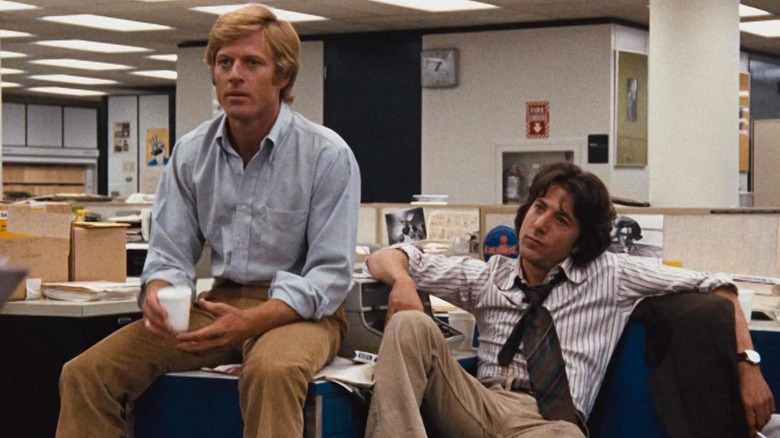
Two years after delivering the film above, Alan J. Pakula returned with another story about journalists uncovering a conspiracy involving misdeeds by the U.S. government. "All the President's Men" is a counterweight to "The Parallax View" and its darkness, though, as investigative doggedness, real journalism, and the truth itself win out in the end to shine light on a shameful time in recent American history.
A burglary is interrupted in Washington, D.C., but while most people seem to think little of it, a reporter at the Washington Post smells a story. Bob Woodward (Robert Redford) begins his investigation by following the money, and along with fellow reporter Carl Bernstein (Dustin Hoffman), he discovers that people high up in Richard Nixon's government have crossed some lines. A shadowy informant nicknamed Deep Throat — revealed decades later to have been the FBI's Deputy Director at the time — helps connect the dots, and soon, an American president will pay the price for his hubris and carelessness. Getting there, though, sees the reporter's lives and livelihoods put at risk in service of finding the truth.
The film is a powerful indictment of presidential corruption and a celebration of the press, but what used to be a fully triumphant watch now carries a bit of sadness to it. The Washington Post, the mainstream press, and the office of the president have all lost any semblance of integrity and trustworthiness. Still, Pakula's film, once again shot by the legendary Gordon Willis, is a captivating, suspenseful, and invigorating watch showing that our systems used to work — and that they can do so again if enough people stand up and make themselves heard.