

Alien Nation Went From Cult Sci-Fi Movie To A TV Series You Probably Never Knew Existed
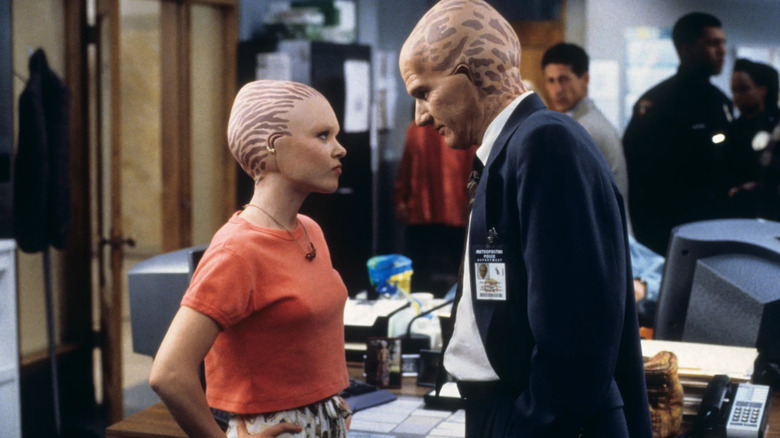
Graham Baker's 1988 sci-fi film "Alien Nation" is possessed of a novel, and pointedly political, premise. The film takes place in the near future of 1991, only about three years after an alien spacecraft crash-landed on Earth. The ship contained 300,000 alien prisoners belonging to a species known as the Tenctonese, which look very similar to humans except they sport no ears and have enlarged, hairless, spotted scalps. Humanity has since accepted the aliens, nicknamed Newcomers, on Earth, but not in the friendliest way. On top of being relegated to slums and ghettos, the Tenctonese are overseen by an immigration office that doesn't have their best interests at heart. In general, humans are racist and hateful toward the Newcomers. Sound familiar?
The "Alien Nation" movie is structured like a buddy cop movie, pairing racist human detective Matthew Sykes (James Caan) with a Newcomer partner named Sam Francisco (Mandy Pantinkin). As the duo investigate the crime and corruption that had formed in the new Newcomer districts, we learn curious details about the Tenctonese. Salt water is like acid to their skin. Sour milk affects them like booze. They were previously enslaved and kept in line with drugs. The film was only a modest success, so it didn't cause more than a ripple.
It did, however, do well enough to inspire a one-season TV series from TV impresario Kenneth Johnson, the creator of "The Bionic Woman" and "V," as well as the developer of "The Incredible Hulk." The TV show served as a soft reboot of the movie, with frequent "Star Trek" actor Gary Graham playing Matthew Sikes and Eric Pierpoint playing George Francisco. (As you surely noticed, the series tweaked the names of the film's protagonists.)
The Alien Nation TV series only lasted one season
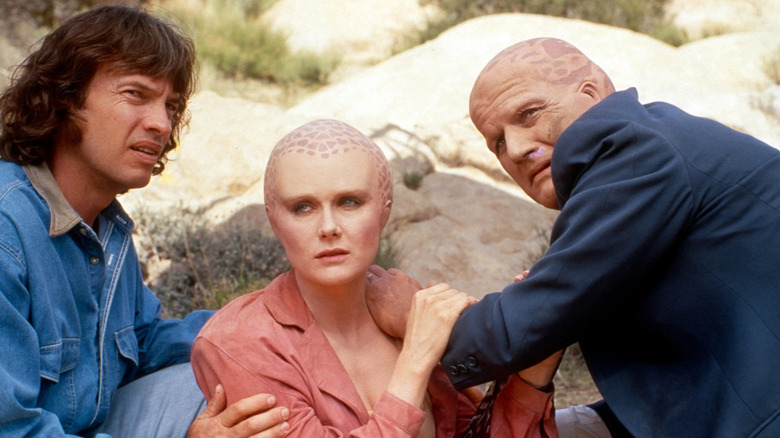
The "Alien Nation" TV series was really great, largely because it just expanded on the ideas from the movie. What if space aliens were subjected to the same racism and cruelty that human immigrants are in the United States? Much of the show was based on ideas of cultures clashing and immigrant assimilation. The Tenctonese characters all attempted to maintain their species' identity, but they also worked very hard to learn human languages, wear human clothes, and engage in human dating practices. All the while, they faced racial slurs and hate from the humans they lived among; the show's chosen epithet for Newcomers was "Slag."
George Francisco's name-change undid a joke from the movie. There, the character was named "Sam Francisco," because immigration officials had to give all the Newcomers human names, and after 300,000 entries, they started to get loopy and jokey with it. Other Tenctonese characters have names like Albert Einstein, Polly Wannacracker, and the like. The series focuses a lot on George Francisco's experiences, along with those of his family. His wife, Susan, is played by Michele Scarabelli, with Lauren Woodland and Sean Six portraying their teenage kids. At the end of the show's only season, the Newcomer family welcomes a new infant. We learn that Newcomer pregnancies are complicated and involve both partners carrying the fetus for a spell.
Graham is perfect in the role of Matthew Sikes, an ignorant, "old school" cop who's very slow to accept Newcomers and has to actively work to undo his racism. He ends up dating a Newcomer biochemist named Cathy (Terri Treas), and she often has to patiently talk him through his ignorance. It seems that the Tenctonese and humans have trouble engaging in physical intimacy; the humans usually get hurt.
There were also several Alien Nation TV movies
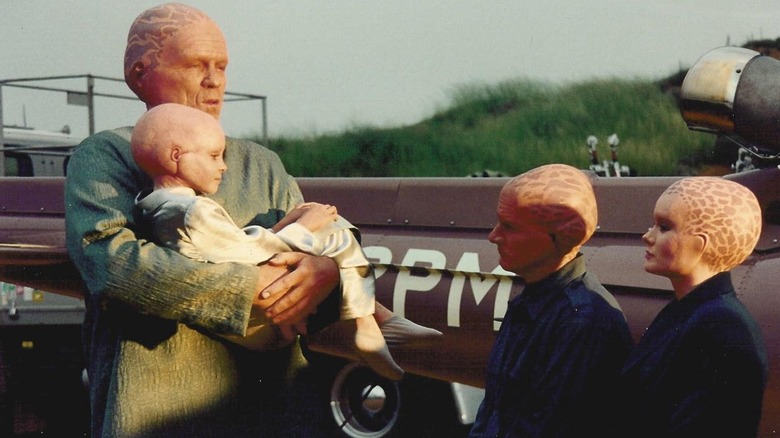
The "Alien Nation" series was canceled in May of 1990 after its first season of 22 episodes. It was a hit show and attracted a fair number of people to the Fox Network, which was still relatively new at the time. Sadly, the entire network was struggling to get on its feet and ended up canceling all of its dramas for the 1991 season. "Alien Nation" was the cut's most prominent victim. The season ended on a cliffhanger, so the show's many fans were upset.
Luckily, after a few years, Fox built up its financial coffers again and followed up the series with a string of TV movies. The films all star the same cast as the TV show and almost directly continue the series. The first TV movie, "Alien Nation: Dark Horizon," aired in October of 1994. Its follow-up, "Alien Nation: Body and Soul" came out in 1995, with both "Alien Nation: Millennium" and "Alien Nation: The Enemy Within" coming out in 1996. The fifth and final TV film, "Alien Nation: The Udara Legacy," aired in 1997. About a decade later, both the "Alien Nation" show and the TV movies were released on DVD. At the same time, the TV films are somewhat obscure and didn't cause as much of a sensation as the original movie or series.
In 2024, Jeff Nichols revealed that an "Alien Nation" reboot he'd been working on had been repurposed as an original sci-fi film dealing with, one assumes, related subject matter. Is there a major studio out there willing to get onboard with (potentially) a hard-hitting sci-fi commentary about the immigrant experience? 2025 certainly seems like the right time to address such topics. Time will tell if it gets made.