

Why Spartacus Creator Steven DeKnight Never Regrets Killing Off His Gladiators
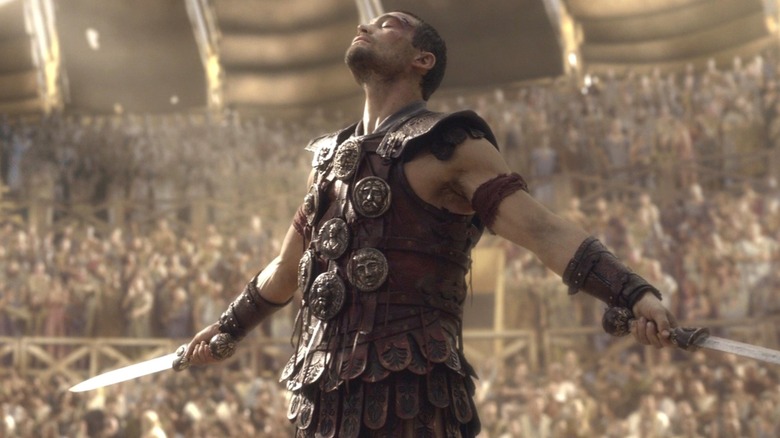
Much isn't known about Spartacus, the Thracian gladiator who led a major slave uprising against the Roman Republic around 73 BC. Surviving records about his life were recorded more than a century after his death, making it doubly difficult to piece together what actually happened before and after the uprising. Whatever little we do know must be taken with a huge grain of salt, as details about Spartacus' personal life remain uncorroborated or contradictory.
But these gaps in history did not stop Steven S. DeKnight from creating "Spartacus," the salacious Starz historical drama comprising three miniseries installments and one six-episode prequel. In keeping with the show's violent subject matter, "Spartacus" is quite graphic, featuring loads of blood, guts, and unexpected deaths. The show's second season, "Spartacus: Vengeance," is set in the aftermath of a shocking character death, which makes way for fresh machinations. Speaking to Cinemablend, DeKnight weighed in on whether he regrets killing off his gladiators, as their stories essentially end with their onscreen deaths:
"There's actually two answers to that question. I never really regret killing a character off, because I feel like when I do kill a character off, it serves a specific purpose, and either that character has run its course, or that character needs to die to propel the hero in a new direction or further his direction. That said, there are plenty of actors that I really miss, and plenty of character traits that I miss."
To better understand DeKnight's perspective, it must be put into context vis-à-vis "Spartacus: Vengeance," and the death of Batiatus (John Hannah) at the end of the first season. Let's dive into it.
Gladiator deaths underline the precarious nature of events in Spartacus
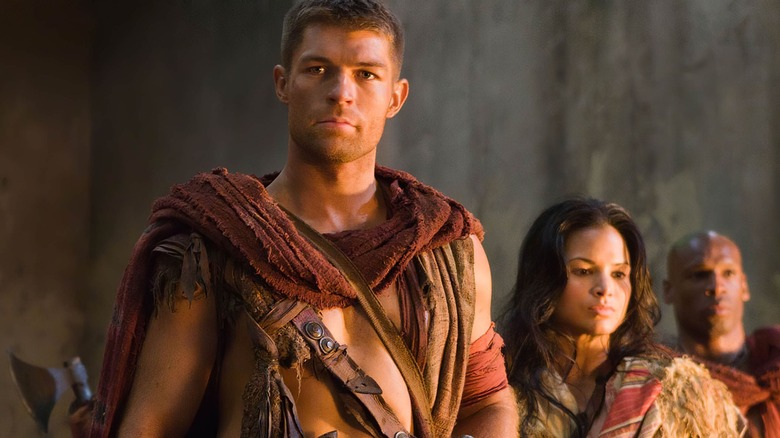
In Season 1 of "Spartacus," the titular gladiator (Andy Whitfield) has some beef with Batiatus, who purchased the former on a whim, for training purposes. By the end of the season, Spartacus kills Batiatus, after which he vows to make "Rome tremble," marking a drastic shift in his perspective. DeKnight uses Batiatus as an example of a justified character death, as the story cannot move forward without it, even if it means that the show is now deprived of such a compelling antagonist:
"A good example is John Hannah from season one. His portrayal of Batiatus really brought something fantastic to the show. But for the story to continue, Spartacus needed to kill him for that season to have its closure and to feel like the hero had a major victory in moving forward in his story. So for that reason, a really fantastic character and a fantastic actor had to go [...] So I definitely miss John Hannah on the show, as I'm going to miss everyone that was killed off this season. But I don't regret any of those."
The vacuum left behind by Batiatus is filled by Glaber (Craig Parker) in the second season, who is hell-bent on stopping the slave rebellion before it can gain a hold over the nation. Glaber isn't too adept at political scheming, as he wears his disdain for others like a badge of honor. This inadvertently works against him in the end, as Spartacus (Liam McIntyre) exploits Glaber's hubris to ragebait him into ushering in a grisly death. It is a gory, cathartic moment (Spartacus drives a sword down his throat; it isn't pretty) that lives up to everything "Spartacus: Vengeance" sets up and promises to deliver.