

Brad Pitt Almost Destroyed This Underrated Rachel Weisz Drama
Director Darren Aronofsky exploded onto the indie movie scene in 1998 with his ultra-low budget freakout "π." It was an intense, out of control math lesson about pattern obsession, religious numerology, and the mob. What's more, it came packaged with one of the more striking electronica soundtracks of the era, featuring artists like Aphex Twin and Massive Attack. Made for only $132,000, it earned $3.2 million at the box office. Aronofsky was, very suddenly, a force to be reckoned with. The director fulfilled that promise in 2000 with the release of his heavily researched (and heavily rehearsed) drama "Requiem for a Dream," an unflinching, ultra-stylized look at the damages of addiction.
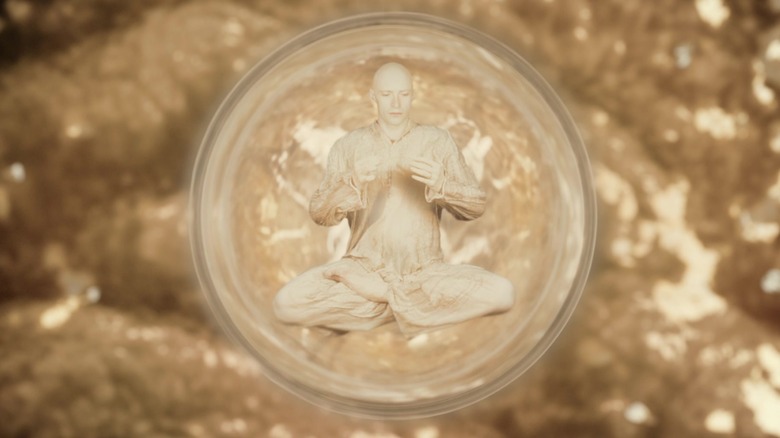
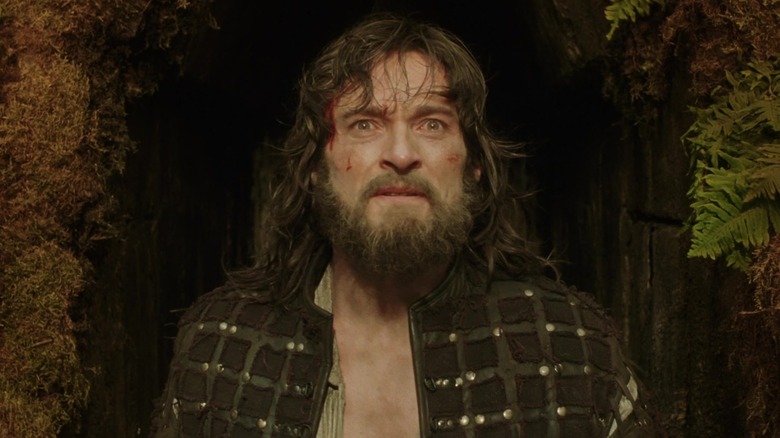
Unfortunately, Aronofsky kind of hit a wall with his third feature: a cosmic love story titled "The Fountain." His most expensive film up to that point, "The Fountain" cost $35 million to make and was distributed in North America by Warner Bros. It was Aronofsky's first big studio project, and he seemingly felt the need to take big swings and tell an epic story. The movie's narrative is divided into three time frames, each of which follows a different character played by Hugh Jackman. There is a segment set the 16th-century (where Jackman plays a conquistador named Tomás Creo), a segment set in the present (where Jackman plays Dr. Tommy Credo, a surgeon), and a segment set in the 26th century (where Jackman plays "Tom the Space Traveler," a bald monk-like figure sitting on a floating island with a massive, dying tree).
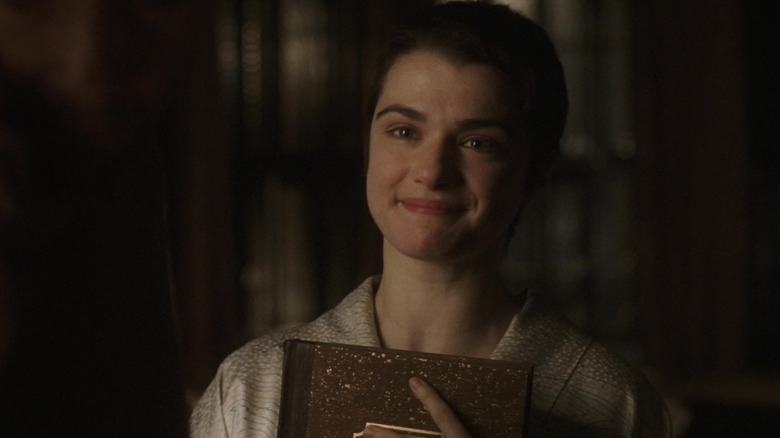
In all three segments, Rachel Weisz plays the Jackman character's true love. The present-day sequences are the most tragic, as the Weisz character is wasting away from cancer. Naturally, all three timelines eventually intersect in a strange, spiritual, cosmic fashion.
"The Fountain" earned only $16.5 million at the box office, making it a legitimate bomb. It also had a troubled production, having almost fell apart entirely when its original leading man, Brad Pitt, dropped out unexpectedly. It was only through luck that Jackman was ultimately available to take his place.
Brad Pitt dropped out of The Fountain right before the start of filming
Production on "The Fountain" was a long time coming. Aronofsky had come up with the idea for the film as early as 1999, when he was still working on "Requiem," and immediately brought it to Warner Bros. for consideration. Luckily, he already had a famous leading man interested in starring. As Entertainment Weekly reported in 2006, Brad Pitt loved Aronofsky's script and signed on to play the three Tom characters as early as 2001. Aronofsky then began exploring the movie's world, refining his screenplay and coming up with visual concepts as he drew inspiration from films like "Aguirre, the Wrath of God" and "The Holy Mountain." By the time production was about to get underway in 2002, Aronofsky had already spent a notable portion of the movie's budget.
This led to a brief period of budget renegotiating, but everything seemed like it was coming together smoothly after that. Sets were being built, the script had been polished to Aronofsky's liking, and Pitt was ready to show up for work, all to the tune of $18 million. And then, mere weeks before filming was slated to start, Pitt quit. It seems that he had made some requests for the script that weren't honored, so he instead left to go work on "Troy" (a swords-and-sandals epic that Pitt isn't exactly proud of).
Speaking at the movie's premiere at the 2006 Venice Film Festival, Aronofsky admitted that he didn't really know why Pitt split, stating (via The Guardian):
"It is like breaking up. If you break up with someone after two and a half years' preparation, it is hard to say if it was one thing. It wasn't like he left the toothpaste cap off the toothpaste."
However, the filmmaker also went on to point out that Pitt's involvement with the project was what attracted all that initial financing. While Pitt may've left, the infrastructure was still in place to keep "The Fountain" going. It took a few more years of development and recovery, but Aronofsky eventually got the movie back on track.
Darren Aronofksy couldn't give up on The Fountain
By 2006, when "The Fountain" finally got made, Aronofsky was able to look back and cite oh-too-familiar artistic differences as Pitt's impetus for leaving. But he also knew that Pitt having initially agreed to star in "The Fountain" was the reason it even got made at all. It also helped that Aronofsky had become mildly obsessed with the film, loving the work he had already put into it. Although he sought additional projects after Pitt's departure, nothing seemed to be grabbing him. He slowly drifted back to "The Fountain" and work began afresh, this time with Jackman and Weisz starring. At the movie's premiere, he also recalled a night where he looked over all the books he had read to prepare for "The Fountain" and realized the film was "still in my blood." As for Pitt, Aronofsky explained:
"The only reason the film was happening was because of Brad. I think, creatively, we grew apart. By the time it was ready to go, he wasn't ready to go ... and so it fell apart."
Surprisingly, the version of "The Fountain" that was to star Pitt contained much larger and more ambitious set pieces, having been granted an impressive budget of $70 million. When it was re-developed with Jackman, however, the budget was halved, and Aronofsky excised some of the costlier portions of his script.
When the film finally came out, its heady, psychedelic tone and strange, century-spanning love story made it a hard sell to mainstream audiences. Critics, meanwhile, were split, with many of them feeling the film was too ambitious for its own good. If you ask me, an abundance of ambition, especially on a spiritually lofty art piece like "The Fountain," is no bad thing. Someone has to push the envelope and force studios to make bold, abstract, college thesis style movies, even if they fail. "The Fountain" isn't wholly successful and isn't commonly ranked as one of Aronofsky's best movies, but one can be grateful it exists at all.