

The Only Living Pickpocket In New York's Noah Segan Learned Two Key Things From Rian Johnson [Exclusive Interview]
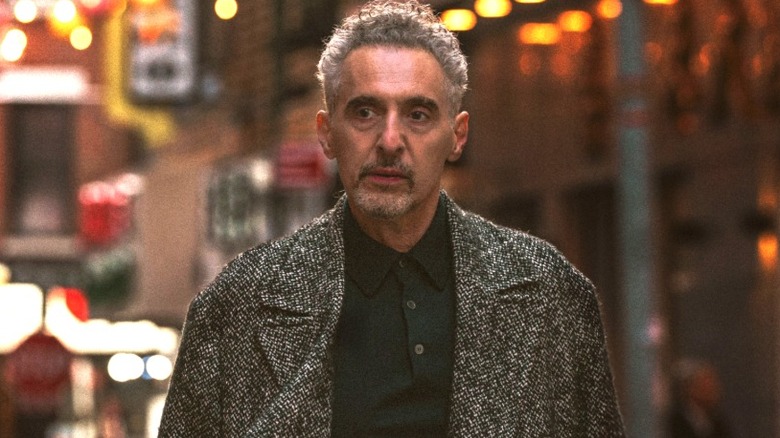
"The Only Living Pickpocket in New York" is one of my favorite films of 2026. In some ways, it feels more like a 1976 movie than something from 2026. The hook is that it's a street-level crime story about a past-his-prime pickpocket who robs the wrong guy and subsequently finds himself in over his head. (In an era in which high concept pitches reign supreme and world-ending stakes are often the name of the game, it's refreshing to see something so comfortably small-scale.) The film has a jazzy, bouncy, brassy score, gorgeous cinematography, and lovely moments for terrific aging character actors like John Turturro, Steve Buscemi, and Giancarlo Esposito.
But it's also perfect for 2026, because the film is really about an old-school analog mentality crashing into the digital era and realizing that the old ways might no longer be equipped to thrive in modernity — or even survive at all. What good is the ability to steal someone's wallet if no one carries cash anymore? There's a beautiful, wistful tone to the movie, which proudly romanticizes New York City and packs artful intentionality into every shot. It's a joy to watch and an extremely satisfying experience, thanks in large part to writer/director Noah Segan's excellent direction and tightly plotted script.
I caught up with Segan over Zoom to talk about what he learned from his longtime collaborator Rian Johnson, romanticizing outlaws, how the memory of actor/magician Ricky Jay influenced the movie, capturing John Turturro's dance moves, and more. The majority of this conversation is spoiler-free, but we do talk about the movie's final moments near the end. I'll mark that section with a spoiler warning.
[Note: This interview has been lightly edited for clarity and brevity.]
What Rian Johnson taught Noah Segan about directing
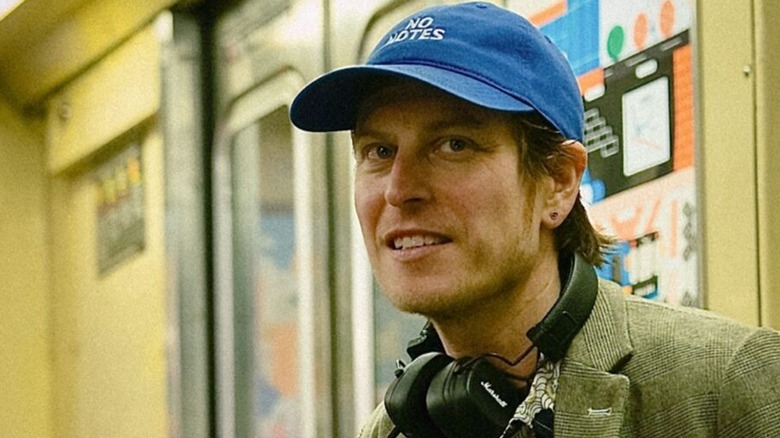
It's such a pleasure to talk to you A) because this is one of my favorite films of the year, and B) because I've also been a fan of your work as an actor for a long time. Somehow it's been 20 years since "Brick" came out. That movie was huge for me when that dropped.
Noah Segan: It's hard to believe I was only six years old when we made that movie. [laughs]
[laughs] I've loved all of your collaborations with Rian Johnson over the years, and I was wondering if there's anything specific that you can think of that you learned from watching him that you were able to put into practice when making this movie?
I mean, so much. I think Rian is my biggest influence, not just as a filmmaker, but frankly, as a person in terms of how you approach your family, your collaborators, the people that you work with. The escalation from the classic "we have a no-jerks policy" ... that's not enough. This is like a "we have fun" policy. We laugh our way through challenges. We smile as it gets harder and link arms and figure it out. And that mentality is really our speed.
I think from a technical standpoint, he's such a great writer that I think obviously having his advice is paramount, but just watching him work on screenplays here [points to his head] initially is very helpful because it sort of gives you confidence that your brain can work. That when you get to this point, it's like, "You should have it up here, man. It should really be taking up a lot of space in your brain." And that's a nice thing because that kind of keeps it warm. It keeps it in you.
The Only Living Pickpocket in New York is a personal story about analog vs. digital
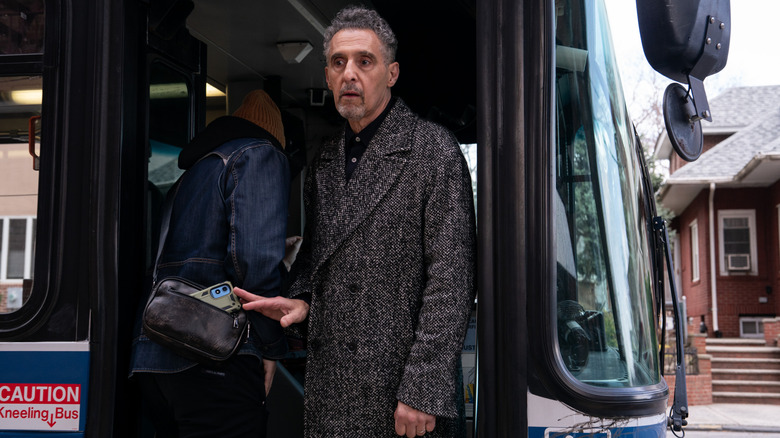
Tell me about the dichotomy of Harry as this old-school guy who is colliding with the dangers of a modern world that he doesn't quite understand. That basic structure, I think, has been in Westerns, film noir, a ton of stuff. So how did you land on that as a foundation for this story?
Well, I've always been interested in that, in that dichotomy, whether it's, as you said, Westerns where you talk about the railroad coming through town. Or science fiction, for that matter, where you talk about technology having a bigger or scarier impact than we thought.
In my case, I think this is a very personal sort of investigation of analog versus digital, and that's something that I deal with every day because I operate in that world. You know what I mean? I'm a very analog guy and I like to spin records and I like things that last a long time and I like to fix things and I have an old car, all that stuff. But man, I watch stuff on a TV. I have a cell phone. I'm not an old fuddy-duddy, but I'm very aware of the difference between something that is analog and tactile and mechanical versus something that exists via software and hardware.
If I encountered an actual pickpocket on the street, I would think that they were a scumbag, but watching John Turturro do it, I'm kind of rooting for him. And I mean, it helps that he's stealing from people who maybe seem like they deserve it. But I'm curious if you ever ran into any struggles at any point along this process of romanticizing a profession where people are fundamentally doing something that's kind of messed up.
Well, I mean, luckily there's a great history of romanticizing outlaws in cinema and in music and in books. And that's not something I can take any credit for, the idea of the sort of heroic outlaw. But I think that the idea of someone who is a criminal or a bad guy being thrust into a situation where he has to act heroically is very powerful, and I think that was something that I was going for. I wanted to show what happens when someone who has maybe spent most of their life doing the wrong thing decides to start doing the right thing.
The Only Living Pickpocket in New York's score is one of the best of the year
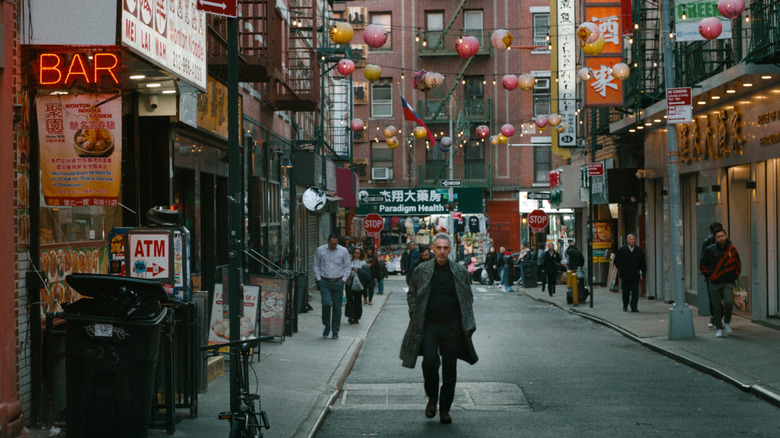
I also loved the score of this movie. It might be my favorite score of the entire year. Can you tell me about the way that you approached including music?
Gary! Gary, Gary, Gary. Man, Gary Lionelli, he's very unassuming. This is how a lot of them are. They're like people you work with where you're like, "Oh, you look like a nice dad. You don't look like a guy who's got a suite of badass horns behind you." Very, very, very sweet, nice guy. Gary's very prolific and has done a lot of music for Ezra Edelman's movies, and he did the music for the incredible O.J. Simpson documentary that I loved dearly.
So good.
Great storytelling and great music and great everything, and I love Edelman's music and was already sort of a fan. And then I discovered that Gary had done the music for a documentary about Gordon Parks and had really done his take on Gordon Parks-inspired, Blaxploitation-inspired, Isaac Hayes-inspired '70s jazz funk rock score. And I was like, "Oh, he gets it. He knows where that zone is. He knows the directions to that spot." And then it was just a party after that.
That's awesome. Do you know if there's a plan for a vinyl release? Do you have any control over anything like that as a director of a movie?
Well, one of my absolute closest friends is Mo Shafeek who runs a company called Mutant, and Mo and I have been very close for many, many years, and he's a dear, dear friend. And this movie would not be complete without Mo putting out this record. It's got to happen.
That's perfect.
It's got to happen, guys. So I don't want to blow up that spot, but nobody will be shocked.
How the scene of John Turturro dancing came together
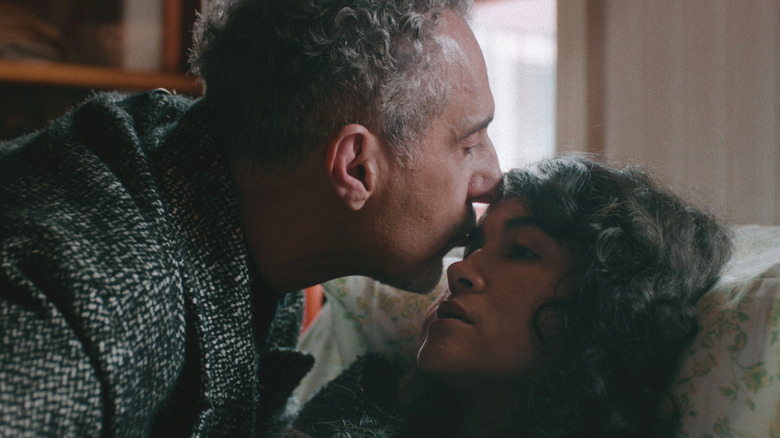
So we see in this movie that Harry's wife, Rosie, requires a significant amount of care and you establish their apartment as this safe zone that is then intruded upon by these young punks. And as an audience member, I had almost a physical reaction to seeing these guys be in that place. It's so disturbing. And I was wondering if you could tell me about achieving that visceral reaction with that part of the film.
Well, I appreciate that. I think what was important to me was to have that environment feel safe and to feel warm because I think so often, we see people who are working class or don't have a lot of means in sort of sad homes, and that's not the case here. This is a warm home. This is a home where this man, who, frankly, has not taken care of much in his life as we come to learn, is taking care of his loved one. As a result, it should feel warm and it should feel safe and somewhat comfortable. And I think it does. And in fact, there are moments of joy there.
So yes, once someone does intrude on that, I would hope that the natural reaction is, "Get out of here. No, this is their safe space!"
Well, you mentioned the moments of joy, and I think an image that's going to be burned into my brain for a long time is Turturro dancing. And I was wondering how much of that was you just setting up the camera and letting him cook? How much did you guys actually talk about what the physicality of that's going to look like? Talk me through that part of it.
So the story goes that I put together a playlist of just songs that I thought felt like the movie and felt like moments in the movie, and gave that to John. And one of the songs was Odyssey's "Native New Yorker." And he called me up one day and he said, "Man," he goes, "I used to listen to this song in discotheques in the boroughs. I'd be in Queens and we would go to the discotheque and they'd play 'Native New Yorker' and people would go wild. We loved that song." And I was like, "That's great, man." I was like, "I wasn't there, but I'm there with you now in spirit." I put the song on there for a reason. Like, "That's awesome. That's the reason I put it on there. Great, enjoy."
Then he sent me a video one day of him in his office at home, and he was just dancing to the song. And I was like, "Oh, man, he's really riffing. He's really in it." And we started talking, like, "Man, wouldn't it be fun to have..." — because he loves to dance. John is a great dancer, and we all know that. We've seen him dance before, and he's invested a lot of his energy and time into dancing as a form of expression, and it works very well with him. And he moves so well. He's just a great mover. And we thought, "Wouldn't it be great if he danced for Rosie?" And he suggested that moment.
Of course, a movie like this, you've got 25 days, everything is scheduled down to the absolute minute. There's no room to schedule a four-minute dance scene. So we waited until the end of the day, and everybody left, and they're packing up in all the other rooms. And John; Sam [Levy], our cinematographer; Karina [Arroyave, who plays Rosie]; and myself put the record on and just did one take.
Wow.
And that was it.
Harry's superpower was inspired by magician Ricky Jay
Harry always seems to be one step ahead, so I was wondering if you could talk about formulating and executing those reveals where there are little flashbacks and stuff that kind of let the audience in on the secret that you've been holding as the filmmaker of what this character's been really up to the whole time.
I think a lot of it was inspired by ... I had gotten to know, for just a short period of time before he passed on, the great magician Ricky Jay. And I thought about Ricky a lot because he was an actor and he was a very good actor, but he was also a character. And there was the character of Ricky, there was the work that he put into both his card work — his sleight of hand, which of course is the same skill set as a pickpocket — and his mentalism, his ability to sort of track what people were doing and what they might do and the math that goes into that.
It was so fascinating to me that I thought, "Let's give Harry that superpower. Let's not just make him a physical thief by making him a pickpocket. Let's give him the mental skills to steal a little something from our brains as well."
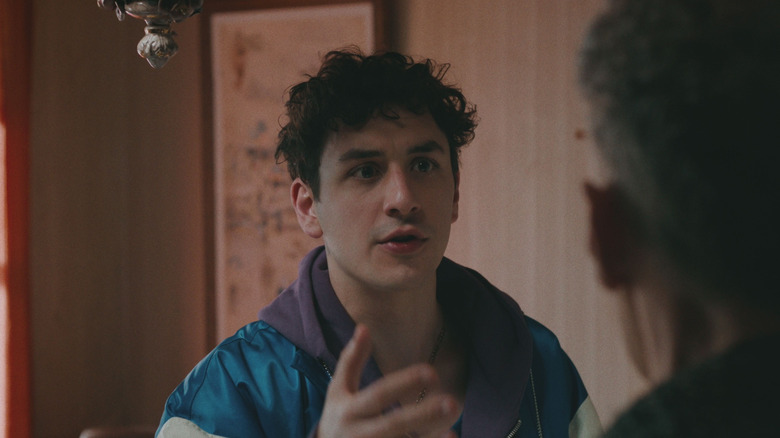
Can you talk about crafting the dialogue for the gangster kid? Because he speaks in a much different way than everybody else does in the movie.
Yeah, yeah. I think obviously, it's a genre movie and it's a crime movie and you got this whole old-school vocabulary that's going to go into these guys who are kind of ... they're not really gangsters, they're criminals, but they have their style and that's fun to write and I think it's fun to say and I think it gives us a little bit of a window into who they are. I thought, "Well, I've got to do the same for these kids," but ugh, the way that they f***ing talk is like ... it grates on you. And then I thought, "Well, that's actually good! You kind of want your bad guy to kind of irritate you."
So it was about collecting all the irritating stuff that I hear when I go on the internet. Because I don't have a lot of techie bro friends, thankfully. I have some, but they're not bad guys and they don't have bad vocabulary, but there is a lot of that out there. But I think the idea of weaponizing this stuff, like the idea of planned obsolescence, to weaponize that and to say, "This is a way of telling you something bad, and it is bad," whoa, that felt like that played into where we wanted to go.
These movies served as cinematic inspirations for The Only Living Pickpocket in New York
[Note: At the end of our conversation, I offhandedly mentioned that I wished I had more time because there were other things I wanted to ask him about. This was slightly greedy on my part, because 15 minutes is more than some junkets are able to provide, but I primarily said it to communicate to Noah that I genuinely loved his film and had thought a lot about it. I wasn't expecting anything from it. But to my surprise, Noah said he'd be happy to continue the conversation via email if I had any further questions, so the following exchange was conducted in that fashion immediately following our Zoom call. Thanks to Noah for caring enough to give me extra time, and to the folks at Sony Pictures Classics and ID-PR for facilitating this.]
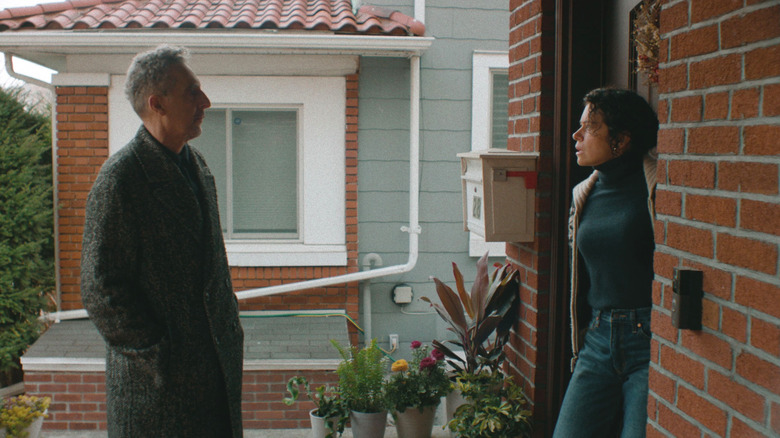
You mentioned the 1970s in our conversation, and this movie reminded me of a 1970s film in several ways. Did you have anything specific in mind when it came to cinematic inspirations?
We ran the gamut of inspiration from the '70s through the '90s. Films like "Friends of Eddie Coyle" and "Mikey and Nicky" were inspirations — funny, both respectively set in Boston (ew!) and Philly (yay!), but tonally right on. We also looked at a lot of great New York madcap caper-comedies like "Desperately Seeking Susan," "The Linguine Incident," and "Something Wild." And then the scrappy but elegant work of Hal Harley and Whit Stillman had a big influence on me from the '90s.
How Noah Segan captured the final shot of the movie, and what it represents
[Note: The following section contains spoilers for "The Only Living Pickpocket in New York."]
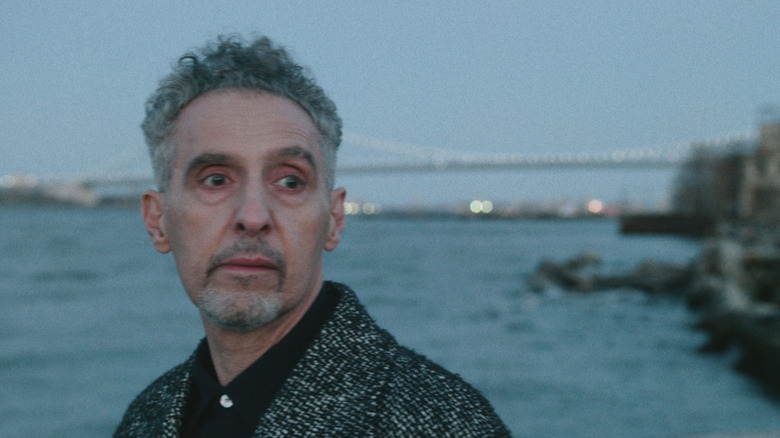
Harry does always seem to be one step ahead, and he takes care of his family, but ultimately, he can't save himself, and that's another way it reminded me of a '70s movie: He dies at the end. But there's a beauty and an acceptance to it, and the way you get that information across — with the cut and then cutting back and he's not there, and then that long credits shot of the city — is so elegant. Was that always how you saw this story ending? And given that short schedule you mentioned, how many takes did it require to nail that long final shot?
Interesting that you think he dies at the end! We should discuss why you think that!! I joke, but there was a distinct choice to show Harry leaving on his terms, giving him the dignity of riding off into the sunset, almost literally, like a hero from a Western. The intention was for that shot to always be our final, and let Harry walk or disappear from it, leaving us with his city. That specific editorial choice was hard to find, and a combination of trying lots of different choices. It was Hilda, our editor, who had the inclination to cut out the sound to help take us into Harry's perspective, and Rian Johnson suggesting we cut away to something from his last look. I felt like Rosie's kiss was a great internal moment for Harry to use. We did the take four times, I think, and used the last one! Each take lasted about seven minutes, so we really did see the sun start to set. That was magical.
I know you've already had a long journey with this once since it debuted at Sundance back in January, but do you have any idea what the next movie you direct might be?
I do! There are a couple things we are working on, hoping to shoot at the beginning of the year. As with most things in our business, it's all about which happens to be the first to get traction. But what is most important to me is maintaining the team as much as possible, from T-Street to Katie and Leo, to my relationship with the cast and crew, like Sam Levy, our cinematographer. Whatever we do, we're going to keep the band together.
"The Only Living Pickpocket in New York" is in limited theaters now and expands nationwide on October 30, 2026.