

Zach Cregger's Resident Evil Has Way More Visual Effects Than You Realized [Exclusive]
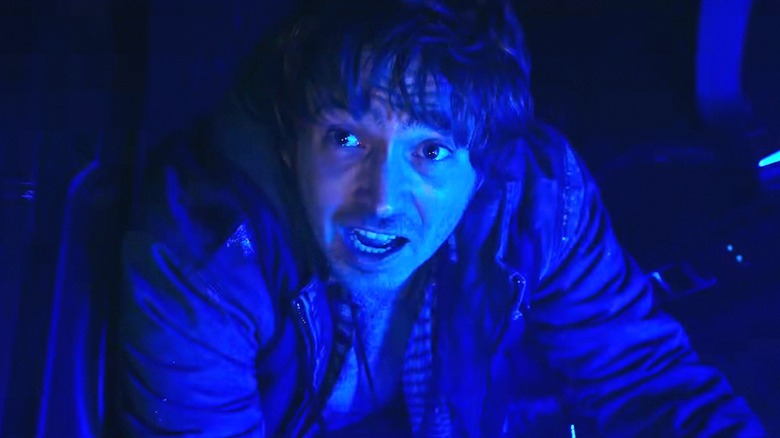
Zach Cregger's "Resident Evil" movie is a blast to watch even if you've never picked up a video game controller. The story is set in the world of the games but is otherwise totally original, and follows a regular guy named Bryan (Austin Abrams) as he's thrust into what is essentially a zombie outbreak. Bryan encounters all sorts of disgusting creatures on his journey to deliver a mysterious package to a hospital facility, and naturally, audiences will pick up on the fact that several of those creatures were created using visual effects.
But in this era, which has seen multiple filmmakers minimize the work of their effects teams in an attempt to convince audiences that those projects were primarily shot practically, it's important to give credit where it's due. To be clear, I don't think Zach Cregger is guilty of this. But many other directors are. (Meanwhile, if you're looking for the most influential VFX artists of all time, we have a list for you.)
I recently had a chance to speak with Weta's Kevin Smith, one of the visual effects supervisors of "Resident Evil," who clued me in to exactly how important visual effects were to this particular project: "83% of this movie by runtime has visual effects in it," he said, highlighting how deceptive much of that work is in the final product.
"I know people are going to leave this movie and go, 'Well, yeah, there was a couple monsters and the guys jumped from the thing, but I heard online and it was all practical and so there wasn't really that 83%.' And a lot of it, you just don't know. It's just such a good movie and it's so compelling. And honestly, once it kicks off, this movie, you've seen, it's relentless. It's pedal to the floor, let's f***ing go. And you just don't pay any attention to how [many] visual effects [there are]. You're just watching a movie, which is, for us, one of the best compliments you can get."
Resident Evil's biggest monster desperately needed recognizable details
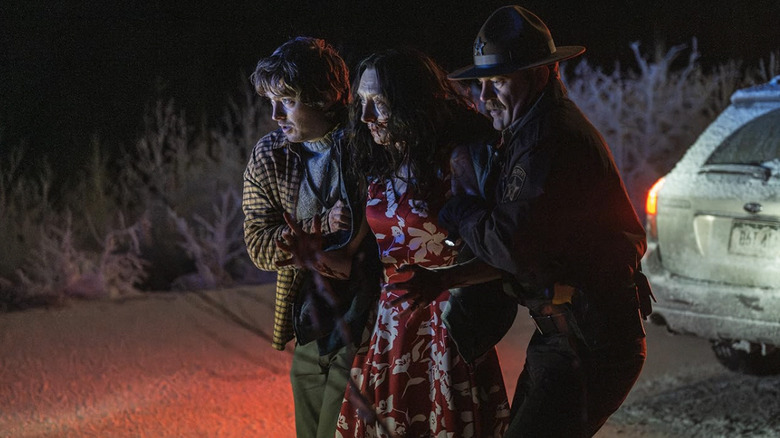
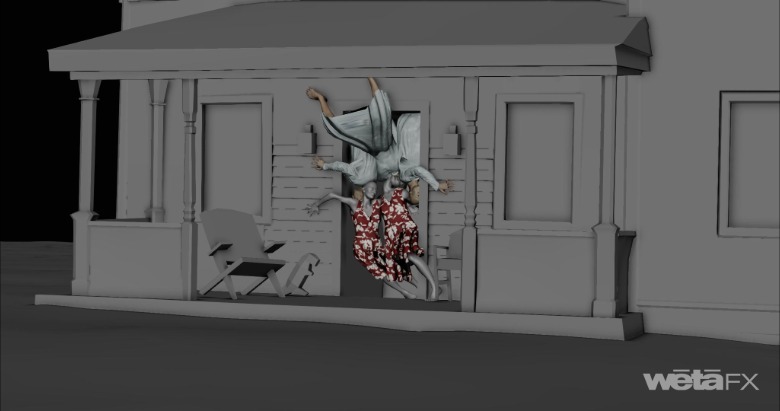
One of the creatures I was curious about was the rolling ball of characters that's chasing Bryan throughout the movie. Internally, Kevin Smith and his team referred to this entity as "the Pedestrian," since it started out as a shoeless woman on the side of the road before assimilating multiple people into a writhing sphere of chaos. Obviously, visual effects were crucial to bringing this character to life, but it wasn't as simple as just dialing up some ragdoll physics in a computer program and calling it a day. It was important to Cregger and his team that in this world of disgusting creatures, the audience instantly understood that the Pedestrian is the same being throughout:
"One of the big things from the [filmmaking team] was making sure that since you didn't see it go from three to four to five to six [people assimilated into one being], they wanted the viewer to understand that it is the same monster. So we made the red dress that the Pedestrian's wearing, which is very recognizable, that moved around on the Pedestrian all over the place, just so shot to shot, it's like, 'We really want to make sure we recognize it as the Pedestrian, so let's put the dress here or the little girl's whatever, shoe, [or] the green pajamas.' And we made sure we got all the shoes people were wearing right so that you really understood that it was this one creature single-mindedly pursuing Bryan."
 Weta FX
It's de rigueur to bash CGI in modern blockbusters, and I understand why. Many films seem to over-rely on visual effects to create spectacles that frequently feel empty, or to distract from poor storytelling decisions. But I like to highlight positive examples when they come along, and the smart decisions implemented in "Resident Evil," like the identifiers on the Pedestrian, never felt distracting or eye-rolling.
"Resident Evil" is still in theaters, so check out the highest-rated video game movie ever and judge for yourself.