

Ted Lasso's Downfall Can Be Traced Back To One Moment
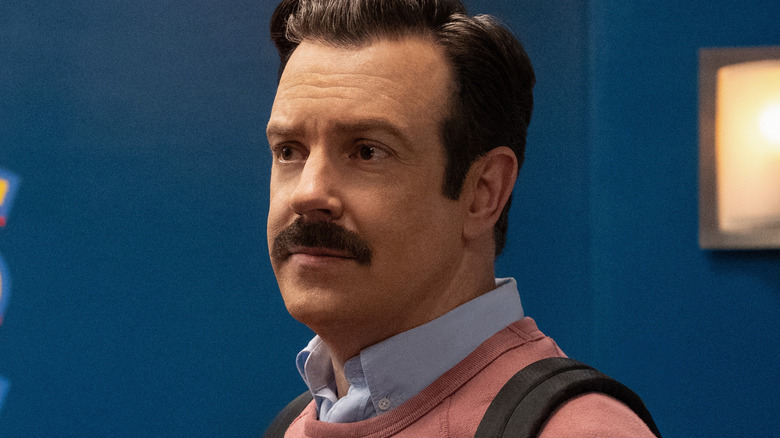
The first season of "Ted Lasso" is a breezy, funny, underdog/fish-out-of-water story about a dorky American football coach (Jason Sudeikis) who's unexpectedly hired to coach a British soccer team. The owner hires him because she secretly wants her team to lose (it's sort of a "Major League" situation), but Ted's aw-shucks manner, gee-whiz aphorisms, and heart-on-his-sleeve earnestness wins over both the owner and the audience. That season is widely beloved, partially because it provided a warm escape from the horrors of 2020. The show continues to be popular (it's currently wrapping up its fourth season), but that popularity ended up being a double-edged sword: Apple knows it has a hit on its hands, so it keeps renewing "Ted Lasso" long after it should have hung up its cleats.
I suspect most viewers know that the series hasn't ever recaptured the highs of Season 1, but when did its downfall really begin? I've pinpointed the specific episode where it passed the point of no return: Season 2, Episode 7, "Headspace." That's when it became clear the show had taken two distinct wrong turns, and my stomach dropped when I realized we were going to have to watch the consequences of both of them play out over the course of multiple episodes.
Ted Lasso's focus on therapy took the show in a different direction
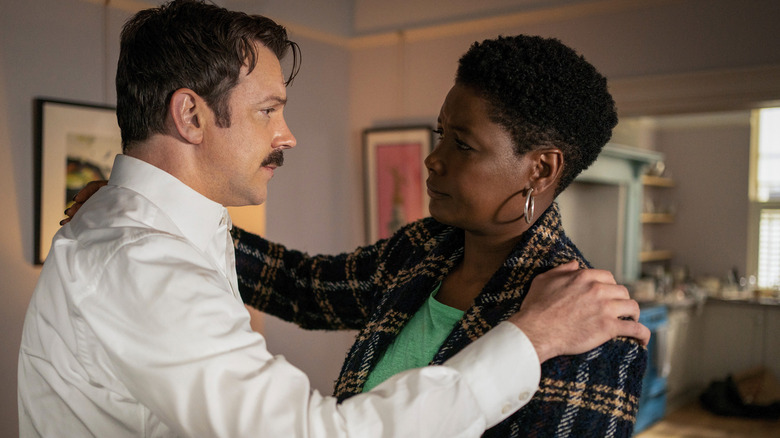
It should go without saying, but this feels important enough that I'm going to say it anyway: Therapy is great and a net positive for cultures that, for a long time, seemed to valorize the idea of doing everything yourself, never asking for help, and bottling emotions. Thankfully, the stigma of therapy has largely dissipated in real life over the past several years, but unfortunately, therapy and therapy-speak has also seemed to work its way into more movies and TV shows than ever. With an extremely small number of exceptions (perhaps most famously in "The Sopranos"), therapy is simply not cinematic. It's literally the opposite of the "show, don't tell" mentality that has been a pillar of dramatic storytelling for a hundred years, and it frequently results in characters stating things out loud that could be much more interestingly revealed through action.
When Ted starts suffering from panic attacks in Season 2, and therapy enters the picture, the tenor of the series changes dramatically — and not for the better. I won't speak for everyone, but for me, the show wildly misjudged how interested I was in exploring its lead character's interior struggles — especially when, and this feels harsh to say, but, to use therapy-speak, I have to "speak my truth," Ted's struggles aren't even that compelling. Everyone has a different tolerance for this stuff, but for me, this decision changed the DNA of the show for a while, and it never fully recovered.
I'm all for creators throwing narrative curveballs to keep a show feeling fresh, but to quote Switch in "The Matrix": "Not like this ... not like this."
Ted Lasso's Nate storyline was narratively disastrous

Speaking of "Ted Lasso" wildly misjudging my interest in things, let's talk about Nate. On paper, the rise of a kit man becoming a respected assistant coach was in line with the heartwarming underdog qualities of Season 1. But Nate's inadequacy about his new position and his fixation on social media praise, spurred on by his father's lack of approval, festers into something repulsive, causing him to lash out against team members. His "Wonder Kid" moniker almost instantly goes to his head, and he begins to resent Ted, even though he wouldn't be where he is without Ted giving him the opportunity in the first place. The show's tone sours even further as Nate becomes a full-blown villain in the Season 2 finale, only for the show to make the brutal miscalculation that we want to see him form a relationship with a restaurant hostess in Season 3.
By the time he half-heartedly reconciles with Ted at the very end of Season 3, it's way too little, way too late. He doesn't even properly apologize before he's hired back at AFC Richmond. Just because we understand the source of a character's trauma doesn't mean it excuses their behavior, but the show's writers were willing to sidestep the consequences of their own actions in order to arrive at the ending they wanted.
A much worse offender than the tepid therapy storyline, Nate's "journey" left such a rancid taste in my mouth that it makes me think less of "Ted Lasso" and everyone responsible for it.