

7 Years Ago Today: Sylvester Stallone Released One Of The Worst Legacy Sequels In Theaters
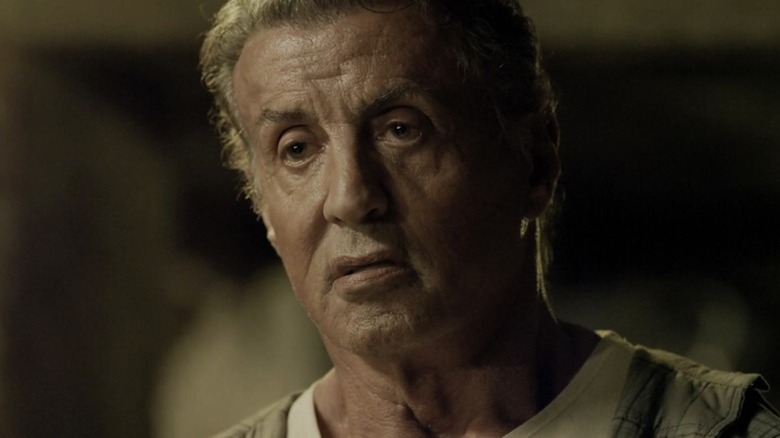
It's always been apparent that the "Rocky" franchise is Sylvester Stallone's means of cinematic therapy. I always credit this observation to Patton Oswalt because he was the first person I heard give voice to it, but it makes sense. "Rocky" is his rags-to-riches success story. "Rocky II" is about dealing with sudden fame. "Rocky III" is about the fog of superstardom, "Rocky IV" addresses the fear of mortality, "Rocky V" continues this theme whilst acknowledging his career slippage, "Rocky Balboa" is an amiable rage against the dying of the light, "Creed" is the passing of the torch, and finally, the lousy "Creed 2" is about Stallone being unwilling to cede the spotlight. Even when the sequels weren't quite up to snuff, it was undeniably fascinating to watch Stallone struggle with whatever life challenges he was facing via the Italian Stallion.
John Rambo is not so personal for Stallone, though he should be. The star gave one of his very best performances as the Vietnam vet who's forced to use his deadly Green Beret skills against a bullying Washington state sheriff (Brian Dennehy) and his sadistic officers. While the selling point is the action and Rambo's ability to improvise booby traps or "eat things that would make a billy goat puke," Stallone powerfully conveys the PTSD anguish that the former soldier can't escape. That he's no longer welcome at home after serving in an unpopular war only exacerbates his confusion. Rambo doesn't take pleasure in fighting an American enemy, and Stallone makes sure you can sense his grief as he defends himself.
Then Stallone turned this nuanced character into a cartoon, which is why the actor's final go-round in 2019's "Rambo: Last Blood" is so repugnant. It tries to make Rambo human again.
Rambo: Last Blood is an indifferent study in human cruelty
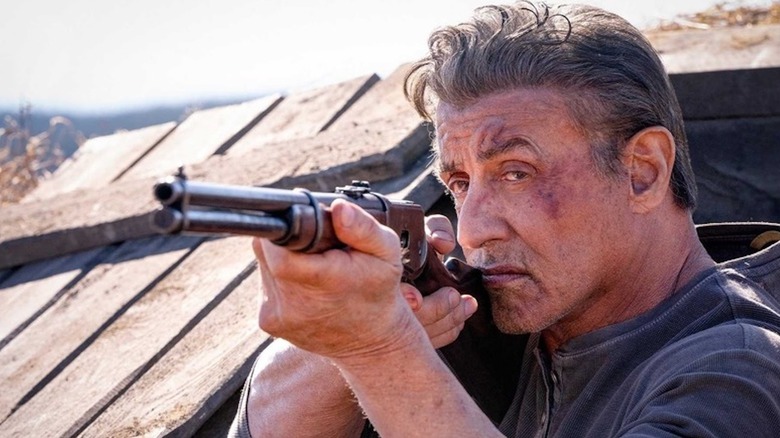
Released 11 years after the franchise's last installment, "Rambo," the mind-numbingly gory "Rambo: Last Blood" is a scaled-down revenge flick that finds our hero going all Paul Kersey on a Mexican cartel for kidnapping, drugging, and eventually killing his essentially adopted daughter, Gabriela (Yvette Monreal). The vibes are off from the very start: the budget is a reasonable $50 million, but the film looks considerably cheaper under Adrian Grünberg's direction. The cheapness is compounded by the movie's stereotypical depiction of Mexico as a cartel-run hellhole. This is explicit fear-mongering from Trump-supporter Stallone, and it's redolent of Michael Winner's wildly racist "Death Wish II." Sure, I've watched exploitation films that are far more morally repellent, but at a time when immigrants are being rounded up and sent to countries where they're not from, the tone is sour throughout.
As an action film, Grünberg is at least adept at staging set pieces (as he proved with the far superior Mel Gibson vehicle "Get the Gringo"), but they're so poorly lit and loaded with CG blood that nothing lands. So even if you were inclined to look past the racism and misogyny of the film for some cheap revenge-movie thrills, the inventive kills are all incredibly unsatisfying.
It's a limp, hateful send-off for Rambo, an achingly real character who deserved better. I'll give the final word to author David Morrell, who created this one-man army. "I felt degraded and dehumanized after I left the theater," he told Newsweek. "Instead of being soulful, this new movie lacks one. I felt I was less a human being for having seen it, and today that's an unfortunate message."