

What Happened To Justine Bateman From Family Ties?
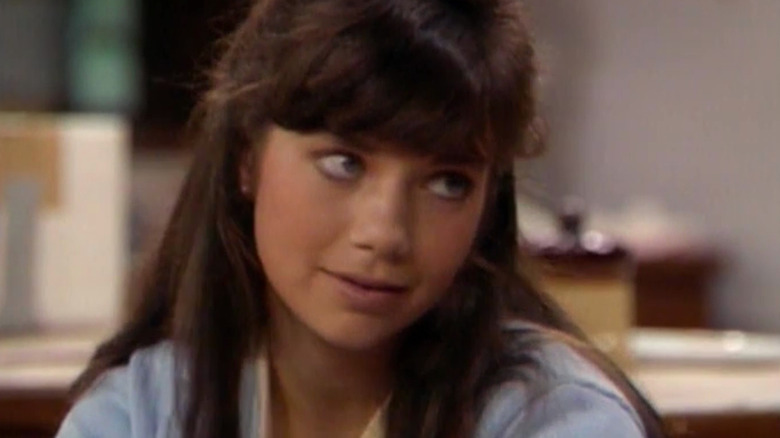
Justine Bateman's most prominent role came right at the beginning of her professional screen acting career, when she played Mallory Keaton on the hit sitcom "Family Ties." Mallory was the daughter of former hippies and ultra-left wing Boomers Elyse (Meredith Baxter) and Steven (Michael Gross) and the younger sister of the show's breakout character, i.e. Michael J. Fox's money-obsessed yuppie and Young Republican Alex. (Notably, Fox himself had to do some intense schedule juggling to work on "Family Ties" and "Back to the Future" at the same time.) Naturally, the series' humor came from the various characters clashing over their political and ideological differences.
Mallory, because she's obsessed with superficial things like fashion, is assumed to be shallow, though it's eventually revealed that she's quite intelligent and shrewd. Bateman starred in all 176 episodes of "Family Ties," which ran for seven blockbuster seasons from 1982 to 1989.
Nowadays, however, Bateman is probably better known for her appearances on Fox News and her more controversial political comments. Her brother, actor/filmmaker Jason Bateman, told Esquire in 2025 that he and his sibling don't talk much but that they still have rich conversations whenever they do. These days, Justine Bateman tends to say strident things about the current U.S. presidential administration and the state of modern politics, occasionally becoming the "main character" of 2020s online "discourse."
Since the days of "Family Ties," Bateman has continued to work on TV and in film, although she has pointedly taken a few breaks from acting and spoken out about the dangers of fame, declaring that it is temporary and cannot be relied on. She's also authored a few books, spoken out against AI, and even directed one feature film.
Justine Bateman hates fame and has taken a few breaks in her acting career
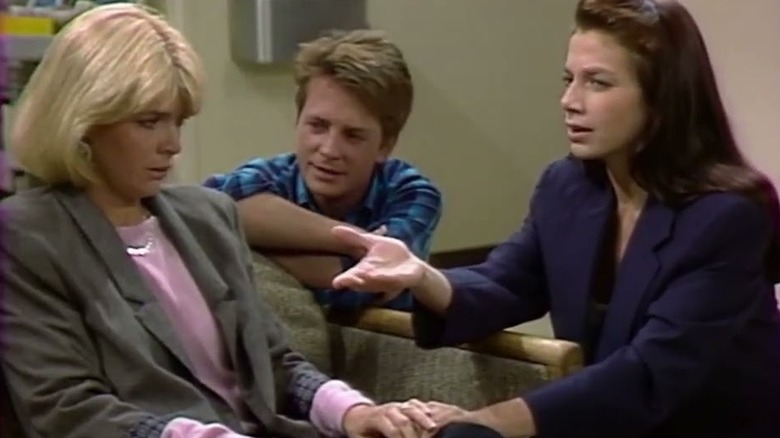
Back in 2018, Justine Bateman was interviewed by Vanity Fair, and she had some very salient things to say about the transient nature of fame. This interview came about in light of her book "Fame: The Hijacking of Reality," which is more of a media analysis than a memoir (which she hates). When you're famous, she wrote, "[People] see the fame, not you." She added that fame often brings along money, which, in turn, breeds security, good healthcare, and so on. But at the same time, it's transient, and it can be difficult to extricate one's sense of self from fame, especially if learned at a young age. Per Bateman:
"Whether it's abuse, or poverty, or a lot of money, or privilege, or whatever is, good or bad. [Fame is] going to work its way into each person's life differently. So, when fame is introduced quite early, it's almost impossible to unweave that aspect from how somebody understands how life works."
This would explain why, back in the early 2000s, Bateman took a break from acting to work on other projects. It was during this time she started a fashion business. That endeavor didn't last very long, though, and Bateman eventually returned to acting. In 2013, Bateman once again stopped accruing credits, this time presumably to return to college and get a degree in computer science and digital media management (which she did in 2016). Eight years later, she made her feature-length writing and directing debut with 2021's "Violet." That movie stars Olivia Munn, Justin Theroux, and Laura San Giacomo.
Justine Bateman's acting career extends well beyond Family Ties
In spite of those breaks, Justine Bateman's filmography is hardly empty. During and after "Family Ties," she took on a lot of TV acting jobs, appearing in single episodes of shows like "Tales from the Darkside" and turning up in TV movies and even educational specials. She was even in the notorious "How Can I Tell If I'm Really in Love?" special with her brother Jason, along with TV movies with titles like "Deadbolt," "Terror in the Night," and "A Bucket of Blood."
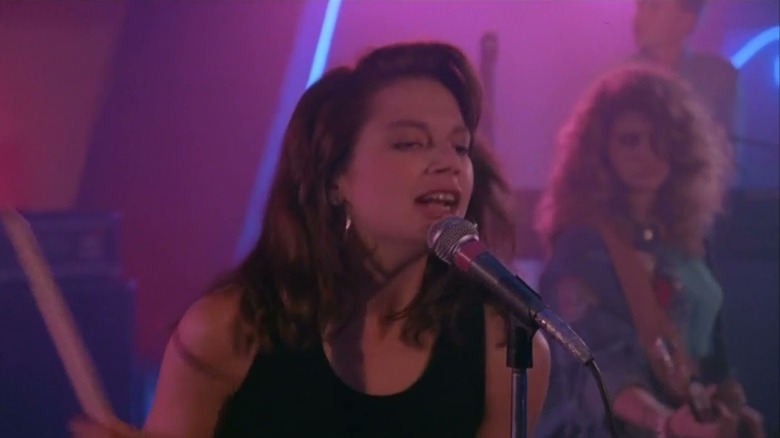
On the big screen, Bateman made her debut in the 1988 feature film "Satisfaction." The movie was about the struggles of a Baltimore rock band called The Mystery and features Trini Alvarado, Liam Neeson, and a very young Julia Roberts (plus Debbie Harry has a small role). From there, Bateman went on to star in mid-profile 1990s movies like "The Night We Never Met" and "Kiss & Tell," along with two episodes of "Lois & Clark: The New Adventures of Superman" and 22 episodes of the sitcom "Men Behaving Badly" (a remake of the badly aged British TV series).
Bateman later appeared in Noah Baumbach's movie "Highball" in 2002, but she mostly focused on TV, turning up in shows like "Out of Order," "Ozzie & Drix," and "Arrested Development," which starred her brother Jason. Bateman was also in 10 episodes of "Men in Trees," turned up in the bizarre Ikea-backed series "Easy to Assemble," and appeared in a 2013 episode of "Modern Family." She is still, it seems, tied to family.
Justine Bateman has taken on some controversial stances online
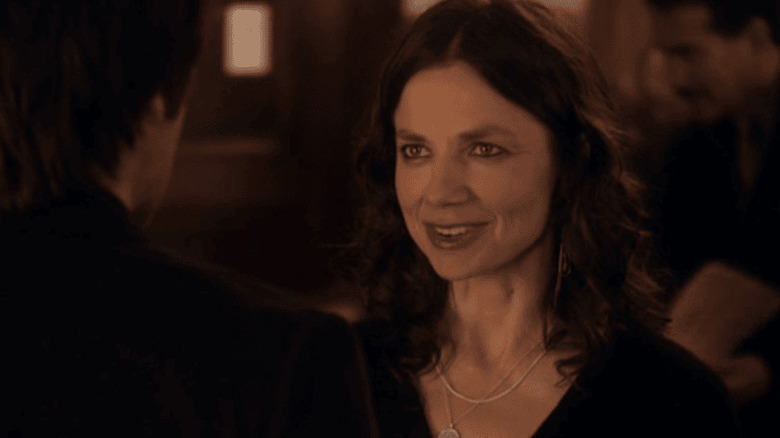
Of late, Justine Bateman has taken a hardline stance against the use of AI in entertainment. She was even named in a 2025 article by The Hollywood Reporter as one of the celebrity spokespeople trying to resist the rise of AI tech, stating that it takes the work out of a human's hands and robs movies of their originality. To quote her directly:
"That great shot at the beginning of 'Sunset Boulevard,' where you're looking up from the bottom of the pool past the body to the photographers. That's such an imaginative shot. They used a mirror to get it. If they had AI, they wouldn't have resorted to that. And we would have been robbed of one of the great shots in cinema."
Meanwhile, Bateman made the news when THR referred to her as a well-known supporter of U.S. President Donald Trump. She took exception to this statement and complained, although it's worth noting that she took to social media to express her relief when Kamala Harris was defeated in the 2024 U.S. presidential election. The New York Post has also covered her political views in greater depth. Bateman insists that she wants to remain apolitical yet appears wary of what she sees as a liberal bias in Hollywood, stating that she hates "cancel culture," a viewpoint often held by conservatives. Her views have been reported on by conservative media outlets like the Free Press and Fox News.
Now 60, Bateman can take her career wherever it needs to go. If she feels no impulses toward fame, she likely doesn't feel the need to keep acting. Or perhaps news appearances are giving her the high she seeks. She is married and has two children.