

Apex Stars Charlize Theron And Taron Egerton Wanted To 'Kill Every Single Trope' In Their Survival Thriller [Exclusive Interview]
Director Baltasar Kormákur typically makes muscular if slightly forgettable action fare, like the Mark Wahlberg-led "Contraband" and "2 Guns," the mountain climbing thriller "Everest," and the Idris Elba-punches-a-lion movie "Beast." He took an unusual (but welcome!) detour into romance for the surprisingly great "Touch" in 2024, but now he's back with a new survival thriller called "Apex," which seems like it was engineered in a lab to hit number one on Netflix this weekend.
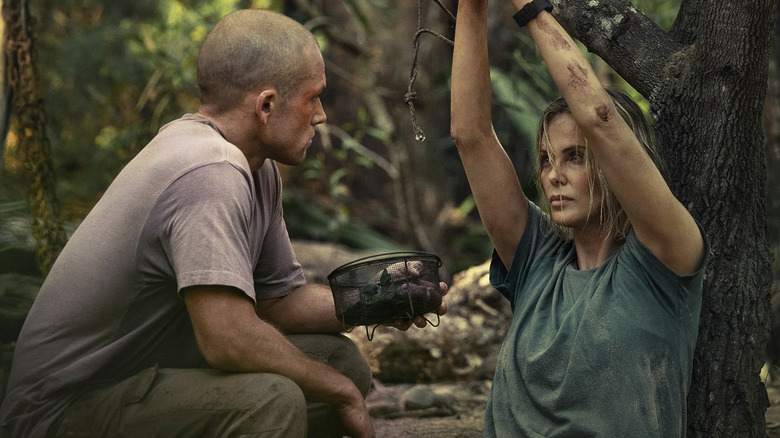
Charlize Theron plays Sasha, an adventurous woman who experiences a tragedy and copes with it by heading to Australia on a solo river rapids kayaking trip. Unfortunately, she crosses paths with Ben, a seemingly nice guy played by Taron Egerton who very quickly proves he's not so nice after all — he spends most of the film hunting her like an animal through the wilderness.
"Apex" is predictable but effective, and the two leads certainly give it everything they've got. Despite some occasionally wonky visual effects, you can tell that the actors fully committed to giving the audience a tactile, thrilling experience, and I was excited to talk to them about the physicality required to play these roles, subverting Egerton's "nice guy" persona, Theron's trajectory into becoming a full-fledged action star, and more.
Note: This interview has been lightly edited for clarity and brevity.
How Charlize Theron and Taron Egerton changed Apex's script
Charlize, I'd love to hear about your experience developing "Apex" as a producer. Can you talk about that aspect of your work on this film?
Charlize Theron: It was great. This was a great film to develop. We had a script that was really great, it had a great blueprint, and I think the reason why we wanted to attack it was because it had so much potential to get even better. We spent a lot of time trying to find just the right writer.
We had a writer step in a couple of weeks before we started shooting, who did a lot of work on a show that I did called "Mindhunter" with David Fincher, Joe Pennell. I had a lot of experience with him and I really liked ... I wanted to bring him on because Taron and I as actors really wanted the two-hander part to be really great.
So the action part of it was easier to figure out. We get a great crew and they figure out great set pieces for us. But when we had these moments of the two of us, we really wanted a writer to kind of help us figure out how to break tropes. And the development part, I would say primarily was trying to kill every single trope surrounding movies like this.
Yeah, that's great. Do you remember any big changes from that original script that you first read? A specific example of how something changed over that course of that development?
Charlize Theron: Yeah. I mean, the character of Ben was a completely different guy. He was a completely different guy until Taron came on and brought so many incredible ideas and things for us to think about. And the character that you see in the film is definitely a character that was developed with Taron.
Taron Egerton had fun playing a 'rancid excuse for a human being' in Apex
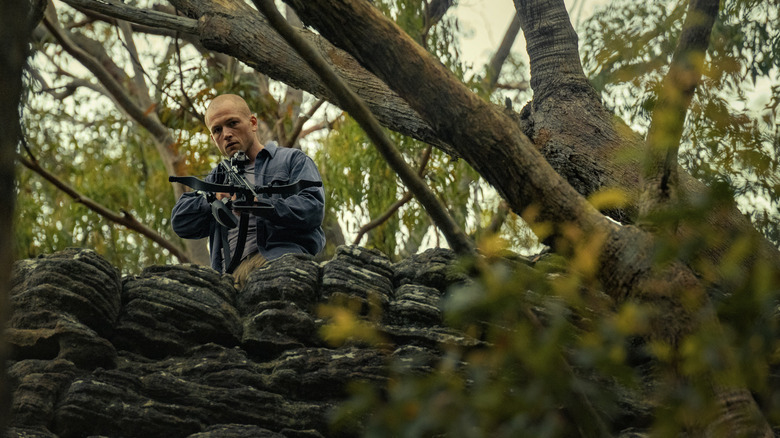
Well, Taron, your character, initially he seems to be this nice guy who has Sasha's best interest in mind, and then we learn that he has something much more sinister planned. Can you tell me about subverting that good guy persona and ultimately going full villain in this one to play somebody who's really deeply disturbed?
Taron Egerton: It's really interesting you use the word nice. I'm quite interested in the idea of nice and what it means, because it's kind of bulls***, isn't it? And I think there's something really fun about being able to play with that in a character, play a performed version of yourself and then kind of pull back the veil and go, "Actually, I'm this rancid excuse for a human being."
When Charlize and the other producers and Kira Goldberg at Netflix originally approached me about it, everyone had such an open mindset. And as much as it being an appealing prospect, doing this really exciting action film with Charlize and playing a great character, the thing that I really could sense and was excited by was it felt like a really great creative open forum.
We were really diligent about having weekly or twice-weekly script meetings. We would get together on Zooms in advance of shooting, and even into the film, to really mine and craft and further develop the material. And the bottom line is that lots of movies get made and it's not always the fact that everyone cares that much to be doing it at 10:00 PM after you've just done a 12-hour day of filming. And I really thrive in those kind of environments, I think.
Charlize Theron did '100 percent' of her own climbing in Apex
So, Charlize, you're obviously no stranger to roles that require a tremendous amount of physicality. That's been a big part of your skillset as an actor for a long time. Was there a moment in your career where you made a conscious decision to start actively seeking out parts that presented you with the opportunity to showcase those skills?
Charlize Theron: Yes. I had done an action movie earlier than this, but I didn't really get ... I didn't find an affinity. I didn't think like, "Oh, I would want to" ... It was actually a very traumatic experience. So I didn't make an action movie for a long time until I got offered "Mad Max: Fury Road." And I think that movie really kind of reminded me how much I like physical storytelling.
And so I made a real — well, not myself, but our production company made a real concerted effort to find material that we could develop around that. And that's how "Atomic Blonde" came about, and the two "Old Guard" films, and then this. I think we ended up wanting to test the waters, see what we could do that felt like pushing the envelope and trying to reach for things in the genre that we like, that we don't see a lot of.
And physically, for me, it became ... I was like, "If I'm going to do this, let's do it. Let's really do it." And it's been that kind of journey for the last 10 years.
Well, watching "Apex," I can tell that even if the production might have been filming on a soundstage in some scenes, you really cannot fake the physicality that both of you are showcasing in this movie. I know they can do amazing things with face replacement and stuff like that these days, but it really looked like you were out there in a kayak for a bunch of shots and you're still climbing on some kind of rock wall, even if some of the backgrounds might have been enhanced with visual effects later.
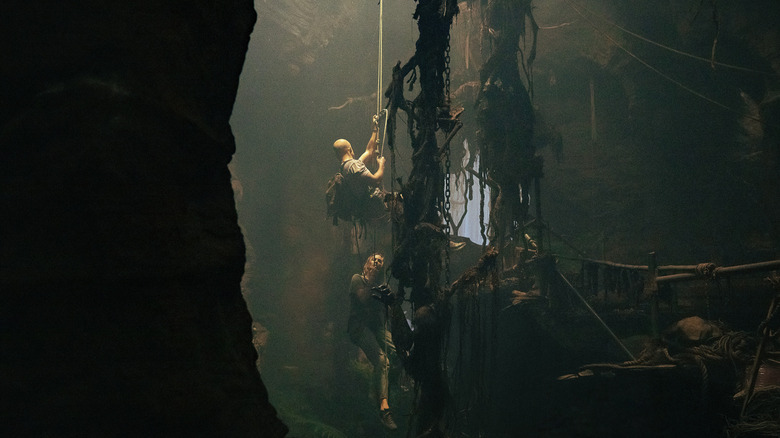
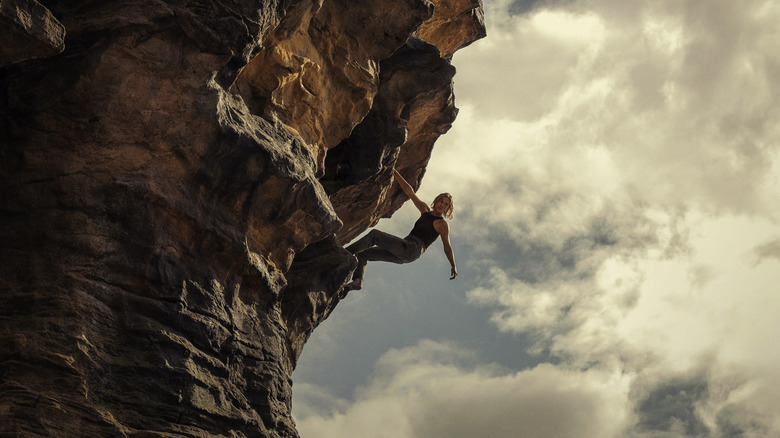
Charlize Theron: Yeah. We only shot on a stage for three weeks. The rest of the film was all on practical location. So the majority of that film is really happening in the gorges that you see and everything about it is real. Sure, we've enhanced a little bit of an extra river for you to see in the back, but aside from those things, everything is really practical. Even the stunt that I have on the top of the mountain, that was an actual gorge that was way past 60 feet that we decided to hang me off and have me free climb up there, which I still don't understand how that happened.
But it was the kind of film that we set out to make. So, Baltasar Kormákur, our director, really likes that kind of practical aspect too, but I'm very proud to say that when you watch the film, we don't have face replacement except for a few water shots. I have some help on the kayaking stuff, not a lot of rapids in Australia. So they went and shot some second unit in New Zealand with two gold –
Taron Egerton: World class. Yeah.
Charlize Theron: Yeah. Like, stuff that I was never going to learn in three months. But the climbing is all me. I did 100 percent of all the climbing and the bouldering in the middle of the film.
Taron Egerton says his Apex character is one of the most playful roles he's ever had
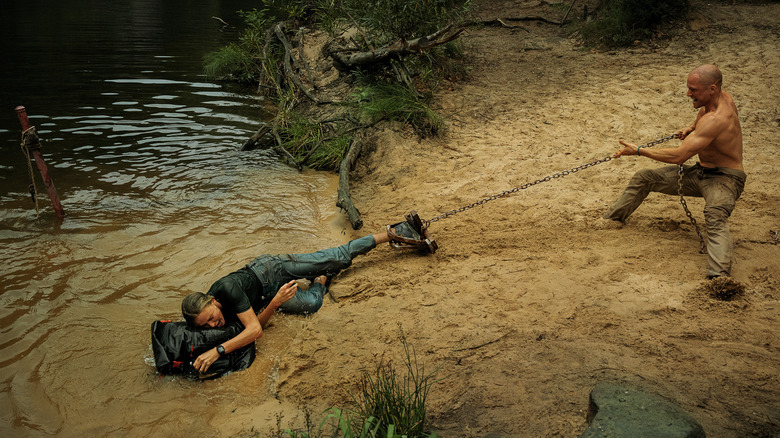
And Taron, I mean, you're really getting after it in this movie, too. It really felt like you just left it all on the table. Was that physical component of your performance, of what this role demanded, a big part of the draw for you?
Taron Egerton: Yeah, of course. I mean, I think I really am of the belief that the best acting is when you're able to move kind of beyond what's very cerebral and really kind of get into your body and be playful and present. And when you're doing a movie that is as physical as this, that actually becomes a kind of an ace up your sleeve in terms of trying to get to a place where you do good work.
For me, what I really enjoyed was finding the balance between him being this very physical character who does live this quite extreme lifestyle out in the wilderness, but also him being a bit of sprite. I kind of thought of him as like a bit of a pixie out in the woods being very, very strange, but kind of wanted him to be very light on his feet and playful. I think weirdly, he's one of the most playful roles I've played, I think.
Charlize, I think I have time for one more question. Sasha frequently finds herself under threat by various men in this movie, whether it's in a gas station, in her car, out in the wild, and even though ultimately it kind of gets pretty heightened, I think unfortunately a lot of people, and especially women, can relate to that feeling. So I was just curious if you could talk a little bit about how you wanted "Apex" to grapple with that idea.
Charlize Theron: Yes. I mean, in general, I think I love female-driven action film because I think there's an element to it that a man can't bring to action film, which is ... I feel like, for a man, it's like, "How do I just conquer this and fix this and get over it?" And I think for women, it starts earlier. It's like the awareness before the action even starts. I think we have like a sixth instinct.
There's something about us that, I don't think we're born with — I think the human condition, we have a little bit of that set in our brain — but for women, I think it's been heightened over the years of seeing so much gender-based violence. I think women in general think something like that is going to happen — not necessarily like in "Apex," but the idea that at some point you're going to be under threat and that you have to somewhat constantly think of that. And I think we wanted to not get too caught up in the minutia of it, but it definitely, to me, played a big part in knowing who the character was.
"Apex" is now streaming on Netflix.