

Kevin Bacon's Forgotten 2007 Action Thriller Was Directed By A Living Horror Legend
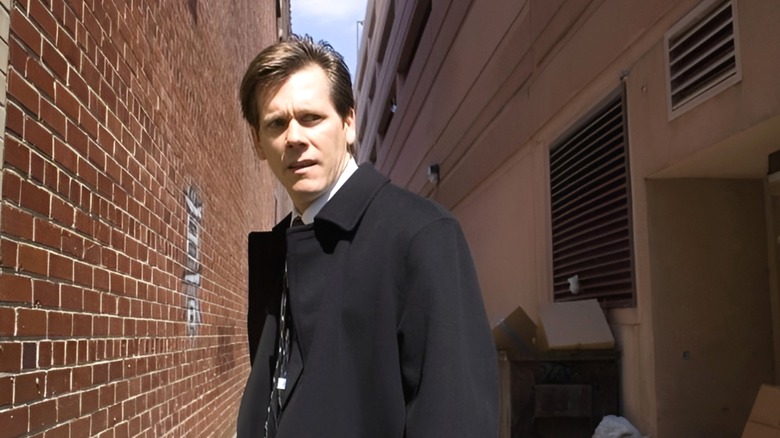
James Wan knows a thing or two about crafting effective horror. Sometimes, the most frightening Wan-helmed ideas have simple origin points that artfully escalate into high-octane set pieces. Everything from "Saw" to "Malignant" embraces this core philosophy, where Wan keeps pushing the bounds of subverting audience expectations. Of course, not every idea can turn into a bona fide box-office sensation or thrive as a cult classic. Some, like 2007's "Death Sentence," fly under the radar despite being a perfectly serviceable popcorn flick. That said, there's more to "Death Sentence" than mindless action spectacle, as its well-trodden premise is elevated by a brilliant Kevin Bacon, who slips into the shoes of everyman Nick Hume.
The idea of the everyman being forced to step up to the mantle of a traditional hero is an interesting one. In the first "Silent Hill" game, writer Harry Mason takes on the impossible task of searching for his daughter inside a hellish town, where he faces off against monsters in spite of his terrible aim. In "The Terminator," diner waitress Sarah Connor's life is plunged into chaos and she is forced to become a hardened fighter to ensure her survival.
Bacon's Nick also ends up achieving outlandish feats in "Death Sentence," which is loosely based on Brian Garfield's eponymous novel (that happens to be a sequel to "Death Wish," which is now a seven-movie franchise). Although Wan's treatment of the film's revenge centerpiece is flawed, Nick's arc as an insurance executive-turned-vigilante brims with pathos.
"Death Sentence" is actively shaped by Wan's affinity for convoluted shootouts, and these bursts of violence aren't wholly unwelcome. But does "Death Sentence" have anything meaningful to offer beyond its bombastic action and compelling central performance?
Death Sentence hews closer to the bleak nature of its source material
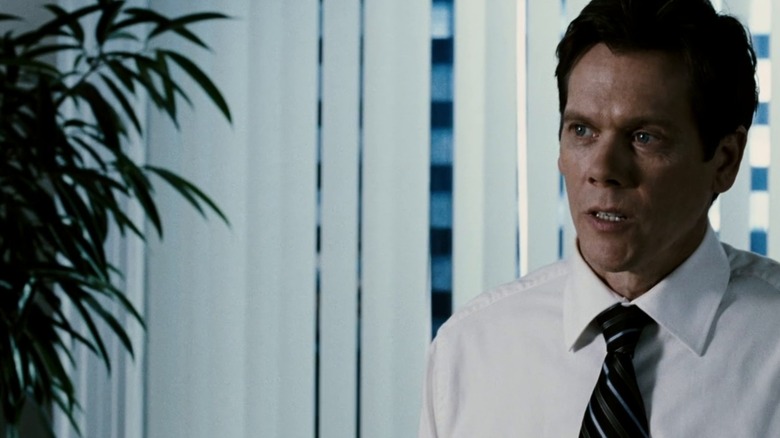
In Garfield's "Death Sentence," Paul Benjamin continues to be a vigilante after his daughter is brutally attacked. The burden of living a double life weighs heavily on Paul, especially when a copycat begins terrorizing the innocent. Paul's spiral into violence isn't framed as cathartic or aspirational — a sentiment that is at odds with the Charles Bronson-starrer "Death Wish II," which glorifies the protagonist's vigilantism with glee. Wan's "Death Sentence" is more measured in its treatment of Nick's predicament, as his psychological state is similar to that of Paul, whose actions are self-destructive in nature.
The issue, however, lies in the clash between the rightful critique of Nick's violent tendencies and the film's stylistic approach to the same violence. Although Wan's framing isn't as thoughtless as the one in "Death Wish II," the scenes that play up relentless, pulpy shootouts don't mesh well with Nick's escalating sense of doom. What Wan excels at is building atmosphere, such as when he uses a tense tracking shot to cement Nick's willingness to indulge in extremes or lets a one-take chase sequence contextualize his vengeful motivations.
If you're willing to overlook this less-than-perfect thematic foundation, "Death Sentence" has lots of thrills to offer. Moreover, it has Garfield's stamp of approval, who called it "a stunningly good movie" that "connects with its audience" despite diverging from the source material. "I think that, except for its ludicrous violence toward the end, the 'Death Sentence' movie does depict its character's decline and the stupidity of vengeful vigilantism," Garfield added. This is a blunt, but fair assessment of the film, which is an undoubtedly well-crafted James Wan offering.