

Orson Welles Declared This Western Legend 'The Most Underrated Director In The World'
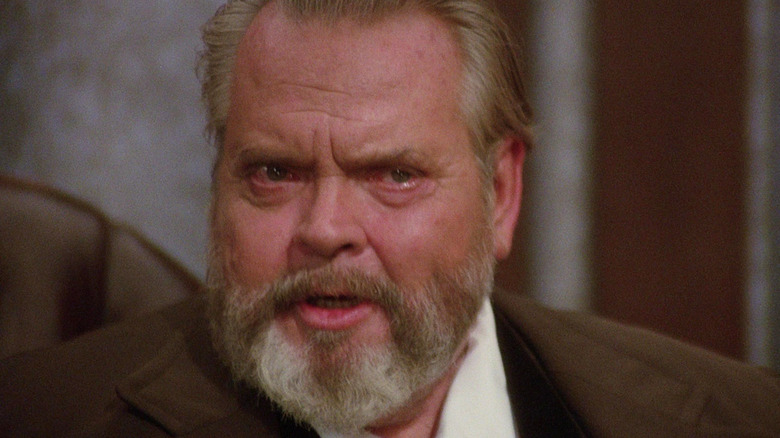
Orson Welles had a sticky relationship with Hollywood. He, of course, called the shots on some of the best movies of all time to emerge from the Hollywood system, and his 1941 directorial effort "Citizen Kane" is still celebrated at film schools and cinematheques the world over. He stayed in Hollywood for most of the 1940s, directing and starring in beloved movies like "The Magnificent Ambersons" to "The Third Man." The former however, was infamously re-edited without Welles' approval, and the excised footage remains missing to this day, causing a great deal of consternation among cinephiles. Then, in the 1950s, Welles had trouble finding funding for his films (he had to finance his "Othello" adaptation himself), and most of them weren't hits.
One can see in his film "The Other Side of the Wind," which was shot between 1970 and 1976, that Welles kind of hated the Hollywood machine and was keen to spoof the then-recent trend of "arty" European movies infiltrating the American consciousness. It's telling that "The Other Side of the Wind" wasn't completed and released until 2018, 33 years after Welles' death.
But Welles was clearly paying attention, and he liked some of what he saw. Talented directors were coming out of Hollywood all the time, and Welles, once considered a wunderkind himself, was happy to discover great movies from up-and-coming filmmakers. Indeed, during an appearance on "The Merv Griffin Show," Welles once said that he was very fond of Clint Eastwood as a director and went so far as to call him the most underrated director in the world at the time. Welles recognized that Eastwood was already well-regarded as an actor ("mythic," as he put it), but he stressed that Eastwood should be taken seriously as a director, too.
Orson Welles felt that Clint Eastwood should be taken seriously as a director
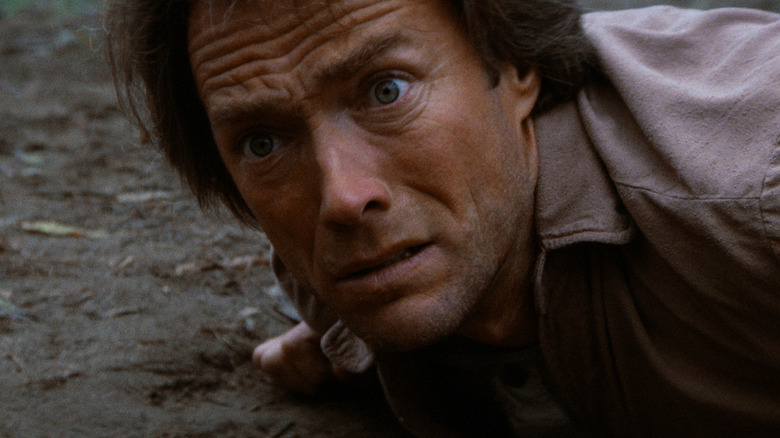
Notably, Orson Welles appeared on "The Merv Griffin Show" not too long after the release of Clint Eastwood's 1976 directorial effort "The Outlaw Josey Wales." The film itself was Eastwood's fifth movie as a director, so he was already considered talented and/or trustworthy enough behind the camera to attain continued employment.
To hear Welles tell it, though, Eastwood was still fighting for respectability as a filmmaker. Wanting to keep an eye out for rising talent, Welles wanted to make sure Eastwood was getting his due. He had seen "The Outlaw Josey Wales" at least four times (!) and was deeply enamored of the movie. In fact, Welles felt it should be considered a classic for all time and not just a pet project by an actor-turned-director. As he put it (in a pointed monologue):
"Clint Eastwood is the most underrated director in the world today. I'm not talking about him as a star. [...] They [the Hollywood establishment] don't take him seriously, the same way they don't take beautiful girls seriously. [...]. An actor like Eastwood is such a pure type, a mythic hero star in the [John] Wayne tradition. Nobody's going to take him seriously as a director. But someone ought to say it. And when I saw that picture ['The Outlaw Josey Wales'] for the fourth time, I realized that it belongs with the great Westerns. The great Westerns of [John] Ford and [Howard] Hawks and people like that."
Welles ended by saying "I take off my hat to him." That's high praise indeed.
Orson Welles saw Clint Eastwood's The Outlaw Josey Wales at least four times
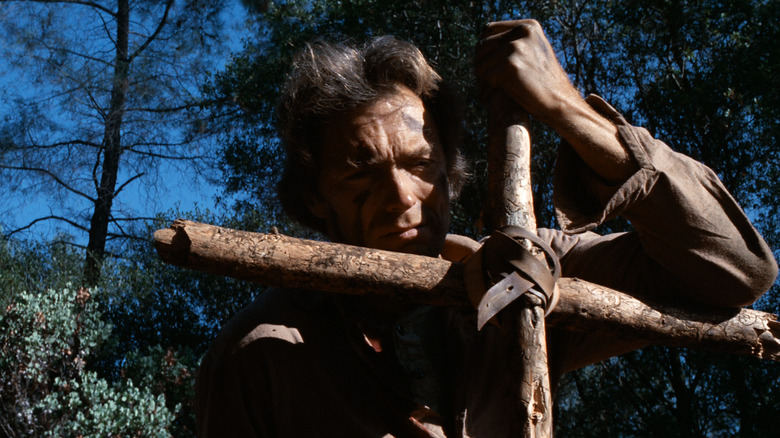
In addition to directing, Clint Eastwood stars in "The Outlaw Josey Wales" as the titular character, a farmer whose family is murdered by pro-Union soldiers during the U.S. Civil War. Wales then joins the Confederacy to get revenge, only to become an outlaw and a gunslinger after the war ends. But as he avoids bounty hunters while attempting to flee to Mexico, Wales finds himself rescuing and defending women and children in remote areas and, even more surprisingly, negotiating with a Comanche chief (Will Sampson). It's a moody Western picture, complete with a somewhat open-ended conclusion that Eastwood had to fight for.
One could reasonably argue that Eastwood would still be a Hollywood legend even if he had never been an actor. His movie roles are impressive, of course, and Orson Welles was correct in describing him as a mythic type of film star who was able to live larger than the screen. But he's also directed many, many movies over the decades, having most recently helmed 2024's "Juror #2" when he was in his early 90s. As a director, producer, and actor, Eastwood has similarly been nominated, personally, for numerous Oscars, with his 1992 and 2004 directorial efforts "Unforgiven" and "Million Dollar Baby" winning the prizes for Best Picture and Best Director.
Sadly, Welles passed away long before he got to see Eastwood become an Oscar darling. But one can safely assume that he would've been glad that a talented director had been recognized by his peers. Welles himself, incidentally, only won two Oscars in his career: one for co-writing "Citizen Kane" and an honorary Oscar in the 1970s.