

5 Beloved '70s Westerns That Don't Hold Up Today
It goes without saying that many movies that were made decades ago don't hold up today. That is especially true when it comes to Westerns — a genre that rose to prominence by depicting Native American characters as savages while whitewashing American history. Broadly speaking, it's a very macho and violent genre, and some of the best ones don't reflect contemporary values. Be that as it may, there are some oldies that are objectively worse now that we have the benefit of hindsight.
Mind you, some of the Westerns on this list aren't bad movies at all — in fact, the general consensus is that they're all good, and I personally enjoy a couple of them, despite their flaws. That aside, some contain needlessly icky elements that prevent them from being truly great.
Elsewhere, some of these picks are just underwhelming movies that were made by filmmakers who were capable of much better. With that in mind, here are five generally beloved Westerns that don't hold up today for a variety of reasons.
Rio Lobo (1970)
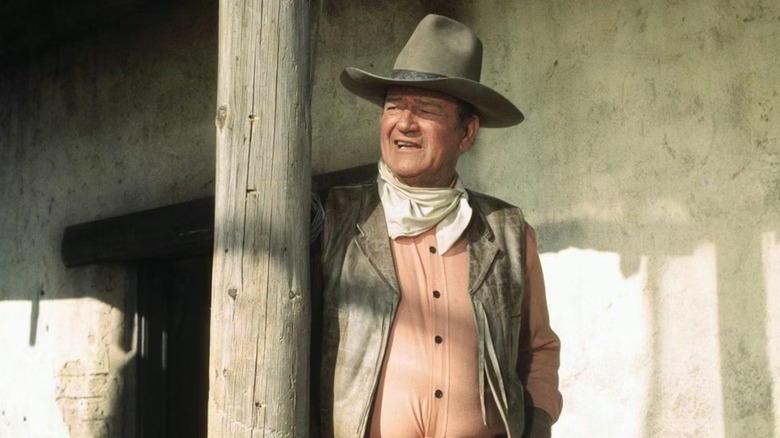
John Wayne and Howard Hawks could make great Western movies in their sleep. At their best, they collaborated on gems like "Rio Bravo" and "Red River," which are frequently regarded as masterpieces of the genre. Sadly, "Rio Lobo" is a disappointing affair that suggests Hawks was running out of fresh ideas by the time 1970 rolled around.
The problem with "Rio Lobo" is that the plot is more or less identical to "Rio Bravo" and "El Dorado" — hangout movies about lawmen protecting towns from wrongdoers. Still, "El Dorado" is a fun riff on its beloved predecessor, while "Rio Lobo" is pedestrian at best and uninspired at worst.
"Rio Lobo" lacks the charm of the other two flicks. Heck, John Wayne even joked about not reading the script beforehand, as he was more than familiar with the role he'd be playing — talk about uninspired, right? It's hard to recommend this one nowadays, mainly because the two films that precede it tell a similar story much better.
A Man Called Horse (1970)
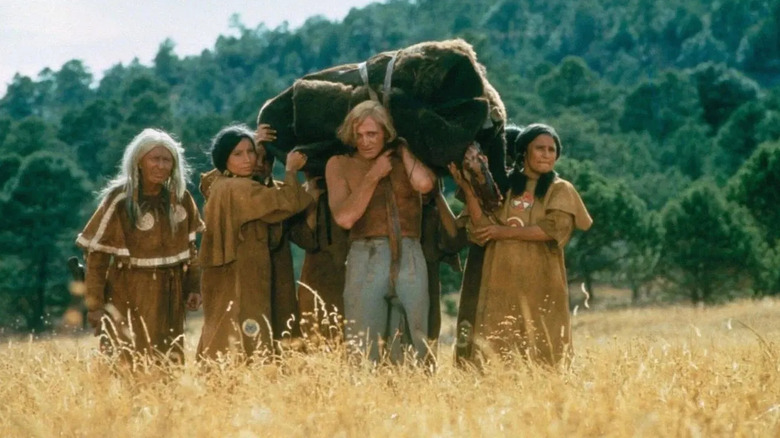
Directed by Elliot Silverstein, "A Man Called Horse" tells the story of an Englishman (Richard Harris) who gets captured by a Sioux tribe, only to end up becoming their leader. The film features actors of Native American descent in some roles, and that's where the good qualities end regarding representation.
"A Man Called Horse" was billed as a movie that portrays the Sioux culture in a positive light. As noble as the filmmakers' intentions might have been, it still relegates Native American characters to the sidelines by making a white Englishman the leader of their tribe. The movie is the poster child of the white savior trope, undermining its so-called noble intentions
Hollywood still hasn't figured out how to tell Native American stories on the screen. In recent times, "Killers of the Flower Moon" — a based-on-a-true-story movie about Osage people being murdered — received criticism for focusing too much on the white villains, as opposed to delving deeper into Native characters. However, Martin Scorsese's crime thriller has also been praised for trying to break down barriers in Hollywood, which is more than can be said about "A Man Called Horse."
El Topo (1970)
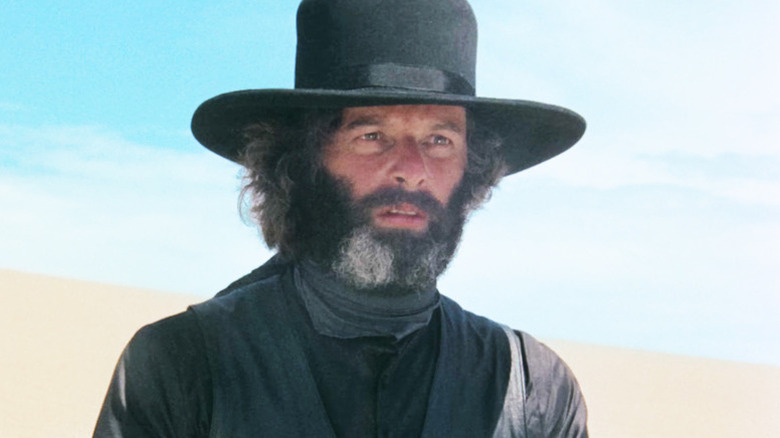
Alejandro Jodorowsky's "El Topo" has been divisive since hitting theaters in 1970. The film — which follows the eponymous gunfighter (Jodorowsky) and his son as they travel through the desert — is a surrealist acid Western that invites viewers to unpack its deeper meaning pertaining to religion and spiritualism. However, the movie's naysayers argue that it's a boring, pretentious slog with some questionable elements.
Like many exploitation movies of the '70s, "El Topo" is dragged down by scenes of animal cruelty, rape, and its depiction of children. For example, the gunslinger's young son is naked, which makes for some uncomfortable viewing because, you know, it's a naked kid on the screen. El Topo also meets a woman and rapes her before embarking on a quest to kill other gunslingers to gain her love. Couldn't he have pursued this mission without the sexual assault aspect?
There is plenty to admire about "El Topo" — the fact it's produced so many thoughtful think pieces and discussions proves that the film has merit. Roger Ebert also gave the controversial Western a perfect score, impressed by its philosophical qualities. That said, the film's worst elements are difficult to ignore, and they dilute its impressive and thought-stirring aspects.
If you or anyone you know has been a victim of sexual assault, help is available. Visit the Rape, Abuse & Incest National Network website or contact RAINN's National Helpline at 1-800-656-HOPE (4673).
High Plains Drifter (1973)
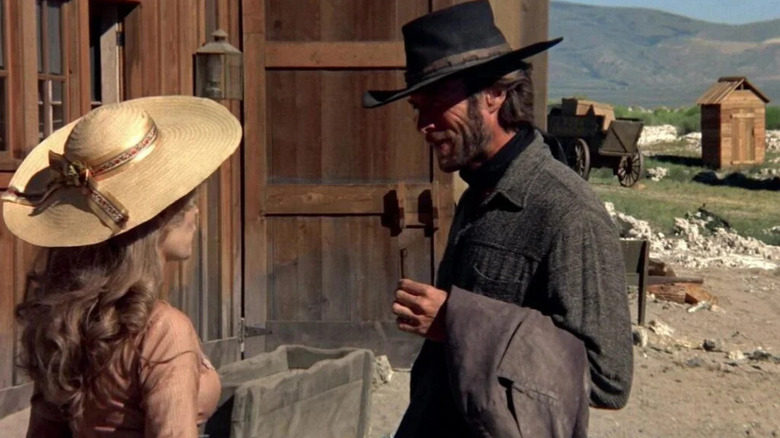
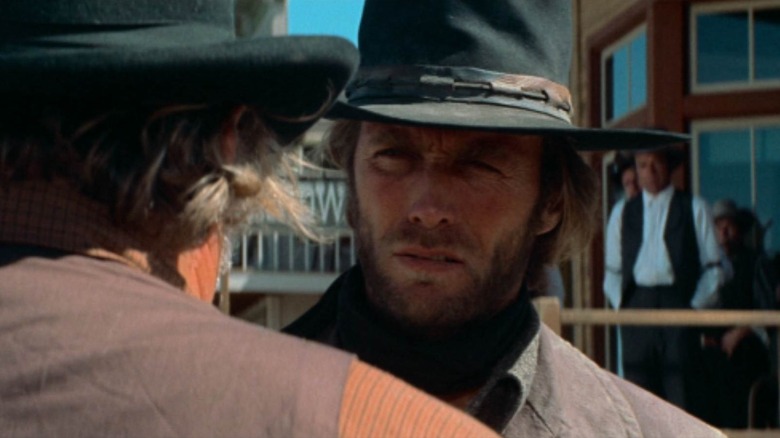
"High Plains Drifter" is often regarded as one of the best movies directed by Clint Eastwood. For the most part, it's an excellent Western that scores extra points for boasting an explosive finale that feels akin to a slasher. The story follows Eastwood's mysterious Stranger as he enters a corrupt town and starts picking off its evildoers one by one, and it's fun. So, why is "High Plains Drifter" on a list about Westerns that don't hold up today?
The simple answer is that the movie features a rape scene that doesn't have to exist. After a woman insults his manners and whiskey breath, The Stranger drags her into a stable and has his way with her, despite her obvious, and very vocal, objections. Defenders of the scene argue that it illustrates that the Stranger is a bad guy. However, he's also portrayed as an edgier Man with No Name-type figure, making him more morally grey than outright villainous. Viewers are going to root for him, especially when he's up against townsfolk who are even more rotten to the core.
What's more, "High Plains Drifter" makes no attempt to condemn the Stranger's actions. In fact, the woman he sexually assaults gets the hots for him when he accosts her in her bedroom later on. In another scene, he rudely tells another woman to "oblige" him — and, of course, she gives into his seduction attempts. "High Plains Drifter" treats its female characters horribly, dragging down what is otherwise an entertaining flick.
Bring Me the Head of Alfredo Garcia (1974)
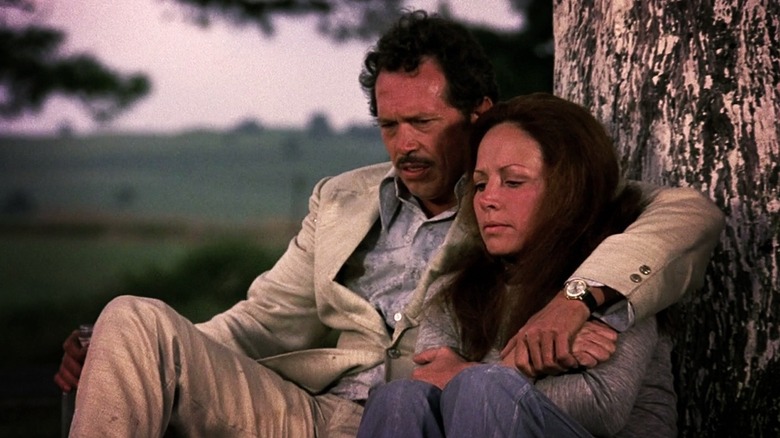
Sam Peckinpah knew how to make great Westerns. "Ride the High Country," "The Wild Bunch," "The Ballad of Cable Hogue," and "Pat Garrett and Billy the Kid" are proof of that. Be that as it may, "Bring Me the Head of Alfredo Garcia" — a neo-Western starring Warren Oates and Isela Vega as a drunk and a sex worker, respectively– leaves a lot to be desired.
Many of Peckinpah's films are accused of being misogynistic, though some folks have hailed them as feminist in disguise. "Bring Me the Head of Alfredo Garcia" is an elegiac examination of manhood, self-loathing, and love that provides plenty of food for thought — and one that only fuels the aforementioned debate about Peckinpah's oeuvre. However, similar to other films on this list, it contains throwaway scenes involving sexual assault. This one has a twist, though, as Vega's character is ready to accept her attacker as a lover until she's saved.
There's an argument to be made that Vega's character takes control in this scene, as she's a sex worker who has experienced such atrocities before and wants to make it as non confrontational as possible. However, the scene serves no real narrative purpose in the grand scheme of things, which begs the question: why did it need to be there at all?
"Bring Me the Head of Alfredo Garcia" deserves credit for telling an unconventional love story about an outsider couple, but Peckinpah couldn't resist giving into some of his more artistically questionable impulses. This isn't his only movie to deal with this type of subject matter, though it's arguably the most guilty of featuring it so pointlessly.