

The Simpsons Created Poochie In Response To A Fox Executive's Completely Ludicrous Note
There actually are loads of wrong answers to the question "What's your favorite episode of 'The Simpsons?'" but if you're pulling from the first eight seasons, you're at least in the series' sweet spot. My personal favorite episode is the Conan O'Brien-credited "Homer Goes to College," which finds the d'oh-y patriarch disappointed to find that college life isn't at all like a raunchy campus comedy. Joke for joke, I don't think the show has ever generated more laughs.
I would not, however, say it's the "best" episode of "The Simpsons," which is also a highly subjective topic. This depends on which mode of the series you prefer. Do you like the episodes that mix big laughs with a big heart, or do you dig it when the writers give their satiric sensibilities a workout? If it's the latter, "Two Cars in Every Garage and Three Eyes on Every Fish," "Homer's Enemy," and "Homer Badman" are hard to beat. But the writers never wielded sharper knives than when they took on corporate interference with "The Itchy & Scratchy & Poochie Show."
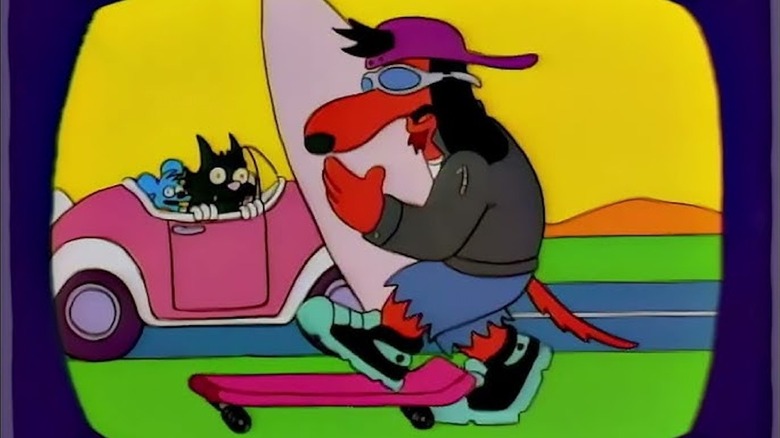
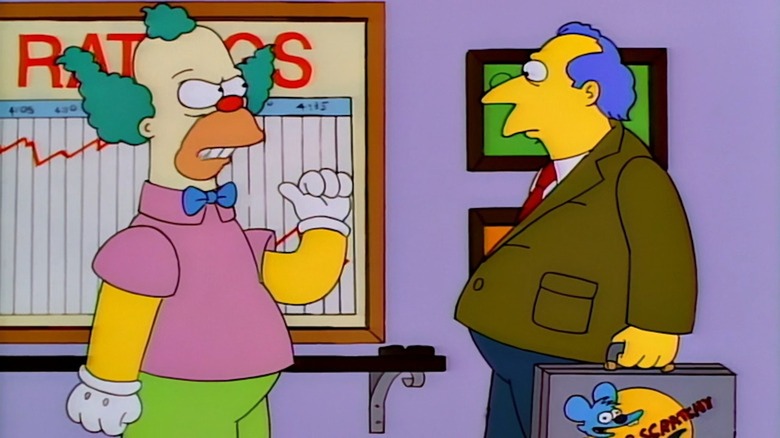
When Krusty the Clown notices his show's obligatory Itchy & Scratchy segment has faded in popularity to the point where it's dragging down his ratings, he wants the cartoon pulled altogether. Reluctant to abandon the long-running institution, his network recruits children (including Bart and Lisa) for a focus group. The adults are rudderless until Lisa jumps in and tells them the Itchy & Scratchy routine has become old hat. So they go to the clueless network exec playbook, and decide to create a hip new character who'll provide some of-the-moment fun. It's a withering condemnation of the television business, inspired by a Fox exec who suggested that "The Simpsons" add a teenager to the family.
How a Fox executive accidentally created a comedy classic
In 2022, The Hollywood Reporter celebrated the 25th anniversary of "The Itchy & Scratchy & Poochie Show" with an oral history regarding its origin, production, and lasting impact. According to former co-showrunners Josh Weinstein and Bill Oakley, it all came about during a yearly meeting with the president of Fox Television and other top executives. Though producer James L. Brooks had long since struck a deal with the network prohibiting it from interfering with the show, this time they got a "verboten" note.
"At one point, someone suggested that we add another family member to the show, a teenager," said Weinstein. "That's correct," added Oakley. "I am not going to say who it was, and we were like, 'That smacks of desperation,'" said Weinstein. "We were polite. They wanted to help. But we just ignored them."
The writers were obviously thrilled to have such rare creative freedom while writing a television show. And yet, according to longtime "The Simpsons" writer and producer John Swartzwelder, they were also aware of the pitfalls. "This is a very dangerous way to run a television show, leaving the artists in charge of the art," he said. "But it worked out all right in the end. It rained money on the Fox lot for 30 years. There's a lesson in there somewhere."
That rain's still falling, and there's no end to the deluge in sight. It's not entirely because "The Simpsons" never Poochie'd itself, but that certainly didn't hurt.