

5 Forgotten '80s Fantasy Movies That Still Hold Up Today
For over a century, people have gone to the movies seeking all kinds of experiences. Sometimes they need to laugh like fools, while other times they desire a good, cathartic cry. Regardless of what they require emotionally, it all comes down to escaping the real world for a couple of hours — which is a prominent reason why people whipping their phones out is so infuriating. They're breaking the spell cast by the movie (unless that movie is, like, "All About Steve").
Speaking of spells, there's not a more transporting form of escapism than fantasy films. When done well, there isn't a genre that engages the imagination more thoroughly and ecstatically — which is why the list of all-time highest grossing movies is loaded with fantastic tales (and their sequels/prequels). Indeed, the biggest game-changer of the last half-century was George Lucas' "Star Wars," which, by complementing its impeccably structured storytelling with groundbreaking visual effects, inspired filmmakers to dream big and/or chase a box office windfall.
As a result, the 1980s found filmmakers of all stripes attempting to hook moviegoers with epic sagas featuring sword-wielding adventurers, powerful sorcerers and malevolent beasts. Ray Harryhausen once again mined Greek mythology for stop-motion excitement, and knocked out the biggest box office hit of his career with "Clash of the Titans." John Boorman brought Camelot to the big screen with the visually stunning "Excalibur," while John Milius went R-rated with, respectively, "The Sword and the Sorcerer" and "Conan the Barbarian."
It wasn't all swords and lightsabers. There was a return trip to the land of Oz, a visit from a long-necked extraterrestrial and Bob Hoskins contending with a cartoon rabbit. And then there were these five unique, must-see fantasy movies that got overlooked at the time of their release.
Alice (1988)
I used to be a vocal proponent of allowing kids to engage with media on their own without guardrails, as I did throughout from very early in my childhood. Nowadays, I realize this is totally irresponsible given, for example, the proliferation of child sexual abuse material (CSAM) on prominent social media platforms like Elon Musk's X (formerly Twitter) — which is a legitimate reason to mourn the death of the analog age. Curious young movie fans can no longer safely switch on the television and run across something challenging on cable, or rent an unsettling movie from their local video store.
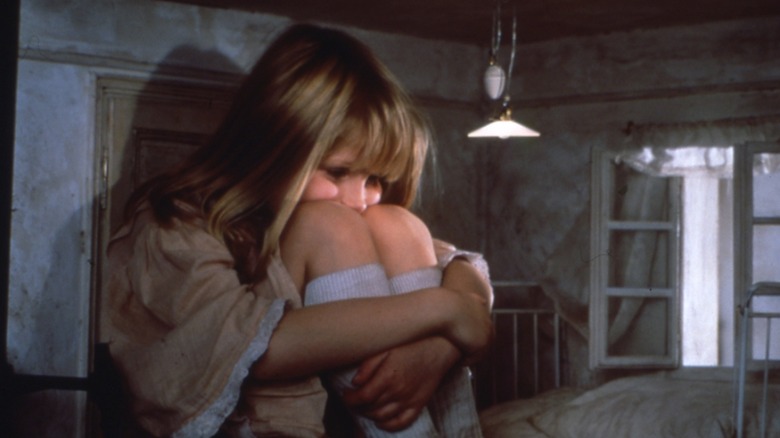
This means there's almost zero likelihood that a child could stumble upon Jan Švankmajer's "Alice" (aka "Something from Alice"), arguably the purest cinematic interpretation of Lewis Carroll's "Alice's Adventures in Wonderland" we'll ever see. The Czech surrealist frames the narrative as the fantastical dream of a bored young girl (Kristýna Kohoutová) trapped in a bedroom filled with strange trinkets, toys and one stuffed rabbit in a glass display case. When the rabbit comes to life and breaks free of its enclosure, Alice pursues the animal across a rocky expanse and into a drawer, which leads her to a world where she, sometimes literally, doesn't fit in.
Švankmajer's "Alice" goes hard in part because previous adaptations, particularly Disney's 1951 animated musical, treated Carroll's singular, reality-shredding masterpiece as standard-issue fantasy. Švankmajer combines stop-motion imagery and live animals to induce a dreamy dissonance between the real and the imagined. There is no musical score, while all of the dialogue is spoken by Alice. Švankmajer's film will shake your kids up, but, if they're creatively inclined, it could also change their life. To that end, it's worth the risk.
Conquest (1983)
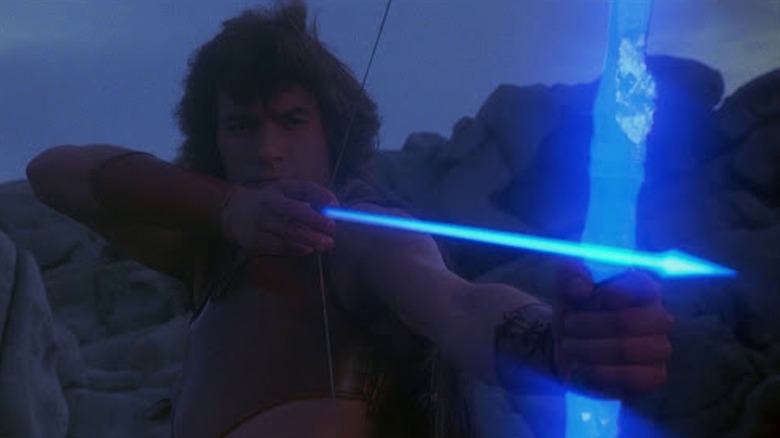
"Conquest" is 1980s swords-and-sorcery saga à la Italian exploitation auteur Lucio Fulci, which means it's slathered in gore, loaded with nudity and, thus, not the kind of fantasy you want to watch with your kids. It is, however, the kind of fantasy your kids would love to watch without you.
Even in 1983, when I would sit right next to our television and watch R-rated movies with one hand on the television dial (so as to make a quick switch should I hear an adult approaching), "Conquest" was an odd duck. Yes, it was liberal in its deployment of boobs and limb-severing action, but Fulci's gauzy, smoke-machine aesthetic felt ill-suited to this bracing fantasy subgenre. Once I got more acquainted with Fulci's oeuvre, I warmed to "Conquest," which is a much more entertaining (and utterly bizarre) film than its reputation suggests. It's not top-shelf Fulci, nor is it a classic fantasy flick, but it's a campy hoot that could only have been made in the early 1980s.
After a ponderous opening where our wet-behind-the-ears warrior hero, Ilias (Andrea Occhipinti), is given a magic bow by his pops and sent forth from their edenic home to become a man, we're thrust into a surprisingly fun two-hander. The more refined Ilias teams up with the brawny barbarian Mace (bodybuilder-turned-actor Jorge Rivero); together, they seek to eradicate evil wherever it flourishes. Their primary focus in "Conquest" is Ocron (Sabrina Siani), a masked sorceress who covets Ilias' magic bow and doesn't like wearing clothes. This is basic hero's journey stuff, but Fulci and his writers throw one major curveball at viewers that was clearly meant to set up a sequel. Unfortunately, "Conquest" was a box office bomb, thus ending the adventures of Ilias and Mace to the delight of evildoers all over the world.
Erik the Viking (1989)
Going into the summer of 1989, moviegoers were abuzz over "Indiana Jones and the Last Crusade," "Ghostbusters II," "Lethal Weapon 2" and, of course, Tim Burton's "Batman." It was a ludicrously packed four-month frame, and yet I was surprised a new sword-and-sorcery comedy-adventure written and directed by Terry Jones and co-starring John Cleese was flying low under the radar. It wasn't a full-on Monty Python movie, but it was just close enough that fans of the troupe couldn't help but get excited.
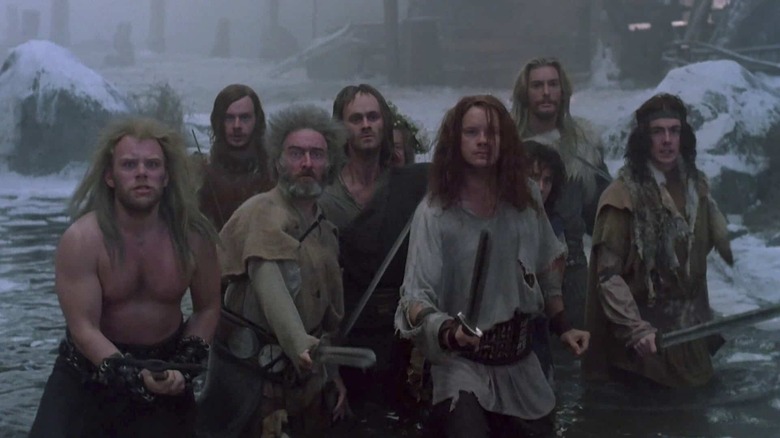
When "Erik the Viking" finally got dumped into U.S. theaters in late September, it was accompanied by some scathingly negative reviews (most notably a zero-star pan from Roger Ebert, who said the film made him "feel like a human dialysis machine"). So I was shocked when I rented it on VHS months later, and giggled, if not guffawed, throughout the whole unabashedly silly thing. It's no "Monty Python and the Holy Grail," but what is?
Tim Robbins stars as Erik, a young viking who wants no part of the raping-and-pillaging lifestyle. He's a kind, sensitive sort who's got the meaning of life on his mind (his grandfather, played by Mickey Rooney, thinks he's nuts). When the mythic Norse wolf Fenrir swallows the sun, hastening the age of Ragnarok, Erik's conundrum hits the backburner as he sets out on a quest to find the Horn Resounding, which will transport him to Asgard where he will ask Odin to end the darkness. Along the way, Erik and his mostly untested crew must do battle with the warlord Halfdan (Cleese) and contend with the treachery of Loki (an uproarious Antony Sher). The biggest laughs come courtesy of Tim McInnerny as Sven the Berserk, a stressed-out viking desperate to get out from under his difficult-to-please dad's Berserk shadow.
Fire and Ice (1983)
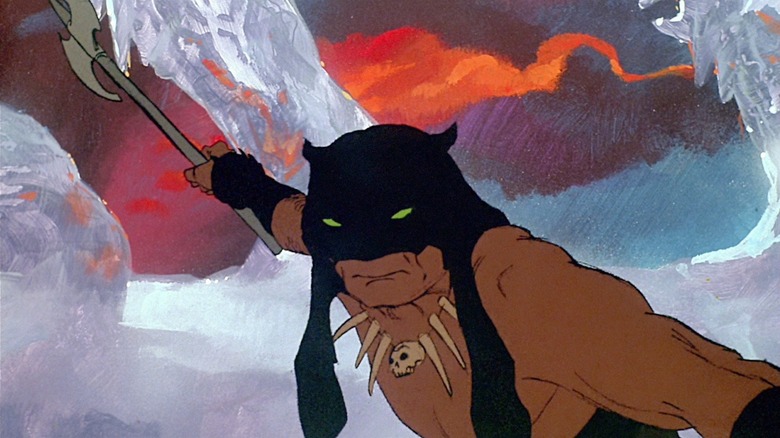
After establishing himself as an animation provocateur with "Fritz the Cat," "Heavy Traffic" and "Coonskin" (the first two of which were rated X), Ralph Bakshi stepped back from his controversy-stirring ways and made the visually stunning "Wizards." The movie's surprise success led Bakshi to attempt an epic animated adaptation of J.R.R. Tolkien's "The Lord of the Rings," which fell short on every count. While budget and length limitations certainly curtailed his ambitions, the serious literary fantasy of Tolkien just isn't his bag. At heart, Bakshi's a pulp guy.
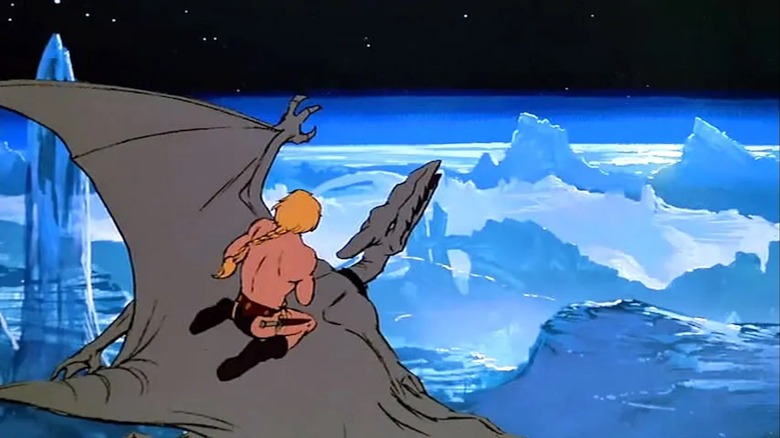
When Bakshi returned to the fantasy genre in 1983, he went full-tilt pulp, teaming with the legendary Frank Frazetta and celebrated comic book writers Gerry Conway and Roy Thomas to make the fantasy adventure "Fire and Ice." Bakshi again employed the rotoscoping technique he'd used to animate the performances in "The Lord of the Rings" and "American Pop" (James Gunn paid tribute to rotoscoping in "The Guardians of the Galaxy Holiday Special"), and the result might just be the most visually stunning movie of his career. Conway and Thomas' story centers on the kidnapping of Princess Teegra, the daughter of King Jarol who rules over a volcanic realm. Teegra winds up in the clutches of the evil Queen Juliana, who rules over Icekeep and hopes to produce an heir with the beautiful young princess via her son Nekron. When Teegra briefly escapes, she meets and falls in love with Larn, a warrior seeking revenge on Juliana and Nekron for destroying his village.
Seeing the equivalent of Frazetta's classic "Conan the Barbarian" book covers brought to animated life is a thrill, and this eye-popping imagery winds up being enough to compensate for Conway and Thomas' occasionally pokey narrative. 43 years after it bombed theatrically, "Fire and Ice" remains a visual marvel.
Zu: Warriors from the Magic Mountain (1983)
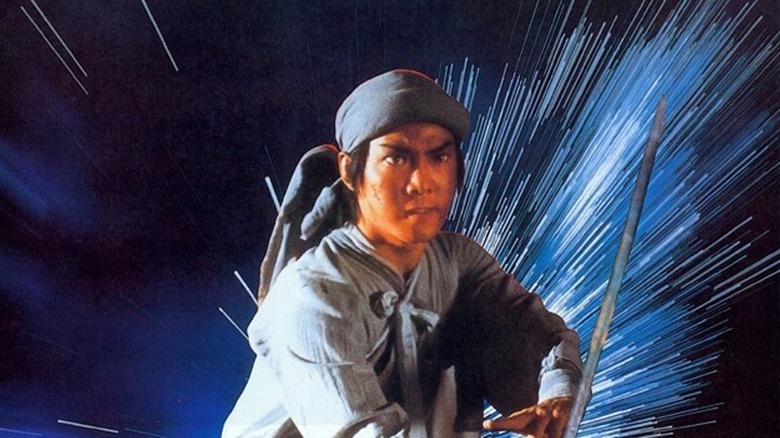
I'm loath to include Tsui Hark's "Zu: Warriors from the Magic Mountain" on this list for two reasons: one, every fan of Hong Kong cinema is going to hammer me for calling one of the most influential films in the industry's history "forgotten," and two, it isn't available to stream anywhere in the United States at the moment.
"Zu: Warriors from the Magic Mountain" may not be known by mainstream American moviegoers, but Tsui's film, particularly the Wuxia elements, was a major inspiration for John Carpenter's "Big Trouble in Little China" and the Wachowski's "The Matrix." Those are stone-cold classics, but they lack the dazzling novelty of "Zu." The film stars Yuen Biao as a deserting soldier who becomes the protege of a badass swordsman (Adam Cheng). They wind up pitted against a Blood Devil (not good), which can only be defeated by joining the Purple Sword of Heaven and the Green Sword of Earth. They also wind up assisted by a devil chaser (Damian Lau), his protege (Mang Hoi), a powerful wizard (Sammo Hung) and the equally powerful Countess (Brigitte Lin). This is all the plot summary you're going to get because if I get into the blissfully convoluted details we're going to be here for a while.
The all-star cast, which includes a very evil Corey Yuen (who summons the Blood Devil), are a joy to watch, but it's the mindblowing visual invention that leaves you reeling. Tsui and his special effects team were drawing from George Lucas' "Star Wars" toolbox, and clearly studied Richard Donner's "Superman" as well. That's why "Zu" holds up so well today. Tsui wasn't trying to match American fantasy movies. He was building a new visual vocabulary that was uniquely Hong Kong.