

Humphrey Bogart Absolutely Hated Making One Of His Weirdest Movies
We may receive a commission on purchases made from links.
The name Humphrey Bogart is synonymous with classic film noir. The "Casablanca" actor built an illustrious career marked with memorable performances, lending to some of the greatest movie moments in Bogart's vast filmography. Although his legacy is firmly rooted in film noir and the distinctive flair he brought to the screen, he often ventured beyond that genre's confines.
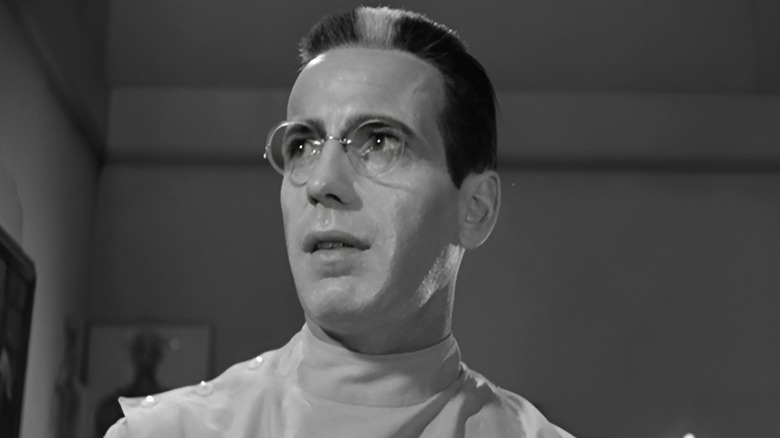
Some of these attempts were wholly unsuccessful, such as Ray Enright's 1938 musical comedy "Swing Your Lady," a shoddy attempt at screwball humor that failed to make good use of Bogart's talents. A year later, Warner Bros. cast Bogart in yet another curious film: Vincent Sherman's strange sci-fi flick "The Return of Doctor X," in which Bogart plays a mad scientist with a thirst for blood.
"The Return of Doctor X" would be Bogart's only foray into science fiction or horror. This was two years before he would deliver a breakthrough performance in "The Maltese Falcon," and around this time, the actor had reckoned with the need to be more discerning about the roles he played. Richard Gehman's 1965 biography on the actor, titled "Bogart," paints Sherman's film as the tipping point, with Gehman alleging that Bogart told him the following about being a part of the movie:
"This is one of the pictures that made me march in to Jack Warner and ask for more money again. You can't believe what this one was like. I had a part that somebody like Bela Lugosi or Boris Karloff should have played. I was this doctor, brought back to life, and the only thing that nourished this poor bastard was blood. If it had been Jack Warner's blood, or Harry's, or Pop's, maybe I wouldn't have minded as much. The trouble was, they were drinking mine and I was making this stinking movie."
Bogart had little control over his early projects under an exclusive studio contract
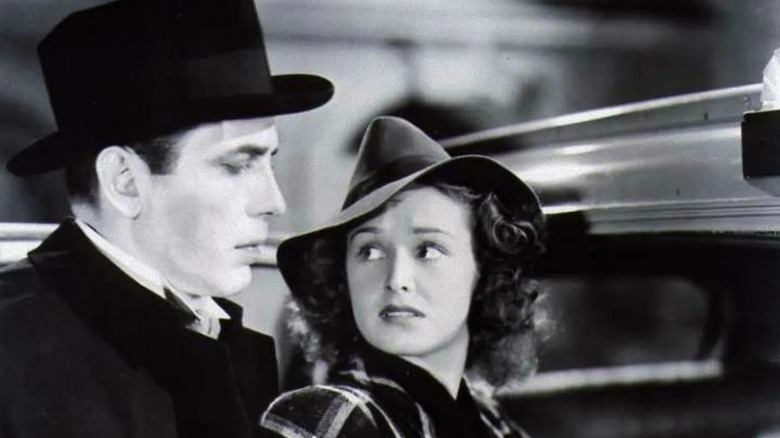
Bogart's career began on Broadway, and he also appeared in supporting roles (like in John Ford's "Up the River") while under contract with the Fox Film Corporation. These fleeting roles, however, weren't enough to sustain a career in Hollywood. Things changed in 1934 after Bogart received mainstream recognition for his performance in Robert E. Sherwood's play, "The Petrified Forest," which Warner Bros. bought the screen rights to a year later.
Leslie Howard, the star of Sherwood's play, also held production rights and wanted Bogart to star in the adaptation alongside him, despite the studio's wishes to cast a veteran like Edward G. Robinson. As a result, WB had no choice but to cast Bogart as Duke Mantee. After the film's release in 1936, Bogart signed an exclusive contract with Warner Bros. Although Bogart received consistent projects, the actor had little to no control over the films he wanted to be part of or the characters he wished to embody.
Per the 1996 documentary "Bogart: The Untold Story," Bogart's growing discontent with Warner Bros. led to repeated clashes with Jack Warner, the studio president notorious for his profit-at-any-cost approach. Although Bogart had done 25 movies under Warner Bros. between 1936 and 1939, "Bogart: The Untold Story" (narrated by Bogart and Lauren Bacall's son, Stephen Bogart) claims that the studio had no interest in pushing the actor towards stardom.
These claims are substantiated by other sources. Two prominent biographies — namely, A.M. Sperber and Eric Lax Morrow's "Bogart" and Jeffrey Meyers Houghton Mifflin's "Bogart: A Life in Hollywood" — also touch upon Bogart's uneasy relationship with Jack and Harry Warner, who forced him to "act in staggeringly bad scripts" while he was under contract.
What is The Return of Doctor X about?
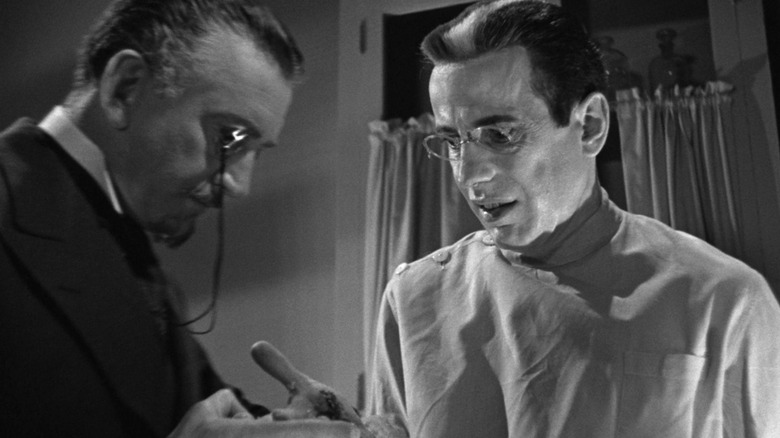
If we keep Bogart's professional frustration in mind, Gehman's account of Bogart's sentiments about "The Return of Doctor X" seems accurate. An exclusive contract didn't offer the luxury to refuse or negotiate, which could explain why Bogart had such a negative perspective of the film. While Bogart had more sway after he became a bonafide Hollywood star post-"The Maltese Falcon," it was still difficult for him to navigate the whims of a powerhouse studio.
Looking at Sherman's "The Return of Doctor X," you'll find a wonderfully eccentric Bogart performance at the center, cushioned by a storyline that makes its convoluted genre blend work. It's a B-movie through and through, and doesn't disappoint if you appreciate it for what it is instead of expecting excellence from a genre entry that's decent at best.
So, what is the film even about? "The Return of Doctor X" opens with a double murder where the victims have been completely drained of their rare Type One blood. Reporter Walter Garrett (Wayne Morris) and his doctor friend want to get to the bottom of this bizarre mystery and come across an odd clue in the process. Hematologist Francis Flegg (John Litel) has an assistant, Marshall Quesne (Bogart), who bears a striking resemblance to the late Dr. Maurice Xavier, a notorious physician who conducted horrific experiments while alive.
This grisly premise lays the foundation for Bogart's turn as a mad scientist brought back from the dead. As expected of a dedicated actor, Bogart brings an appropriately unsettling quality to the role despite a limiting script, which leaves much to be desired. His performance alone makes "The Return of Doctor X" a delightfully off-kilter early entry in Bogart's stacked Hollywood career.