

A Forgotten '70s Kid's Sci-Fi Show Starred Horror Great Sid Haig And A Star Trek Legend
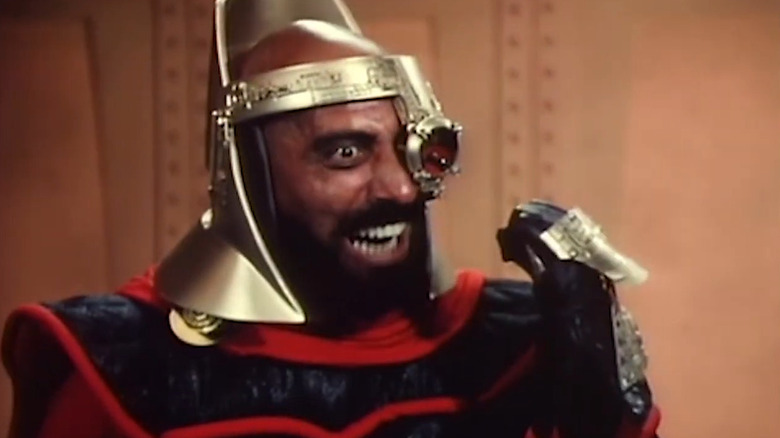
Danger hides in the stars! This is the world of "Jason of Star Command," a very obscure 1979 kid-friendly TV series put out by Filmation, the studio behind "The Adventures of Batman" (1968), "Star Trek: The Animated Series" (1973), and their most popular TV series, "He-Man and the Masters of the Universe" (1983). Most of Filmation's output was animated, and often based on existing comic strips or superhero characters. Their first live-action series didn't debut until 1975 with the release of "Shazam!," based on the DC Comics character, and the studio branched out quickly. "Isis" began in 1975, and the miserable supernatural sitcom "The Ghost Busters" started the same year.
When George Lucas' film "Star Wars" became a giant blockbuster in 1977, Filmation was very quick to jump on the genre bandwagon. They started churning out sci-fi adventure shows by the fistful, including the live-action "Space Academy," the animated "Space Sentinels," and the animated "The New Adventures of Flash Gordon." In 1978, they even went so far as to produce a live-action sci-fi series that was presented in an old-fashioned serial structure, very much like the old 1930s serials that inspired "Star Wars."
The show was "Jason of Star Command," a swashbuckling space adventure that starred Craig Littler as the eponymous hero. Jason was a Han Solo-looking hotshot pilot, and he would, on a weekly basis, face off against the evil space lord Dragos, played by horror legend Sig Haig (the terrifying clown in "House of 1,000 Corpses"). Jason's affable commanding officer, Commander Canarvin, was played by James Doohan of "Star Trek" fame. Doohan left the series for its second season (it was 1979, so he was presumably going to work on "Star Trek: The Motion Picture"), and he was replaced by the stern and more serious John Russell.
Who here remembers Jason of Star Command?
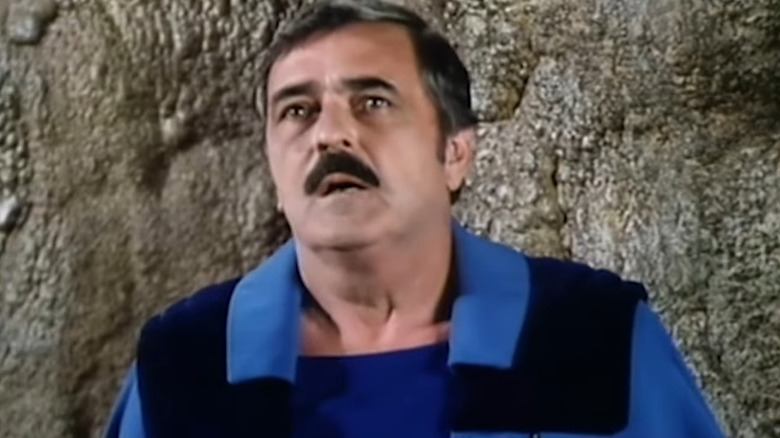
"Jason of Star Command," for its first season, aired as a 15-minute segment during the "Tarzan and the Super 7" block of shows. Some younger readers may not recall the habit that studios had of booking several animated shows in a package, all sold under a single title. The "Tarzan" block initially included all animated shows ("Jason" notwithstanding), including "Tarzan, Lord of the Jungle," "The New Adventures of Batman," "The Freedom Force," "Manta and Moray," "Superstretch and Microwoman," and "Web Woman." The block was 90 minutes long, with "Jason" bringing up the rear.
To ensure that old-timey serials were properly evoked, "Jason of Star Command" was told in a broad, melodramatic style, with episodes that ended on classic cliffhangers. Some of the props and characters from Filmation's 1977 series "Space Academy" were reused for "Jason," including a little talking robot named Peepo. Indeed, "Jason" stated in its opening titles that it took place in the same universe as that show, declaring that Jason worked "in a secret section of Space Academy."
On the series, Jason is a pilot who flies a ship called a Starfire, which he uses in combat against the evil Dragos and his alien minions. Jason has a small audio-cassette-looking robot in his front pocket, and it chitters to give him advice. The robot was named Wiki. Back at home base, Jason was presented with widgets and starships by the intelligent but awkward Professor Persafoot, played by Charlie Dell. The cast also included Susan O'Hanlon and Tamara Dobson, Cleopatra Jones herself.
Jason of Star Command changed a lot in its second season
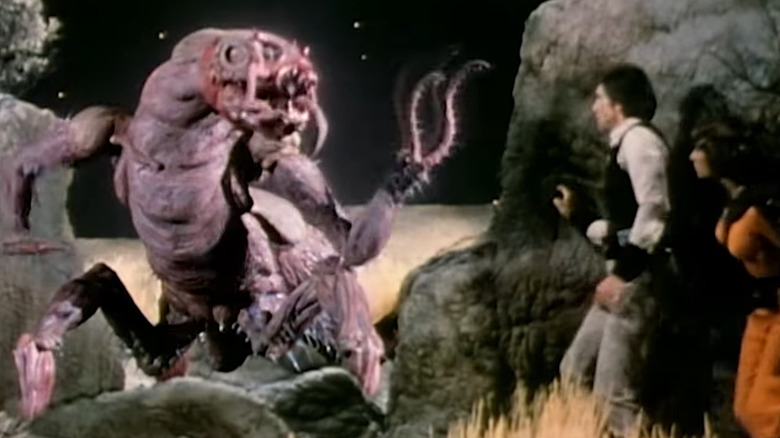
The show's villain, Dragos, dreams of galactic conquest, and is about as sophisticated a villain as a Saturday morning kids' show requires. Sid Haig, always committed, gnashes and chews scenery with the best of them. Dragos' minions fly starships by remote, presumably so Jason could shoot them out of the sky without having to kill anyone. Dragos operates out of a rocky Dragonship, his evil lair.
The monsters on "Jason of Star Command" are, to be succinct, awesome. Many creatures were realized via stop-motion and then composited into the frame with live-action actors via greenscreen. It was an effect also seen on shows like "Land of the Lost," and it always looked great. It was fake-looking but also eerily gripping.
As mentioned, Doohan left the show at the end of its first season, and he was replaced by a new character. Also in its second season, "Jason" was dropped from the "Tarzan" block of programming and expanded into a 30-minute series all its own. The stories became bigger, the characters richer, and the effects more ... well, the effects remained impressive throughout. It seems that the makers of "Jason" also wanted the show to feature Jonathan Harris' character from "Space Academy," but he refused. Doohan was cast in his place. This anecdote was included in the DVD essay.
Resourceful internet sleuths might be able to track down episodes of "Jason" online, as it's not available on streaming. There was a DVD release of the series back in 2007, but it has since gone out of print. One might be able to find it on the secondhand market. It's a whimsical series, and worth at least a brief glance.