

Twin Peaks Creator David Lynch Had A Very Unique Way Of Conducting Auditions
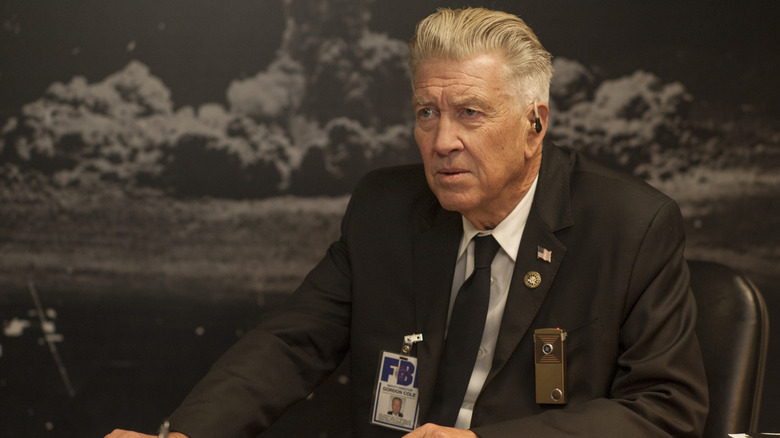
The late, great director David Lynch was always interested in dark and troubling things. Going back to his earliest student films in the late 1960s, he was eager to explore the nature of dreams, the violence and putrescence lurking underneath everything, and the imperishable fear that lies at the center of the human soul. Lynch repeatedly presented audiences with the horrific, bleak, absurd rot that infects the human world, proclaiming that our only reasonable reaction is to recoil in horror. His films were nightmares of anxiety and abuse.
It was surprising, then, to see Lynch in interviews, as he wasn't a bleak or depressed man. Indeed, he was kind of like a kindly, offbeat uncle who used old-fashioned colloquialisms like "golly." Lynch famously didn't like to talk about his work, as he felt it already spoke for itself. He was also roundly inarticulate on such matters. In a widely-disseminated interview with BAFTA, Lynch posited that his 1977 debut feature "Eraserhead" was his most spiritual film. When interviewer David Barlow asked Lynch to elaborate on that point, Lynch merely replied, "No, I won't."
Lynch, perhaps unsurprisingly, also didn't hold auditions the same way other directors might. In most cases, Hollywood auditions tend to involve actors reading a few lines from a script and enacting a scene to test if they have the right chops for the role. One could watch Lynch recreate this process on screen in his 21st century classic "Mulholland Drive." Lynch, however, tended to make films that featured unconventional narratives. So, when he auditioned actors, he would merely sit down and listen to them speak so as to test (one might suppose) if their personality matched what he envisioned in his head, as noted in GQ's 2017 oral history of Lynch's hit TV series "Twin Peaks."
Lynch liked to hold interviews instead of auditions
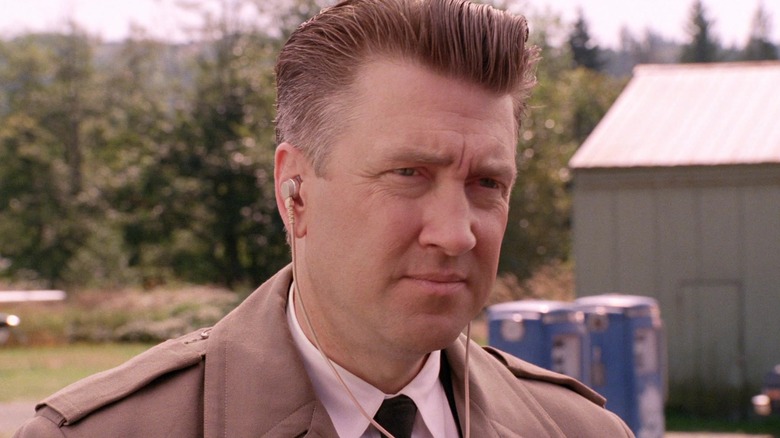
"I don't ever make them audition or read a scene," as David Lynch explained to GQ with respect to his casting process. He continued:
"I feel that would be unfair, 'cause they don't really know what I want. I would want to start directing and rehearsing with them, and we'd waste a lot of time. So, I like to look at pictures first, and then either meet them or have them videotaped speaking. That's what I go on: hearing their voice and having them just talk about whatever. And I get a feeling from that."
What qualities would Lynch look for? It appeared to be instinctual for him; he would know it when he saw it. Because he was somewhat inarticulate, though, he probably couldn't describe what he wanted regardless.
Various "Twin Peaks" actors similarly discussed their audition processes with GQ, and each of them recalled the off-topic conversations that they had with Lynch. Ray Wise, who played Leland Palmer on "Twin Peaks," recalled that he and Lynch merely talked about their first cars. (Lynch's was apparently a Volkswagen Beetle.) Sky Ferreira, who appeared in the revival season of "Twin Peaks" (itself better known as "Twin Peaks: The Return"), likewise remembered auditioning for Lynch at his house, stating, "It was a very surreal ... I don't know any other way to describe it. He was showing me furniture he makes, his coffee commercials, and his weather report." Indeed, Lynch spent years recording daily weather reports from his home in Los Angeles and posting them online despite having (seemingly) no real knowledge of meteorology. Whatever Ferreira said, it got her the role.
No one read lines for David Lynch, and some actors didn't even meet him in person
Jim Belushi, who also appeared in "Twin Peaks: The Return," told an amusing story about his "audition." Most notably, Belushi didn't know what he was even auditioning for. He was merely instructed to report to a certain space where a woman was waiting with a video camera. There was no script, no title, and no description of what character he might be playing. "We just talked about things," Belushi recalled. It wasn't until after he had went home that his agent was allowed to say that the video was for a new David Lynch project.
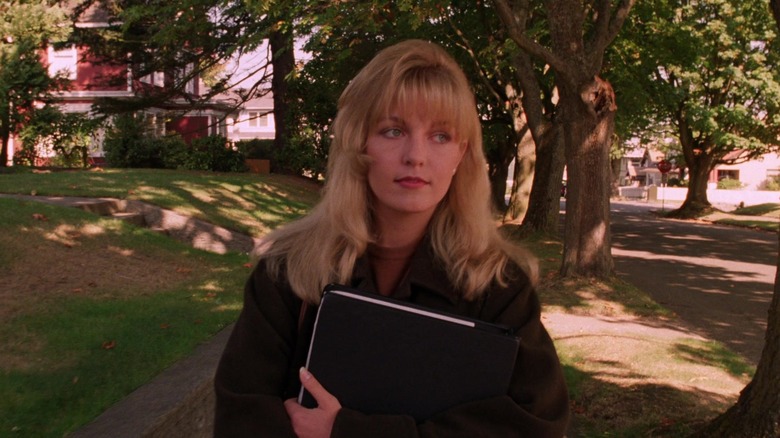
Sheryl Lee, who played the tragic heroine of the "Twin Peaks" universe, Laura Palmer, only remembered being anxious. She did get to meet with Lynch in person back when she auditioned, and she was familiar with his previous work. (By that point, Lynch had already caused a stir in the film world with "Blue Velvet.") But Lynch put her at ease and only asked her about what the role might demand of her. As Lee put it:
"I was a fan, and I was very, very shy and intimidated. I was shaking like a leaf, I was so nervous. But David immediately was so kind and so warm and funny and welcoming. He asked me questions about dipping me in blue-gray dye and wrapping me in plastic and cold water, and how would I feel about all that? And I said I'd be fine with it."
Lee probably couldn't have predicted that a shot of her wrapped in plastic and painted corpse gray as Laura Palmer would become one of the definitive images to emerge from "Twin Peaks."