

Marvel Adapted A Lesser-Known Stephen King Story Before It Was Published
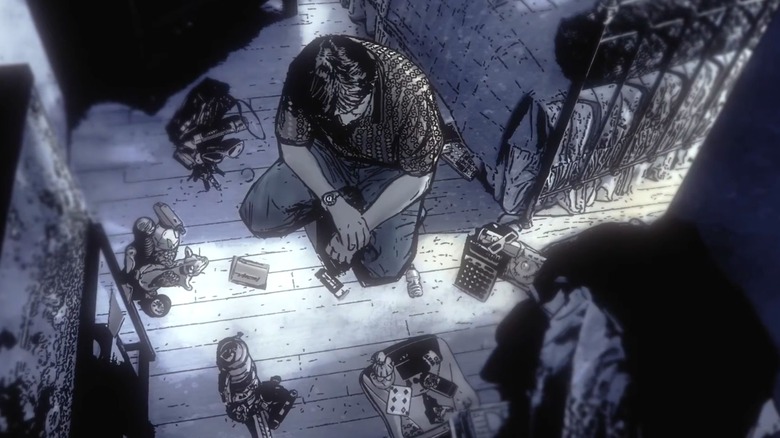
In his 2008 short stories collection "Just After Sunset," Stephen King included his horror novella "N.," which rewires expectations from the get-go. "N." follows Sheila, whose psychiatrist brother Johnny dies by suicide after dealing with the mysterious, titular patient. The novella's nested narrative takes us inside N's world, which is significantly different from mundane expectations of reality. Per N, the town of Motton, Maine, hides a doorway capable of unleashing an otherworldly beast, and this obsession gets exacerbated by his obsessive-compulsive disorder (which is diagnosed by Johnny at some point). King weaves his telltale fascination with small towns and eldritch horror within a grounded setting, making "N." a chilling tale about the fragility of reality.
"Just After Sunset" was published in November 2008, but "N." had already gotten the video episode treatment as early as July in the same year. According to a now-archived post by Comics Bulletin, this comic-book style video series was made for small screen platforms to market the short story collection, and consisted of 25 one-and-a-half-minute episodes.
Screenwriter/comic book writer Marc Guggenheim (co-creator of the "Arrowverse," whose end officially halted a vital part of TV history) adapted the text (with oversight from King himself), while artists Alex Maleev and José Villarrubia brought this vision to life. Marvel Entertainment and Simon and Schuster Digital also released this in DVD format as a part of the special collector's edition of "Just After Sunset."
Fast-forward to 2010, Marvel published the first issue of "Stephen King's N." in comic book format, which reuses the script and artwork from the video series while offering some additional context. This four-issue comic series is a must-read for King enthusiasts (and graphic novel lovers), but is it any good?
Marvel's N. adaptations are good enough, but nothing beats King's novella
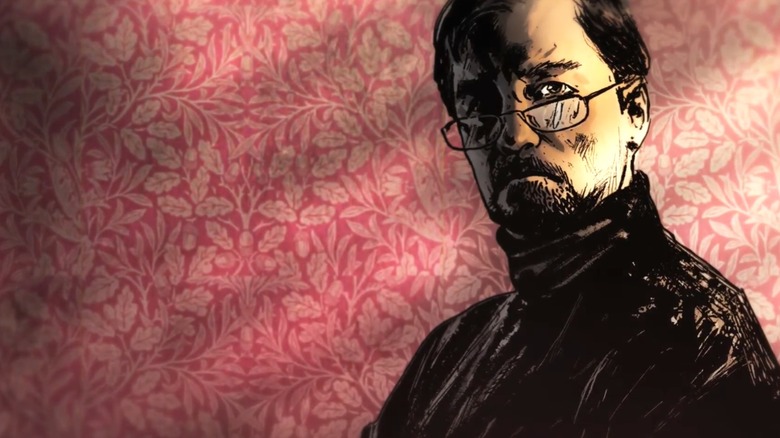
The runtime of "Stephen King's N." is 30 minutes, while the four-issue comic book tells the same story with added context (such as N.'s true identity). While Guggenheim and co. do a fine job of adapting an immersive story into two distinct artistic formats, much of the novella's atmospheric dread is lost in translation. King's descriptive prose works in favor of a story that compels us to fill in the blanks, especially when we're pulled inside N's perspective. N's OCD diagnosis is intimately linked with supernatural events, as the number of stones visible in Ackerman's Field indicates the presence of Cthun, the monster intent on invading our world.
Soon enough, a chain reaction is set in motion, as every person aware of N's case gets inevitably drawn to the horrific lull of Cthun. Both the video series and comic books nail the bone-chilling horror of being trapped in such a hopeless cycle, with the pop-up art style creating a jarring aftereffect. But King's prose emerges as the ultimate source of bleak terror, effectively capturing the futility of human will in the face of an evil nobody can fathom.
"N." was ahead of the curve in terms of marketing its merits with the help of an original graphic series, as such a move was unheard of in 2008, especially for the written text. King himself dabbled in comics briefly, having co-written a grisly DC horror comic with Scott Snyder in 2010, along with three pages in a special Marvel X-Men comic in 1985, which also features segments penned by George R.R. Martin.
So, if you're in the mood for a brisk, but unforgettable horror story, "N." might help sate your curiosity.