

Ron Perlman's Underseen 1995 Sci-Fi Fantasy Movie Is A Visually Stunning Masterpiece

We may receive a commission on purchases made from links.
It's curious how infrequently directors Jean-Pierre Jeunet and Marc Caro's 1995 steampunk fantasy "The City of Lost Children" is mentioned in cinematic conversations. In 1995 and 1996 (and I admit this is merely anecdotal), a hefty percentage of college dorm rooms sported posters for the film, and many enterprising college-age collectors owned a VHS copy of it. Teens of the '90s loved the movie's striking aesthetic, fairy-tale-like narrative, and strange performances, notably from the venerable Ron Perlman. The film even briefly ran the midnight movie circuit and was generally well-attended (at least at the screenings I attended).
But then, at some point, that changed. A new generation didn't embrace the movie, and "The City of Lost Children" fell by the wayside. The film may have been damaged by the fallout over Jeunet's next directorial effort: 1997's "Alien: Resurrection." As Elizabeth Ezra's essay book about Jeunet explains, Jeunet and Caro were both invited to helm the "Alien" sequel, but Caro didn't like the idea of working on a Hollywood project that they wouldn't have creative control on. (Screenwriter Joss Whedon had related complaints about "Resurrection.") Jeunet had no issues directing such a project, though, and the two had a creative falling out. Caro did some costume and set design work, but Jeunet is the only credited director. Perhaps, in light of "Alien," "The City of Lost Children" transformed into something of a disappointment, a reminder that we would never get another Jeunet/Caro movie ever again.
But rather than dwell on what might have been, perhaps audiences can instead appreciate the weirdo steampunk odyssey that is "The City of Lost Children." It's still a striking and unique movie to this day, lying on a matrix somewhere between Terry Gilliam and Tim Burton.
The City of Lost Children is a glorious steampunk oddity
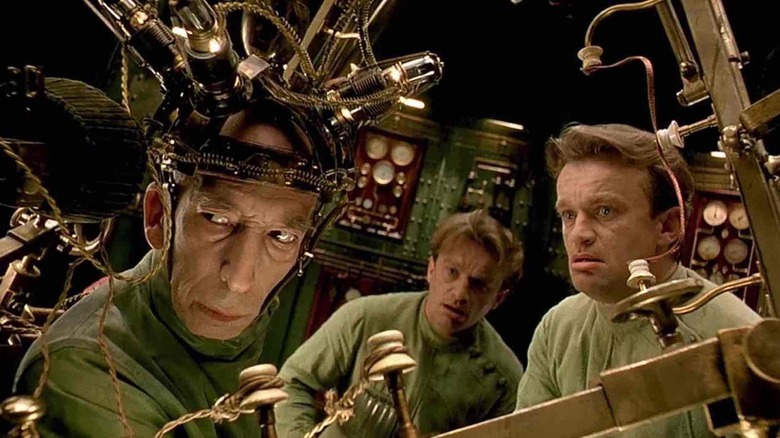
The plot of "The City of Lost Children" is part bedtime and part Universal horror film, with a pinch of Charles Dickens thrown in. It tells the story of Krank (Daniel Emilfork), a wicked old man who lives in an eerie lab located in an oil derrick in the middle of the sea. He is surrounded by lab assistants, all of them clones (all played by Dominique Pinon), who helm the dream-extracting brain machines that can shunt the dreams of children into his head. Krank regularly hires an army of eerie, pale cyborgs to travel into the neighboring city to kidnap children for dream extraction. His secret is that he is not an old man; he's an artificial being who has prematurely aged thanks to his inability to dream and now lives with a disembodied brain in a tank.
Ron Perlman stars in the film as One, a none-too-bright circus strongman whose little brother has been kidnapped. One only discovers who the kidnappers are via a circuit of orphaned petty criminals run by a sinister pair of conjoined twins (Geneviève Brunet and Odile Mallet). (There are definitely shades of "Oliver Twist" and "Pinocchio" in "The City of Lost Children.") He eventually falls into the company of Miette (Judith Vittet), who, through a byzantine set of events, ultimately confronts Krank and his evil minions.
"The City of Lost Children" also features a man who trains fleas equipped with a specialized poison that makes people deteriorate mentally. The film climaxes, as one might predict, in the dream world, lending it a "Nightmare on Elm Street" vibe. It also takes place in a damp, expressionistic cityscape that owes a lot to director Tim Burton's "Batman." It's gorgeous to behold.
The City of Lost Children may have been too confusing for most filmgoers
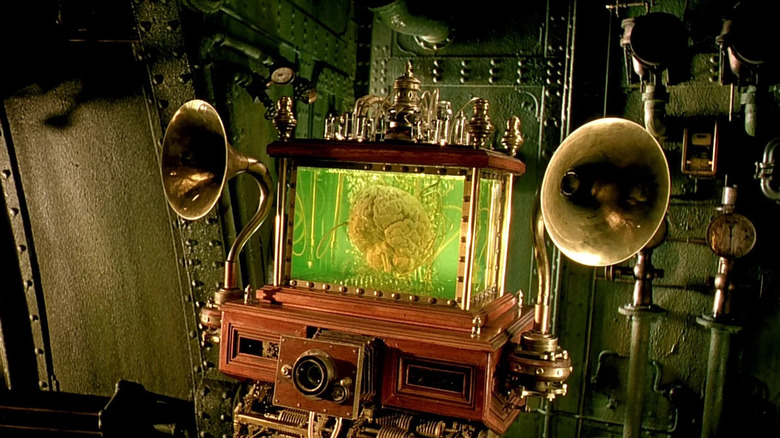
There's a lot more to the narrative of "The City of Lost Children" than what I described above, and it's sometimes unclearly told. Its plot doesn't always follow clear beats, and there are entire asides that feel tacked on. Indeed, it may take several viewings before one can follow exactly what's happening in any given scene. The film tends to swirl.
But one can always distract themselves with the film's zany steampunk visuals. Steampunk was growing in popularity in France at the time, to the degree that a Belgian comic book artist named François Schuiten was hired to redesign Parisian metro stations in the steampunk style. "The City of Lost Children" took the timeless Gothic impulses of Tim Burton and the chaotic storytelling of Terry Gilliam and pushed them through a hip, steampunk lens, resulting in a striking, clanking nightmare for kids.
U.S. critics liked the film well enough. ("The City of Lost Children" has an 80% critical rating on Rotten Tomatoes based on 61 reviews.) More so, teenagers of the 1990s enjoyed it, turning it into a brief cult phenom and transforming Jean-Pierre Jeunet and Marc Caro into dorm-friendly names in the process. The pair's earlier film, 1991's "Delicatessen," was rediscovered in the wake of the movie's cult success.
Jeunet and Caro may've split over "Alien Resurrection," but Jeunet returned in 2001 by directing the celebrated comic romance romp "Le Fabuleux Destin d'Amélie Poulain," aka "Amélie" (a movie that, strangely enough, helped inspire "John Wick: Chapter 4"). The filmmaker has remained whimsical ever since then, even helming the bizarre smart home nightmare that is 2022's "Bigbug" for Netflix.