

Stephen King's Favorite Western Is Arguably One Of The Best Movies Ever Made
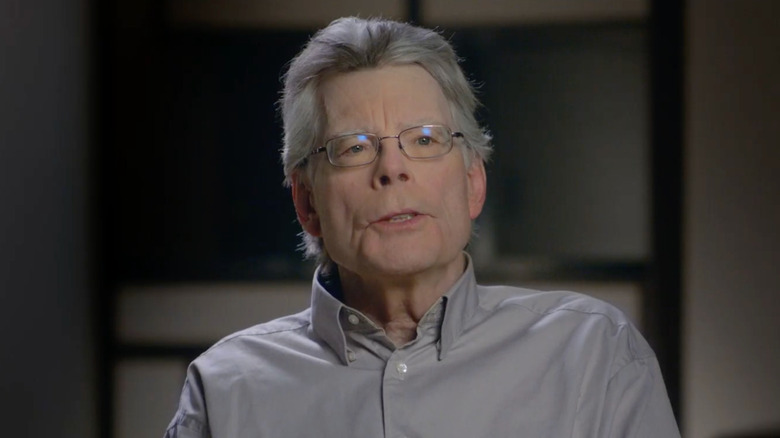
When Stephen King shared his top 10 movies on social media in 2025, his choices proved to be largely uncontroversial. Indeed, he had generally selected films that are widely accepted by general audiences and critics alike as being stone-cold classics. King, perhaps unsurprisingly, is a populist, which is a comfortable place for the world's most popular horror author to be.
For starters, his list included director Michael Curtiz's 1942 wartime film "Casablanca," and it's hard to argue against that. He also listed the Stephen Spielberg-helmed 1975 ultra-blockbuster "Jaws" and 1977 alien contact thriller "Close Encounters of the Third Kind," along with director Francis Ford Coppola's 1974 crime epic sequel "The Godfather Part II," Martin Scorsese's raw 1973 drama "Mean Streets," and William Friedkin's 1977 thriller "Sorcerer" (which King had previously named his favorite movie of all time). It seems that King was going to a lot of movies in the 1970s. But then, this makes sense. Many of us have an explosive period of cinematic discovery in our 20s. (King was born in 1947.) Notably, however, he didn't feature any straight-up horror films on his list.
That said, King did name a Western that could qualify as a horror movie when looked at in the right light — namely, director John Huston's 1948 sweat-fest "The Treasure of the Sierra Madre," which is, again, a pretty unassailable pick. Huston's movie was nominated for the Best Picture Oscar and won three additional Academy Awards for Best Director, Best Screenplay, and Best Supporting Actor. The film has a Western setting, taking place largely in the wilds of the Sierra Madre mountains in the mid-1920s, but at least half of the movie is inflected like a terrifying EC Comics story. Naturally, King digs that.
Stephen King (unsurprisingly) loves The Treasure of the Sierra Madre
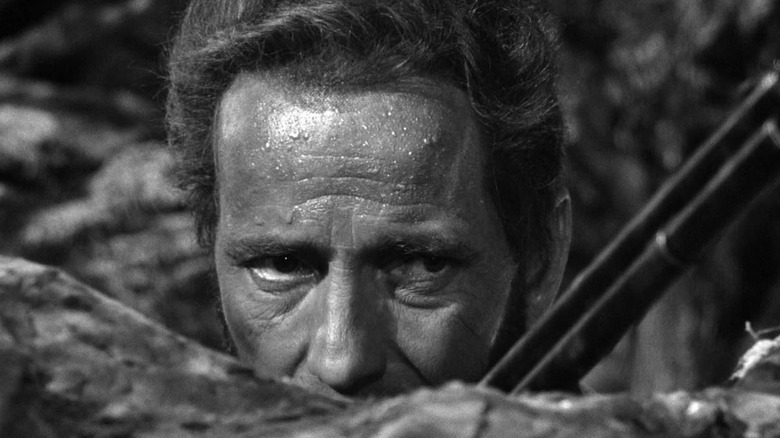
"The Treasure of the Sierra Madre," for those not familiar, stars Humphrey Bogart as Fred Dobbs, a down-on-his-luck American drifting from job to job. He winds up in Tampico, Mexico, where his luck runs out after he's stiffed by an employer following a spate of hard labor. He and a fellow drifter named Bob (Tim Holt) then happen to run across Howard (John Huston's father, Walter Huston), an old prospector who has some information on mining ... but also warns them of what happens to a man's soul when he suddenly comes into wealth.
As (perhaps bad) luck would have it, Fred wins a small lottery sum, so he, Bob, and Howard buy up some supplies to go prospecting for gold in the Sierra Madres. Not just any spot in the Sierra Madres, but a very faraway, remote place (one that's miles from where anyone could hear them scream). The trip is long and arduous, and the mining process nearly destroys them, but the men amass some gold.
The heart of the picture comes from its many scenes of suspicion, paranoia, and distrust. Its three leads quickly begin eyeballing each other, fearful that the other two will swipe their share of gold. There are several moments when you're sure someone is going to murder someone else. By the time "The Treasure of the Sierra Madre" draws to a close, there's no doubt that one or more of its main characters will no longer be breathing.
"The Treasure of the Sierra Madre" is often referred to as a Western, but again, it's not some old-fashioned oater involving sheriffs and gunslingers. Rather, it's a horror tale of sweat and desperation (not to mention, an otherwise great work of cinema).
The Treasure of the Sierra Madre would have fit into Creepshow
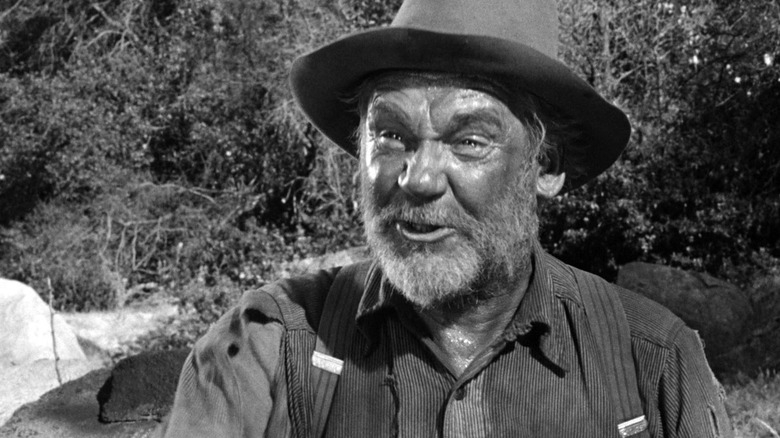
The sweaty foreheads, the wild eyeballs, and the growing sense of dread in "The Treasure of the Sierra Madre" all feel like emotions cribbed from a "Tales from the Crypt" comic (which actually didn't debut on newsstands until 1950). Really, the movie is one supernatural twist away from being a legit horror film, which is also its strength. It's a warning; more specifically, it's a dour examination of the corrupting power of avarice. Audiences can sense from the word jump that the movie will end badly.
Of course, Stephen King was also fond of EC's horror comics from the 1950s, as evidenced by his screenwriting debut on director George A. Romero's "Creepshow." The 1982 film was an anthology movie, presented as if its stories were being read from an EC-style comic book. Recall that EC not only put out titles like "The Vault of Horror" but also terrifying war comics like "Two-Fisted Tales" and Westerns like "Saddle Justice." Horror, crime, war, and Westerns could all conceivably dovetail in the pages of EC Comics. Hence, Romero included a lot of dramatic lighting and bizarre camerawork in his movie to emulate the look and feel of old-timey comics.
It's also easy to see a shortened, more salacious version of "The Treasure of the Sierra Madre" fitting right into "Creepshow." Romero may have added some style to the film, like flashes of color or more dramatic music, but the plot could remain exactly the same. As such, it's no wonder that King likes John Huston's film. It's a great movie with a great horror story at its heart.