

John Lennon Was A Big Fan Of This Trippy Western That Continues To Be Controversial
We may receive a commission on purchases made from links.
Filmmaker Alejandro Jodorowsky's 1970 acid Western "El Topo" is often cited as the first proper "midnight movie." The saga of its cult status is traced carefully in J. Hoberman and Jonathan Rosenbaum's invaluable 1991 book "Midnight Movies." There, it is written that Ben Barenholtz, who ran the Elgin Theater in New York City at the time, saw "El Topo" at the local Museum of Modern Art, and it was so weird and shocking that people walked out. Barenholtz knew such a movie would be a hit in his neighborhood, so he immediately tried to purchase the U.S. distribution rights. He couldn't get them, but Barenholtz did convince the film's producer, Allan Douglas, to allow him to exhibit the movie after hours at the Elgin, beginning at midnight.
Barenholtz also talked about his discovery of "El Topo" in the 2005 documentary film "Midnight Movies: From the Margin to the Mainstream," recalling the gangbusters success of his after-hours approach. The 600-seat Elgin theater sold out within a week, he remembered, and hipsters gathered in droves. Part of the movie's success might've had to do with the fact that marijuana was openly consumed at the Elgin without interruption. The theater was so smoky, by Barenholtz's recollection, that you just had to "inhale a few times, and you'd be stoned." Barenholtz could rightly be credited for popularizing the very notion of a Midnight Movie. Fans of the midnight magic of "The Room" owe this man a debt of gratitude.
John Lennon was also a huge fan of "El Topo." As The Guardian noted in a 2009 retrospective on Jodorowsky, he even convinced The Beatles' manager, Allen Klein, to distribute "El Topo" and invest $1 million in the filmmaker's next movie (his 1973 masterwork "The Holy Mountain").
El Topo may have been the very first Midnight Movie
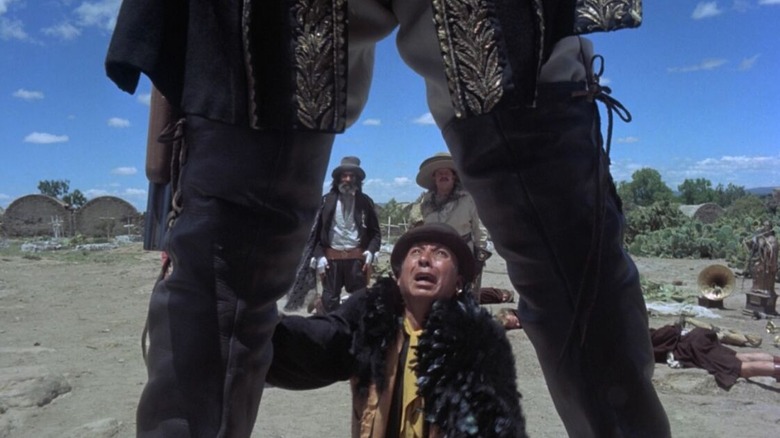
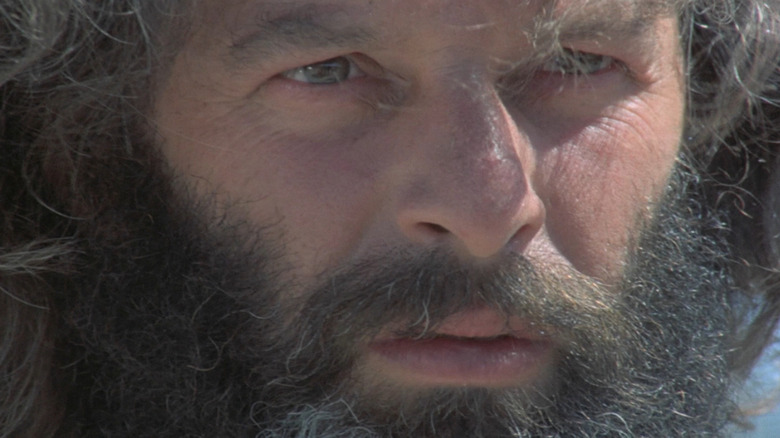
"El Topo" is a surrealist odyssey that is dripping with just as much blood and gore as it is with religious symbolism. Alejandro Jodorowsky plays El Topo, a gunfighter who is traveling through the desert of some unknown country, aiming to slay the land's four greatest shooters. Each gunfight has a spiritual bent, with El Topo growing increasingly doubtful as to the righteousness of his quest. He is shooting these men at the behest of Marah (Mara Lorenzio), a woman he met in the desert who will only return his love in exchange for death. (Yes, this is all similar to the Marvel Comics version of Thanos doing terrible things to appease the embodiment of Death.)
And that's just the first half of Jodorowsky's movie. "El Topo" is simultaneously about the harm that violence does to the soul, the dangers of living without a spirit, and a deconstruction of Western tropes, specifically the gun violence that is a central feature of the genre. One of the bandits in "El Topo" is even played by celebrated Mexican actor and director Alfonso Arau, who helmed films like "Like Water for Chocolate."
"El Topo" was a cult hit, though, and John Lennon loved it. He linked Jodorowsky to Allen Klein in what was to be, Lennon likely hoped, a lucrative creative team-up. Unfortunately, Jodorowsky and Klein didn't get along. According to Fred Goodman's book "Allen Klein: The Man who Bailed Out the Beatles, Made the Stones, and Transformed Rock & Roll," Klein enlisted Jodorowsky to direct an erotic adaptation of Pauline Réage's book "Story of O," but Jodorowsky flatly refused. This refusal led Klein to spitefully withdraw all distribution rights for "El Topo" and "The Holy Mountain" pretty much in perpetuity.
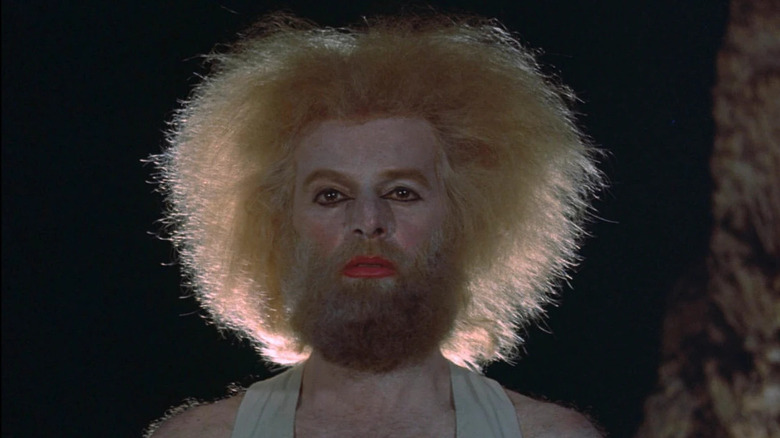
The controversial assault scene in El Topo
Thankfully, Alejandro Jodorowsky and Allen Klein eventually reconciled, and a Jodorowsky DVD box set was released with newly remastered versions of his movies. (I, personally, had to watch "The Holy Mountain" for the first time on a bootleg VHS tape. He died in 2009, but please don't tell Klein I did that.)
There was some controversy surrounding "El Topo," however, as Jodorowsky once claimed, quite flippantly, that a sexual assault scene in the film was actually unsimulated. In Richard Crouse's book "Son of the 100 Best Movies You've Never Seen," Jodorowsky stated openly that he forced himself on actor Mara Lorenzio without her consent. He merely described the assault as "a very strong scene" and thematically appropriate.
In 2019, Jodorowsky's comments led to the New York Museo del Barrio canceling a retrospective of his work. Jodorowsky then explained — in a statement to Artforum — that his remarks had been untrue and that he had only said them to create some "edgy" marketing for his movie. He added that he had used shock value to drum up interest in his film, believing (quite wrongly) that bragging about assault would turn heads toward his movie. Some Jodorowsky fans I've personally talked to say they've soured on the filmmaker since his assault claims came to light and are unsure what to think after his statement retracting them. I will leave it up to the reader to make what they will of Jodorowsky's comments.
Meanwhile, "El Topo" remains a cult classic to this day. Roger Ebert once gave it a perfect score and even wrote about the film for his Great Movies essay series. The striking power of "El Topo" cannot be denied.