

Roger Ebert Absolutely Hated Patrick Dempsey's Cult '80s Teen Comedy
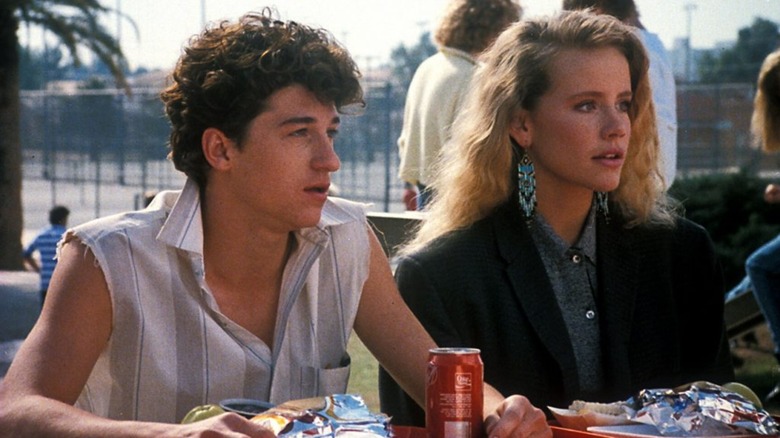
Director Steve Rash's 1987 teen comedy "Can't Buy Me Love" has something of an arch premise. Patrick Dempsey stars as Ronald, an uncool nerd who lives next door to Cindy (Amanda Peterson), a popular cheerleader and the type of person he could never associate with at their class-obsessed high school. When Cindy accidentally spills wine on one of her mother's suede outfits, Ronald offers her $1,000 to replace it in exchange for her pretending to be his girlfriend for a month, hoping that "dating" her will raise his social status at school. Cindy already has a boyfriend, but he's away at college, so she agrees (albeit reluctantly).
This process goes well at first, as Cindy realizes that Ronald is actually a sweet, decent kid with a deep appreciation for poetry and astronomy. Ronald, meanwhile, discovers that associating with Cindy is indeed increasing his clout at school, so he becomes arrogant and even mean-hearted as his popularity increases.
"Can't Buy Me Love" was one of those films that '80s kids watched regularly on cable TV or at slumber parties, with some of us seeing it multiple times without trying. It also helped make Dempsey a teen idol, and he cemented that status with his later roles in films like "Coupe de Ville." (Obviously, this was long before Dempsey's days on "Grey's Anatomy.") "Can't Buy Me Love" isn't a great movie by any measure — its examination of popularity and class in high school is hardly revolutionary — but people of a very specific age remember it fondly.
Robert Ebert, however, deeply hated it. In his half-star review, Ebert wrote that it "makes American teenagers look like stupid and materialistic twits. [...] It doesn't have a thought in its head and probably no notion of the corruption at its core."
Ebert hated, hated, hated Can't Buy Me Love
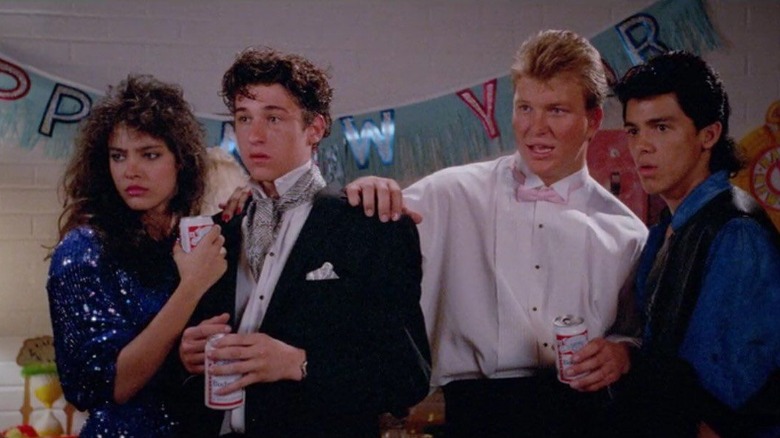
To some, "Can't Buy Me Love" might seem like a lightweight but otherwise harmless romantic comedy. Can teenagers put aside their obsession with social status long enough to see each other more closely? And how much does status do damage to a teen's psyche? Roger Ebert didn't care about such concerns, though, arguing that the movie's values were backward. "Is this really a portrait of teenage America?" Ebert asked, and then answered, "Of course not. It is more likely a portrait of the possession-oriented values of the adults who made this film."
Ebert continued by writing, "The kids in the school are portrayed, almost without exception, as monstrously cruel snobs. Their parents are generally uncaring, unloving, or absent." He went on:
"If 'Can't Buy Me Love' had been intended as a satirical attack on American values — if cynicism had been its target — we might be on to something here. But no. On the basis of the evidence, the people who made this movie are so materialistic they actually think this is a 'teenage comedy.' Can't they see the screenplay's rotten core?"
Ebert pointed out that there had been a spate of teenage romantic comedy films in the mid-1980s that dealt with similar themes (namely, unpopular kids pining for popular ones), citing movies like "Lucas," "Sixteen Candles," and "Gregory's Girl," all of which he liked. But he noted that those films "respected the innocence and even the idealism of their adolescent characters." "Can't Buy Me Love," Ebert felt, had an incredibly bleak worldview ... and sold it as innocence.
Roger Ebert valued the innocence of teenagers
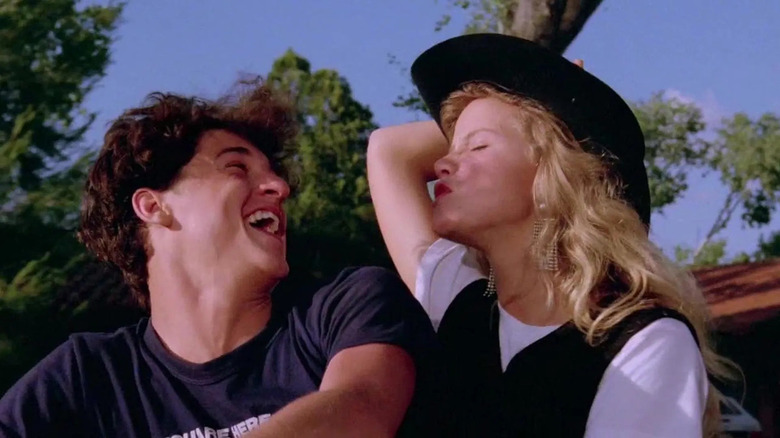
At the core of Roger Ebert's concerns, as a reader might intuit, was his issues with teenage innocence. Ebert clearly felt that adolescent film characters should be depicted as retaining a certain degree of their youthful excitement about life. And for Ebert, introducing money into a romantic transaction was too depressing to consider. He concluded his review by writing:
"It may be true in our society that people marry for money. That they seek successful people to go out with. That they try to buy popularity. But when you are a teenager, love is no respecter of greed, and the heart beats strong and true. The makers of 'Can't Buy Me Love' never knew that, or have forgotten it."
It's also worth remembering that Ebert also hated slasher movies for similar reasons. He often referred to them as "dead teenager movies," which he defined in 2012 as a "generic term for any movie primarily concerned with killing teenagers, without regard for logic, plot, performance, humor, etc. Often imitated; never worse than the 'Friday the 13th' sequels."
Ebert hated to see teens being mistreated in movies for reasons of entertainment, and he didn't appreciate when teen characters were given an unrealistic degree of adult irony. Let the kids have their innocence.
Now, outwardly cynical movies about more realistic horrors that come with the broader teen experience, Ebert was fine with. For instance, he loved "Better Luck Tomorrow" (which is technically part of the "Fast and Furious" universe, amusingly enough), and he was mostly okay with "Heathers" (itself, surprisingly, a box office flop), i.e. films that deal with teenagers committing crimes in some manner. But when a movie like "Can't Buy Me Love" tried to mask its inner materialism with "sweet" interactions, he bristled.