

Demi Moore's Creepy Apocalyptic Horror Movie From The '80s Has A Bone-Chilling Premise
This post contains spoilers for "The Seventh Sign."
Horror centered around a religious apocalypse can be extremely effective. For example, take John Carpenter's "Prince of Darkness," which creates dread-inducing atmospheric terror to ramp up the arrival of the Anti-God. There's a campiness to these central events, but Carpenter's moody approach to depicting the end of the world makes all the difference. By comparison, Carl Schultz ("Traveling North") takes a more dramatic approach to a similar premise in "The Seventh Sign," which treats the Biblical End of Days like an endlessly escalating spectacle. Just when you expect the horror to center on the disasters preceding the end of the world, the film frames divinity as a terrifying concept that does little to alleviate human anxieties.
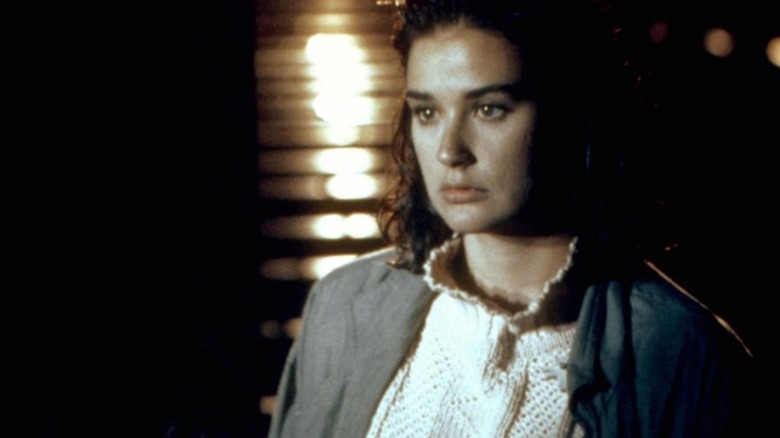
Schultz's movie opens with the telltale signs of an impending apocalypse, like sea creatures dying in droves and humid climates experiencing sudden and extreme chills. While all this is happening, a mysterious traveler (Jürgen Prochnow, who plays the villainous Sutter Cane in Carpenter's overlooked "In The Mouth of Madness") is shown opening envelopes right before these disastrous events unfold. Before long, the Vatican mounts an investigation, sending Father Lucci (Peter Friedman) to look into the matter. Elsewhere, Abby (Demi Moore) is preparing for the birth of her child, while her husband, Russell (Michael Biehn), deals with his innocent client being convicted in court.
Remember the envelope-opening traveler? Well, he ends up renting a room owned by Abby and Russell, introducing himself to the couple as David. As soon as the man enters Abby's life, though, all hell breaks loose. Could David be a literal agent of evil? This is when "The Seventh Sign" throws a major curveball and reveals the truth about its eerie premise, which makes an impact in spite of its underlying silliness.
Moore's The Seventh Sign is an incoherent but intriguing mess
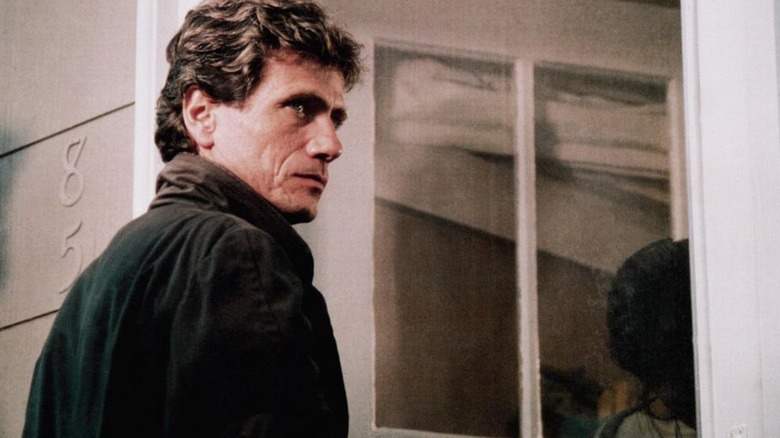
Abby's physical vulnerability during her pregnancy is constantly juxtaposed with her dogged determination to uncover the truth. When her path crosses with David's, she experiences nightmares and intense fear connected to humanity's doomed future. All signs point to David being the Anti-Christ before he unexpectedly reveals himself to be the Second Coming of Christ (!!), leaking bursts of light instead of blood when a terrified Abby stabs him. Even after the shocking Jesus reveal, though, David is presented as a tragic yet ominous figure whose intentions remain questionable even as he laments that no souls remain to be given to newborn babies ... although the film doesn't bother telling us why that's the case.
Such narrative incoherence plagues "The Seventh Sign," but it distinguishes itself from traditional genre fare that uses evil incarnate archetypes to usher in the apocalypse. Abby's bravery has less to do with faith (even though she is a believer), as her actions are only geared towards protecting her unborn child. She's not preoccupied with saving the world, either, as Abby is acutely aware of her mortal limitations. In the end, the choices she makes are driven by her desire to ensure that she's bringing her child into a world with a shot at survival (as opposed to being part of some grand divine scheme).
That said, the movie is quite wishy-washy when it comes to its treatment of the supernatural. After all, if David is Jesus, surely he's better equipped to save the world than a mortal woman? Father Lucci is similarly revealed to be a force for evil, yet he abruptly disappears without explanation. Still, if you can overlook these flaws, "The Seventh Sign" is a decent horror film with a genuinely creepy premise.