

I've Been Watching Sci-Fi For 49 Years. This Is The Movie That Made Me A Lifelong Fan
In 1979, CBS aired a made-for-TV special called "The Horror Show," and it changed my life forever. Written and directed by Time Magazine film critic Richard Schickel and hosted by Anthony Perkins, it served as a well-curated primer for a genre that would soon become my obsession. While I consider it a transformative piece of media (one that I'd recommend showing to curious young film fans), as I got older, I came to realize that Schickel played a little fast and loose with his definition of horror. Why, for instance, did he heavily feature François Truffaut's adaptation of Ray Bradbury's science-fiction classic "Fahrenheit 451?" And, most bafflingly, how did Douglas Trumbull's spacebound tragedy "Silent Running" qualify as horror? Both films are set in dystopian futures, and, sadly, Truffaut's picture might qualify as horror nowadays since it appears the United States has arrived at the fascist destination Bradbury warned us about. "Silent Running," however, is pure, melancholic sci-fi.
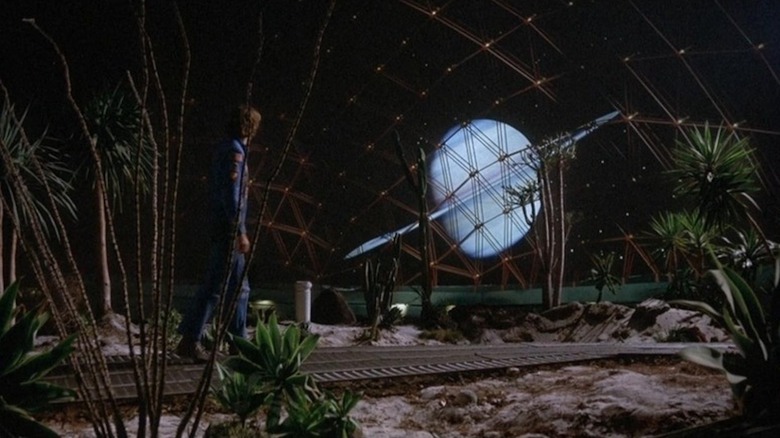
Written by Michael Cimino, Deric Washburn and Steven Bochco, and directed by visual effects pioneer and all-around cinematic genius Douglas Trumbull (without whom Stanley Kubrick wouldn't have been able to realize "2001: A Space Odyssey"), "Silent Running" set aboard a massive spacecraft called the Valley Forge, which is orbiting Saturn and outfitted with six geodomes containing various flora and fauna. This ship's four crew members have been tasked with preserving these massive greenhouses while the people of Earth attempt to mend the planet's ruined environment.
I first watched "Silent Running" shortly after encountering a clip of it on "The Horror Show," and it both fired my imagination and broke my heart. I'd already seen films like "Logan's Run" and all of the "Planet of the Apes" movies, but this is the movie that made me a sci-fi fanatic.
Silent Running features Bruce Dern at his unhinged hippie best
Released in 1972, "Silent Running" initially caught some critical flak for being a preachy piece of pro-environmentalism (though Roger Ebert gave it four stars). The world had been put on alert about the dangers of pollution via Rachel Carson's 1962 book "Silent Spring," and while most people were rightly concerned about the dangers such insecticides posed to our planet, they bristled when movies turned into sermons.
Trumbull's film makes a clear appeal to viewers' consciences, but its protagonist, botanist Freeman Lowell (Bruce Dern), is far from sympathetic. The movie opens with Lowell tending to the flora and hand-feeding a cute little bunny. He seems like a gentle, compassionate man. Then his three other shipmates (played by Ron Rifkin, Cliff Potts, and Jesse Vint) come roaring through the geodome on go-kart-like vehicles, hooting like little boys and running over a patch of flowers. Lowell understandably explodes in anger, but even here you can sense that he's coming unglued.
Lowell has little in common with his colleagues. He's a hippie committed to the environmental mission, while they're basically blue-collar guys who want nothing more than to go home. That opportunity arrives when they're informed that the mission is being abandoned; they're ordered to jettison and nuke the geodomes and return the Valley Forge home to Earth for commercial use. They're overjoyed, while Lowell is devastated. He can't allow these last vestiges of plant and animal life to be destroyed, and he is prepared to kill the other crew members if need be to save the geodomes.
Silent Running's environmentalist message has never been more relevant
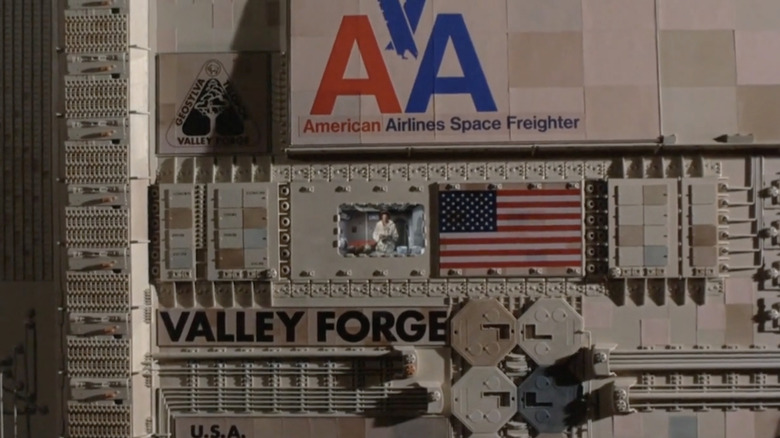
This might sound like heavy viewing for a six-year-old kid, but the Valley Forge is a marvel of futuristic design. There's a magnificent shot early on where Lowell peers out the window of his room into the vastness of space. Trumbull then cuts and pulls back from the window, revealing the massive size of the ship (emblazoned with an American Airlines Space Freighter logo). He then pans over the massive length of the craft, which is being maintained by a trio of droids. The thoroughness and texture of the ship's design are awesome. It was much more real and tactile than anything in "Star Wars." It left me awestruck.
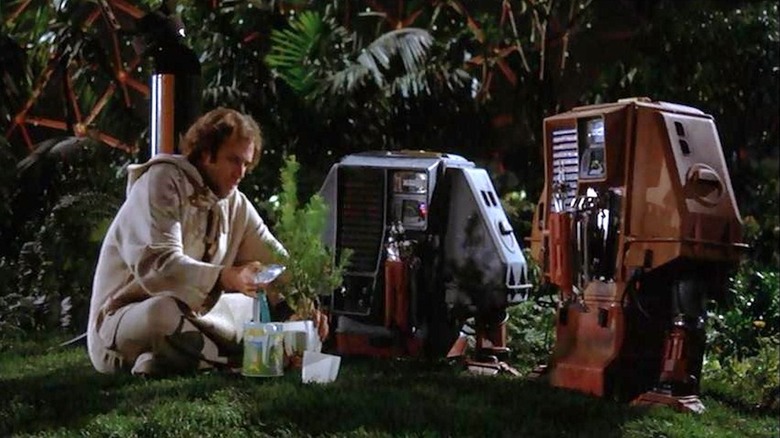
Oh, yeah. The droids. They're waddling scene-stealers (inhabited by double-amputee performers) who assist Lowell in his efforts to keep the geodomes from getting nuked. As Lowell's mental state deteriorates, he begins calling them Huey, Dewey, and Louie and treats them as friends. As a child, I cared much more for the droids than I did any of the human characters, and worried a great deal for their well-being. They're proto-R2-D2s.
54 years after its release, I've watched "Silent Running" multiple times, and while I wouldn't say I've grown to like Lowell, I empathize with his outrage. The United States has elected to give up on long-term survival for short-term corporate gains. This grim scenario is playing out in real-time right now, with rapacious billionaires aggressively pursuing the development of AI, which requires the construction of massive, environmentally ruinous data centers. We were already in a rapidly worsening climate crisis; this feels like planetary suicide.
Like much of the best science fiction, "Silent Running" is a cautionary tale. It's plausible, disturbing, and ultimately very sad. Sci-fi taught me to be wary of technology. The genre has never been more vital than it is today.