

Pirates Of The Caribbean Director Gore Verbinski Blames Video Games For Terrible Modern CGI
Movies and TV shows have gotten bigger, this much is clear. Blockbusters are no longer limited to the summer, as every studio is extremely reliant on tentpole event movies to drive their box office revenue. Even on television, genre shows with massive budgets and lots of special effects dominate the conversation, with every streamer wanting their own mega-hit franchise on the small screen.
But while CGI is everywhere now, it's not necessarily better than ever. Recent Marvel Studios movies look worse than those released 15 years prior (and, in some cases, with less than half their budgets), while even extremely costly TV shows like "Stranger Things" and "The Rings of Power" suffer from bad visuals sometimes. Compare this to, say, the mid-2000s, back when CGI was just starting to become prevalent but fully CGI characters were still rare and hard to pull off. Creations like Gollum (Andy Serkis) were and still remain magic tricks on par with any movie made today for twice the cost.
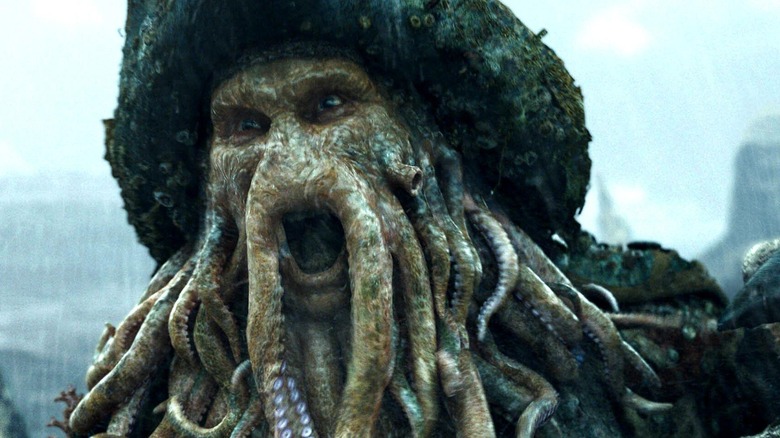
Director Gore Verbinski certainly knows a thing or two about good visual effects. As the helmer of the original "Pirates of the Caribbean" trilogy, Verbinski led a creative team responsible for some of the most visually stunning sequences in blockbuster cinema. Bill Nighty's Davy Jones may be turning 20 years old this year, but he looks just as real as any of the humans in those movies.
As for Verbinski, he's finally returning with "Good Luck, Have Fun, Don't Die," his first film in a decade. After the movie's premiere at Fantastic Fest in 2025, the filmmaker spoke with ButWhyTho about the culprit that he believes is responsible for the modern state of CGI: video games. "I think the simplest answer is you've seen the Unreal gaming engine enter the visual effects landscape," he explained.
Gaming makes CGI-heavy movies and TV shows look less realistic
Having previously been used on high-profile video games like the "Mass Effect" trilogy, the Unreal Engine is now often employed to create the virtual sets for the StageCraft technology utilized by shows like "The Mandalorian." As Gore Verbinski sees it, though, this has led to "this sort of gaming aesthetic entering the world of cinema."
"It works with Marvel movies where you kind of know you're in a heightened, unrealistic reality. I think it doesn't work from a strictly photo-real standpoint," he added. Mind you, studios are quite open about using Unreal Engine for pre-visualization and shot planning on sequences like the Harkonnen arena fight in "Dune: Part Two." However, the engine is becoming steadily more common in rendering as a competitor for Maya (the standard in animation), and Verbinski takes issue with that:
"I just don't think it takes light the same way; I don't think it fundamentally reacts to subsurface, scattering, and how light hits skin and reflects in the same way. So, that's how you get this uncanny valley when you come to creature animation, a lot of in-betweening is done for speed instead of being done by hand."
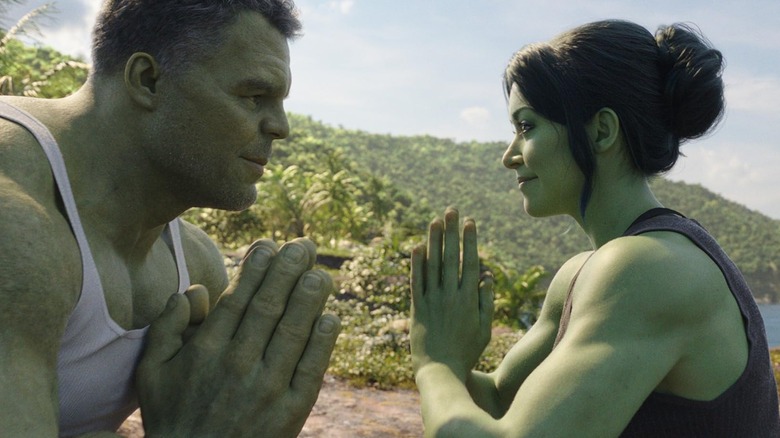
Calling this "the greatest slip backwards," the filmmaker noted that productions are, unfortunately, going all-in on Unreal Engine rather than using different tools. As Verbinski observed, you can make "a very real helicopter," but the instant it flies wrong, your brain discards the whole thing. It's why Marvel Studios struggles with digital body doubles in projects like "She-Hulk: Attorney at Law." It can copy an actor's likeness, but if you don't have animators who can properly recreate their movements, then the realism goes out the window.
"Good Luck, Have Fun, Don't Die" hits theaters on February 13, 2026.