

How Tom Clancy Felt About The Jack Ryan Movies
Tom Clancy's name appears on more books than he actually wrote. Clancy, as any middle-aged dad can tell you, exploded onto the pop literary scene in 1984 with his debut novel "The Hunt for Red October," a spy thriller about a defecting Russian submarine, and the brave CIA analyst, Jack Ryan, who has to use his wits (and not brute force) to save the day and arrange the proper diplomatic channels. This led to a long string of terse military thrillers from Clancy, including hits like "Patriot Games," "Clear and Present Danger," "The Sum of All Fears," and many others. Clancy was the solo author of 13 thriller novels, and collaborated with other writers to pen five others. After his death, Clancy was still the credited author on many other books that were written using his characters, or in his style. 27 Clancy novels were published after his death in 2013.
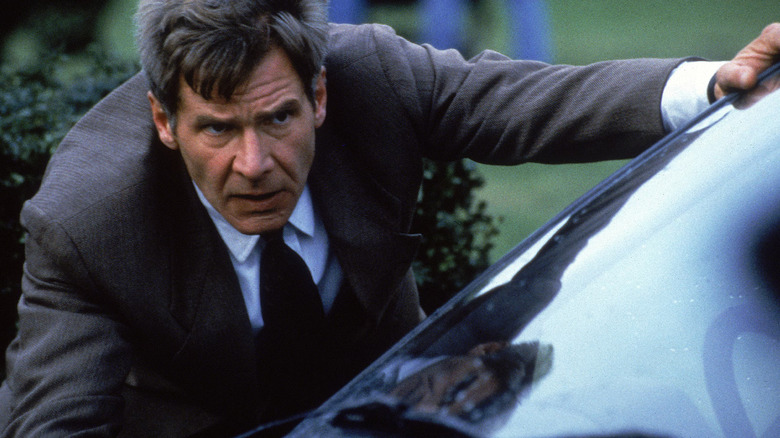
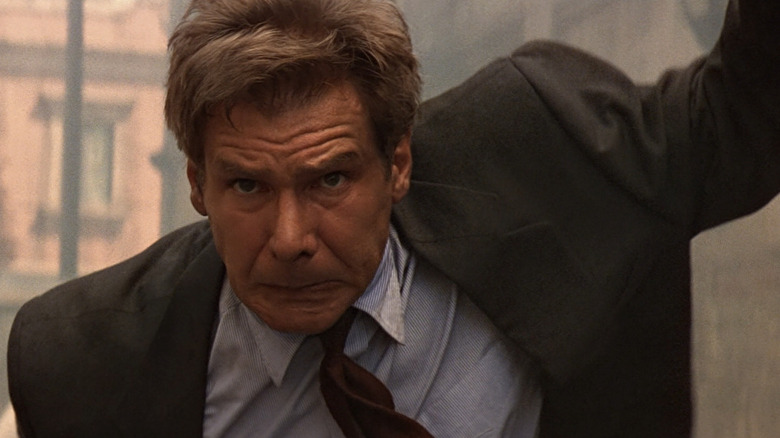
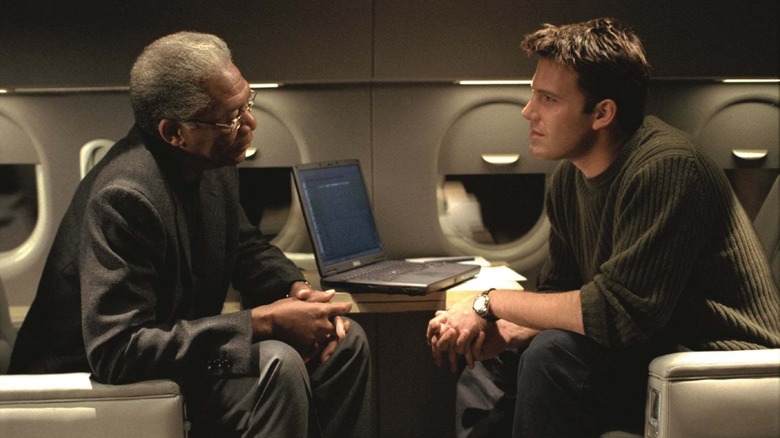
"Red October" was adapted into a feature film in 1990 by director John McTiernan, and it was a giant hit, making over $200 million at the box office. Alec Baldwin played Jack Ryan. That film's success led to a whole series of films based on Clancy's Jack Ryan novels, including two with Harrison Ford (in 1992 and 1994), one with Ben Affleck (in 2002), one with Chris Pine (in 2014), and a Jack Ryan TV series with John Karasinski (2018 through 2023).
Clancy, then would have been able to see at least four of the Jack Ryan movies before he passed. Indeed, back in 1995, Clancy was quoted in the Los Angeles Times about his opinion on the extant Jack Ryan movies, and he was able to give his open and frank opinion on the matter. Clancy, it seems, was not a fan.
Tom Clancy was no fan of the Jack Ryan movies
The Los Angeles Times article was largely about how Clancy, even in 1995, was considered a major Hollywood power player, and that he was using his newfound cinematic fame to make filmmaking more efficient. Clancy, it seems, was incredibly impatient with the studio's long-held habits of altering his books, sometimes substantially, to make movies out of them. Clancy didn't see why screenwriters needed those habits, and asserted creative control over his adaptations as a result. As such, he wasn't too fond of the movies of his books, as they were too different from what he wrote.
Clancy was also incredibly frustrated with the waste of time that Hollywood regularly engaged in. Why did it take so long to write a screenplay? He said:
"One of the things I commented on, in my meeting with [Paramount executives], is that the system almost seems designed to fail. [...] We all know that time is money. Well, by God, time really is money in Hollywood, and yet the Hollywood process wastes a colossal amount of time unnecessarily. As a person who writes novels of up to 1,200 pages of manuscript in five months, I don't understand why it takes up to six months to write 120 pages of text, which in fact is often based on source material that is already written, so you don't have to make anything up."
This makes sense. Clancy was clearly quite prolific, and the slow pace of Hollywood screenwriters frustrated him.
Tom Clancy didn't like Hollywood's inefficiency
Later in the article, Clancy noted that, when he writes his novels, he submits chapters to his editor one-by-one, rather than turning in a completed manuscript. This allows he and his editors to adjust plot points and make changes as he goes, ultimately making the writing process just that much faster. Clancy said that he didn't like Hollywood's additional habit of always submitting completed screenplays that needed constant "adjustments." "It's a hell of a lot easier to fix Chapter Five when you're writing Chapter Five," he said, "than it is to fix the ripple from Chapter Five all the way through Chapter 40." He wanted the whole writing structure of Hollywood to be changed.
In 1995, however, the first three Jack Ryan movies had already come out, and they had already been big hits under the studio's way of doing things. Regardless, Clancy saw the movies as being full of story problems and newly introduced inaccuracies about government and the military. He eventually had to sit down with Paramount executives and lay down the law. He said that his meeting were successful:
"In the case of Paramount, they saw the error of their ways, and I saw the error of some of my ways, and everybody became reasonable. When people are reasonable, it's quite easy to reach an understanding."
Clancy was, at the time, working on the TV miniseries "Op Center," which starred Harry Hamlin and ran a good 170 minutes. The next Clancy project was the cyber-thriller "NetForce" from 1999. The next Jack Ryan film wouldn't hit the big screen until "The Sum of All Fears" in 2002.