

This Forgotten '70s Superhero TV Show With Aquaman Vibes Was Canceled Way Too Soon
Primetime television had a brief superhero moment in the 1970s when shows like "Wonder Woman," "The Six Million Dollar Man," "The Bionic Woman," "The Incredible Hulk" and "The Amazing Spider-Man" became hugely popular with young viewers. Their special effects were primitive (limited mostly to miniatures), but what they lacked in high-tech pizazz they more than made up for with practical stunts (seriously, television stunt crews in the 1970s and '80s were absolute worldbeaters). They look positively quaint 50 years later, but, as someone who grew up watching them, they were must-watch television. Miss an episode, and everyone in your elementary school peer group would freeze you out.
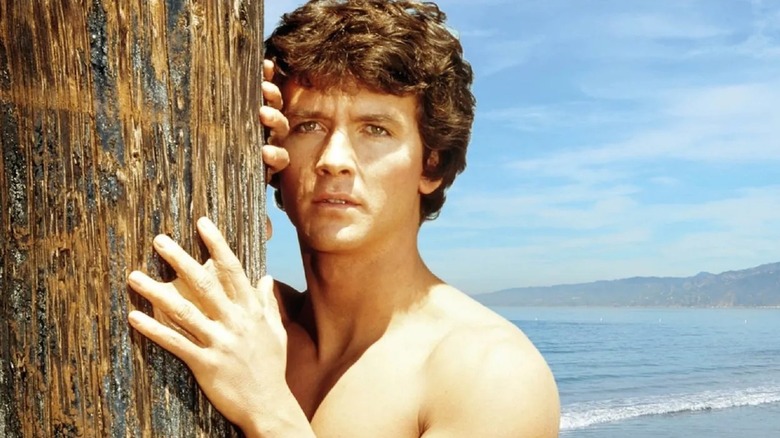
Seeking to, er, ride the wave of small-screen superhero success, NBC introduced Patrick Duffy, one year away from stardom as Bobby Ewing on "Dallas," as the "Man from Atlantis" in 1977 in a made-for-TV movie. An off-brand Aquaman, Duffy's character washes up on a beach after a severe storm. He has no memory, but he soon realizes he possesses superhero strength, can breathe underwater, and is fluent in cetacean. He also has webbed hands and feet, though his weakness is that he suffers from light sensitivity.
After NBC reaped impressive ratings from their four "Man from Atlantis" TV movies, they turned it into a weekly series. After a promising start, the show quickly began hemorrhaging viewers, and was canceled after 13 episodes. How did the show's fortunes go south in such a hurry?
Man from Atlantis spiraled into high camp silliness
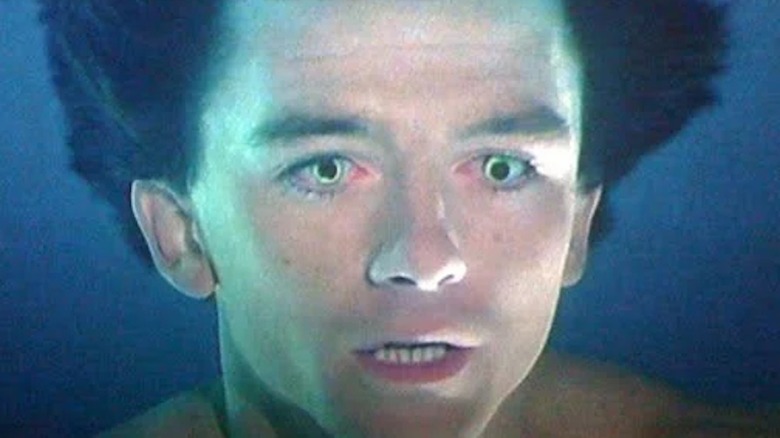
In the TV movies, Duffy's nameless character is placed in the care of Dr. Elizabeth Merrill (Belinda J. Montgomery), who works for the Naval Undersea Center. Via some very 1970s computer sleuthing (i.e. a lot of keyboard tapping that results in some mind-blowing epiphany), Merrill discovers that Duffy may be the last citizen of Atlantis. Since he does not know his name, she dubs him Mark Harris, which means he would go on to edit Entertainment Weekly and write three superb nonfiction film books.
The biggest issue with "Man from Atlantis" is that it lacked a consistently strong villain. Victor Buono was fine as Mr. Schubert, a diabolical scientist who wants to cause a topside nuclear apocalypse so he can create an undersea Eden, but he came and went as the series tried to find other adventures for Mark Harris. Tonally, the show swiftly went from semi-serious sci-fi to high camp, which alienated a lot of viewers. Harris was suddenly able to time travel, which sent him to the Old West and, inexplicably, 16th century Verona where he gets tied up in the feud between the Montagues and the Capulets.
I was not terribly discriminating when "Man from Atlantis" aired in the late '70s, so the show's slide into silliness didn't bother me a bit; I would've stuck with the show for at least one more season. The ratings, however, indicated that the tonal shift was a huge problem, which, given the series' high budget, forced NBC to cancel it. While "Man from Atlantis" never found a cult following, whenever I'm in a swimming pool, I might find myself doing Mark Harris' dolphin swim.