

Pluribus Episode 8 Draws A Terrifying Parallel With The Last Of Us

This article contains spoilers for "Pluribus" season 1, episode 8 — "Charm Offensive."
"Breaking Bad" creator Vince Gilligan's "Pluribus" relishes in portraying its hive-minded Others in a positive light. They're unfailingly polite and nice, seem to get a genuine kick out of being connected to each other, and go out of their way to create a positive environment for the handful of people who were immune to the Joining. However, there have been some signs that the hive might not be quite as benevolent to humanity as the Others claim. Their inability to harm other living things — plants and animals alike — means they're stuck with converting their own dead into a source of protein, and global starvation is a legitimate issue. And now, "Charm Offensive" reveals that the hive mind virus has genuinely unnerving implications that make it seem far closer to the Cordyceps infection of "The Last of Us" than a benevolent global rapture.
As Zosia (Karolina Wydra) informs Carol Sturka (Rhea Seehorn), the hive mind also has a mission: They feel the need to spread the "gift" of the RNA virus by casting it out to other planets, like Kepler-22b did to Earth. To do this, the Others are planning to build a giant antenna and divert the world's power into it. This, combined with the previously revealed food sourcing issue, seems like a bad idea resource-wise. In effect, humanity is going to lose its power sources along with its food supplies — all in service of spreading the hive mind virus further into space.
In other words, the hive mind affects people's brains and forces them to spread the condition at all costs. While its method takes a far more gruesome form, this is precisely how the Cordyceps infection in The Last of Us works.
The Last of Us infected and the Pluribus Others aren't as different as you might think
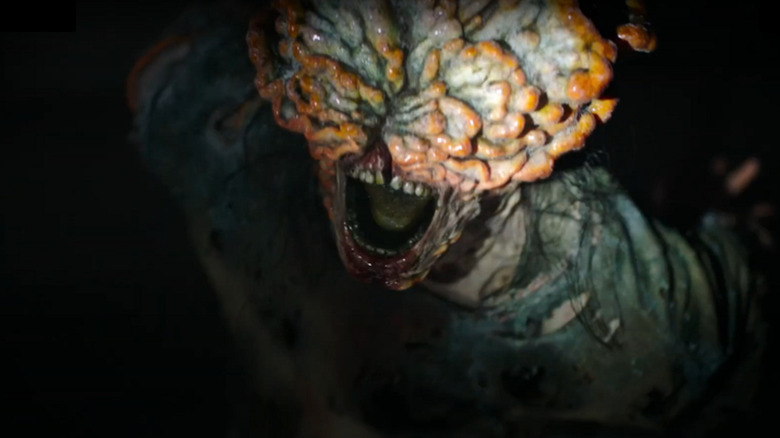
Unlike the "Pluribus" hive mind, the Cordyceps fungal infection in HBO's "The Last of Us" is horrifyingly real, even though the real-life version thankfully doesn't turn humans into hostile fungus monsters. The Cordyceps brain infection from the show, on the other hand, very much does. It hijacks the user's brain and turns it into a vessel for the fungus, with a drive to spread the infection through their creepy mouth tendrils. All of this happens, of course, without the infected's consent and to their express disadvantage, as the infection molds them into a radically different being.
Converting the affected's physical properties to join the hive and a burning desire to spread the condition to the unaffected are both confirmed traits of the "Pluribus" hive mind virus, as well. As the show makes increasingly clear, the situation also causes a measure of physical discomfort to the Others, thanks to the fact that it cripples their food production and causes them to toil endlessly to spread the virus. It's a weird and concerning parallel with "The Last of Us" and its depiction of one of the most gruesome zombie apocalypses in all of fiction, especially considering how little the Others themselves seem to know about their condition.
"Pluribus" is streaming on Apple TV.