

The Wild Inside History Of The Star Wars Holiday Special, From The Man Who Directed It
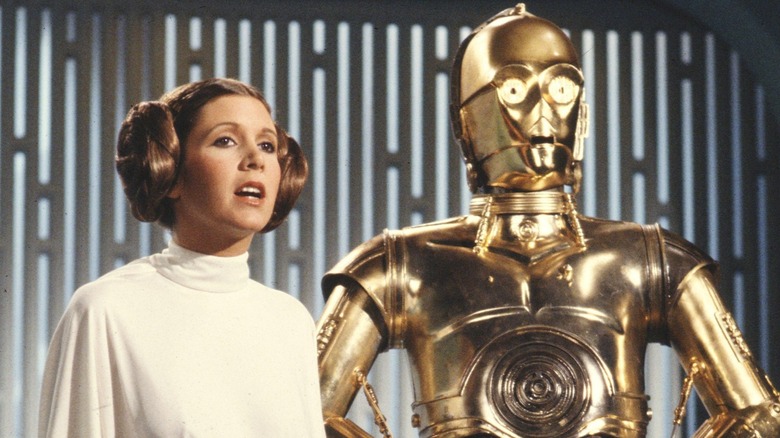
In 1978, the "Star Wars Holiday Special" aired on CBS and instantly became the most infamous piece of media in pop culture history. Clearly rushed, clearly low budget, and clearly made by people who did not know much about "Star Wars," it's the kind of trainwreck that needs to be seen at least once by any serious fan. It's too baffling. It's too bizarre. It's the kind of project that truly makes you wonder what everyone was thinking. (Naturally, it has also developed a sort of camp appreciation from those who live in the "it's so bad it's good" circles.)
10 years ago, /Film contributor Blake Harris interviewed Steve Binder, the director of the "Star Wars Holiday Special." While some would expect an interview with a total hack, Binder revealed himself to be something of a TV master, albeit one in a very specialized field. A veteran of celebrity-studded TV specials, he's a filmmaker with a very specific skill set, one that made him in-demand for this kind of project. Surely if he could wrangle the egos of superstars like Elvis Presley and Petula Clark, he could direct a handful of Wookiees and a few disinterested actors from the most popular film of all time?
This is not the tale of a group of people trying to assassinate a beloved science fiction franchise in its infancy. Rather, it's the story of a group of people handed an impossible task and told to make it work. This is the true history of the "Star Wars Holiday Special," straight from the director who called the shots on set.
Excerpted from our 2015 career-spanning interview, here's our conversation with Binder.
The director of the Star Wars Holiday Special was not a sci-fi fan
I'd love to start off by hearing about the first time you ever even heard the words "Star Wars Holiday Special?"
I got a call from Gary Smith, one of the executive producers, to see if I was available. At this point, the production had already been going for a week or had shut down. They'd run out of money. They were spending way, way over budget. And evidently there were lots of problems.
What kind of problems?
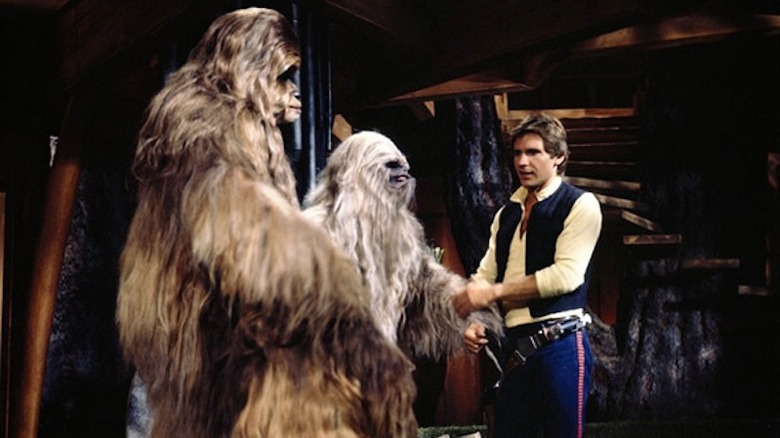
Well, I went out to Warner Bros. where they were shooting on a big stage. And they had built the Chewbacca family home, which was a phenomenal set. But it was a full, 360-degree set.
You mean that unlike, say, a sitcom where an "apartment" is really just three walls and a wide opening for cameras and crew, this was essentially a self-contained—albeit it phenomenal—set?
Right. I remember walking out there and saying, "No wonder you're having problems. You have a 360 set with multiple cameras!" And there was no way they'd be able to get these cameras in to shoot. Another concern was the opening itself. Where there's no dialogue and it's just all subtitles with the Wookiees.
That's not quite a promising start. So what was it about the project that attracted you? Were you a big fan of the movie?
I went to see the original and I loved the production value. But to be honest with you, I'm not a great science fiction fan. I love heartwarming stories. I'm a sucker for a good love story.
This was at least more family-oriented. Less space opera.
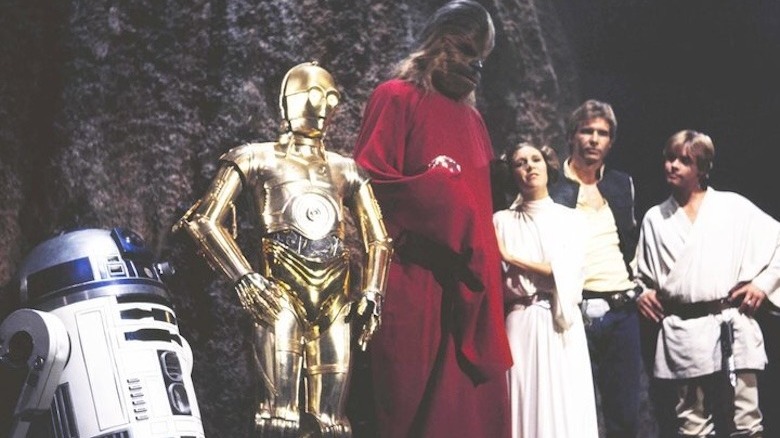
So I said yes and they FedExed me a bible, basically, on the Chewbacca family. A pre-life that George Lucas had written. I think having someone as creative as George writing the life of the Chewbacca family, taking the time to develop his characters and give them a full three-dimensional life before you even get to the beginning of the story in the special; that was fantastic. And I had obviously no input whatsoever on changing anything. I was just a fireman—I was there to get it done—if CBS decided to move forward at that point. Because they were all talking about pulling the plug. But they decided to go forward and I think the public wasn't prepared in the television advertising etcetera for what this was. And I think that was the huge mistake. This was not going to be Star Wars 2. This was a variety special focused on selling toys for George's merchandising deal.
Steve Binder didn't think the Star Wars Holiday Special was a disaster
Let's talk about what happened after you actually started.
The first decision I made was to cut into the set and remove one of the walls so we could get all the equipment in there. Inside the Wookiee environment, which was probably what 99% of their problem was before I ever got involved. And then I basically just prepped every night and took it one scene at a time. From my standpoint, as a director and producer, it was a totally positive experience for me. I loved meeting and working with everybody. And I think we did it pretty well under the circumstances.
Tell me a bit about those circumstances. Any memorable difficulties?
Well, one issue to begin with was the fact that the Wookiee costumes were so heavy! The actress who played the child, Patty Maloney, when we started she probably weighed only 80 or 90 pounds. And then she probably lost about 15 pounds from shooting the show. They [the Wookiees] could only shoot like 50 minutes of the hour and the other 10 minutes they had to have the heads off and be given oxygen off stage. So we didn't even have the principal cast available to shoot a full hour at a time!
And then there was the light ceremony at the end of the show. I was told there was no money left to build a set. So I had this huge airplane hangar film stage with extras and the entire cast of Star Wars in it and I just asked the art director if we at least had money to go out and buy a bunch of candles. Which is what we did. We bought up every candle within the vicinity of Warner Brothers that was available.
Was that kind of stuff frustrating for you, creatively?
I thought that turned out well in my opinion. For the most part, I felt that way about everything we did. I mean, I didn't walk away thinking this was a disaster or anything. I had the opposite feeling. I was glad I did it and I learned a lot and got to work with some of the best technical people in the business.
George Lucas had nothing to do with the filming of the Star Wars Holiday Special
What about George Lucas? What was your relationship with him during the production?
I never saw him or even received a phone call from him. He was never on set at all. But he came up with the story, and supervised the script by the writers they brought in [Pat Proft, Leonard Ripps, Bruce Vilanch, Rod Warren and Mitzie Welch]. And he approved it. I think he distanced himself when he didn't get great reviews. I mean, to sort of disassociate from it when he was the whole force behind the project; that's disappointing. And saying, you know, he wanted to buy the negative and get it off the market and so forth. Which was kind of ironic because he's the one—before I ever entered the picture—who wrote the script and gave it the green light from his end. With the goal of selling a lot of toys.
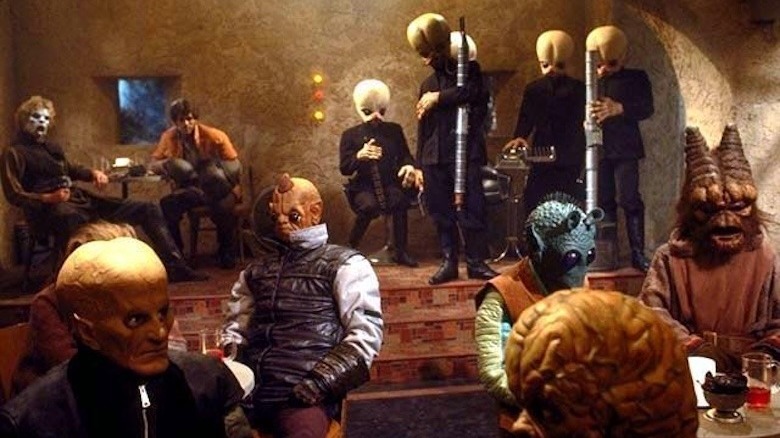
But I think it just goes back to what I said earlier: they failed to tell the public exactly what it was. This was not "Star Wars 2" and I know a lot of fans were really disappointed. With expectations so high and here you had Harvey Korman doing a cooking parody of Julia Child in a scene. You had Diahann Carroll singing a sexy song in it and you had Jefferson Starship trying to do a hologram sequence and so forth. And the story itself was pretty weak. But I'm glad I did it and I learned a lot. And I can honestly say that I've never done a show where I didn't learn something from someone.
Well on that note, let me just ask you one more question. You've obviously learned a lot over the years. And, of course, the entertainment landscape has changed a lot over the time, but I was wondering what advice you would give to someone who, like you, wanted to make specials that were special? Someone who was interested in producing or directing variety shows?
I think it would behoove any student of variety productions to go back and look at the history. Whether it's the Streisand specials, the Liza Minnelli specials, or even going back to the Milton Berle's and Perry Como's series. I think it's important that these young directors study those shows so they don't begin their careers just thinking that all that's on television in variety is Beverly Hills Housewives or the Kardashians. I mean, when I started there were only three networks. That was it. Now you have 500 choices of what to look at. But if you sit there and go through the 500 choices there's not a lot to watch that's new and fresh and exciting. So television has to reinvent itself. And it will. I'm not one who believes in the "good old days." I think the good old days are ahead of us. It's a young world, you know?