

2025 Shut Down The Most Tired Movie Argument Of All Time (And It Made Some People Really Mad)
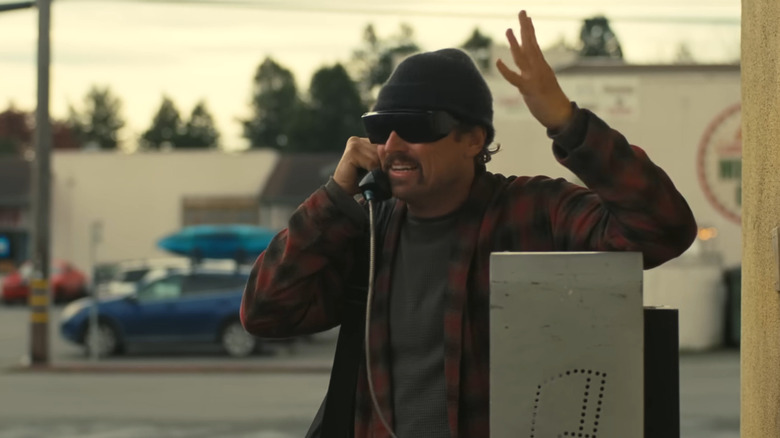
Whenever anyone in a creative field expresses any kind of political sentiment, hordes of people tend to insist that the person espousing said opinion should shut up and stick to what they "know," whether that's music, filmmaking, or sports (the latter isn't necessarily a creative pursuit, but you get what I mean). This tends to go hand in hand with people insisting that art isn't political, but that's not true; even William Shakespeare trafficked in political art by writing histories that looked favorably on Tudor ancestors like Henry V and unfavorably on that dynasty's fallen enemies like Richard III. Claiming that art and politics aren't compatible is a tired argument, and I think a slate of 2025 releases may have finally put that particular take to rest.
It's no secret that 2025 has been a particularly divided year when it comes to politics — not just in the United States, but in the world writ large. Even though several of the films I'm going to talk about here were, to be fair, written long before we all experienced one of the most intensively divisive political eras the globe has ever seen, the fact of the matter is that some of them were prescient, some of them were pointed, and all of them were deeply political and not shy about that fact whatsoever. That alone is refreshing; like it or not, politics are a part of the human experience. More and more often, political games affect people's personal bottom lines, whether that's related to their cost of living or their ability to marry the person they love. Movies like "One Battle After Another," "Wake Up Dead Man: A Knives Out Mystery," and "Sinners," just to name a few, tackle that exact conundrum directly. And honestly? The results are pretty spectacular.
American-produced cinema in 2025 was openly political — and they weren't subtle about it either
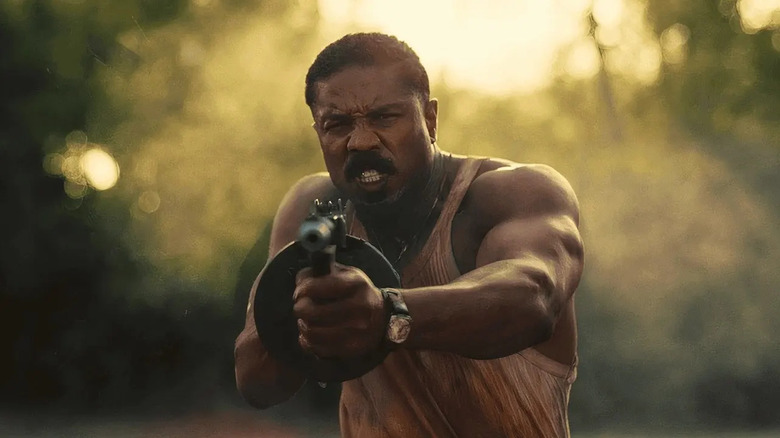
When I saw Paul Thomas Anderson's bravura masterpiece "One Battle After Another" in theaters, I was shocked, beyond belief, that the film depicted immigrant children trapped in cages within detention centers. I had a similar feeling during Bong Joon Ho's underrated "Parasite" follow-up, "Mickey 17," watching Mark Ruffalo's power-hungry and bombastic would-be dictator Kenneth Marshall lord over his cronies. During Ryan Coogler's first original project post-Marvel, "Sinners," when the vampire Remmick (Jack O'Connell) matter-of-factly informs Black musicians and twins Smoke and Stack Moore (both Michael B. Jordan) that the white people in Mississippi will never accept them, so they should choose the vampire life (I'm paraphrasing), I was absolutely blown away.
Both "The Running Man" and "The Long Walk," directed by Edgar Wright and Francis Lawrence (respectively), depict horrifying and futuristic worlds where the government openly and even proudly abuses its poorest citizens, forcing them into deadly contests in the hopes that they might win scores of money. I knew that "Wicked: For Good" would focus on a fight against fascism in a magical world, but I was still fascinated by how openly Jon M. Chu embraced this aspect of the Broadway musical, and imagine my surprise when "Zootopia 2," the blockbuster sequel for children, took a nakedly political approach to its own story.
I don't mean any of this to be negative. Quite the opposite. I spent these major movie moments in disbelief because I almost couldn't believe that studios were letting Anderson, Coogler, Joon Ho, Chu, Wright, Lawrence, and "Zootopia 2" director Jared Bush and Byron Howard do that on the big screen in 2025. I welcome this, though. Art should be relevant. These movies are.
Politics and art are permanently intertwined, and ultimately, that connection can create truly transcendent films
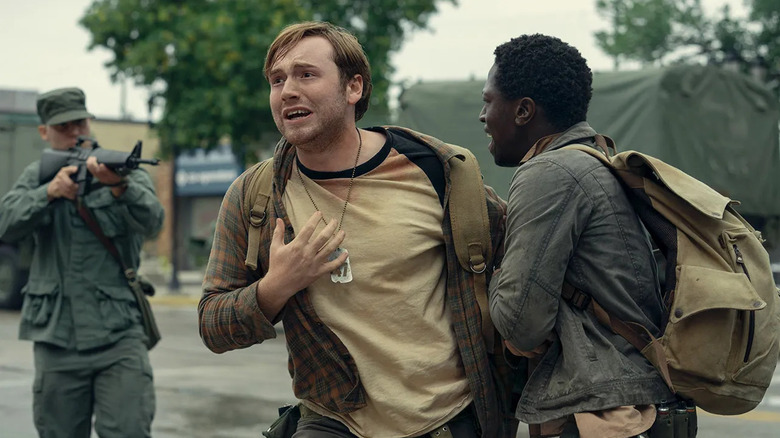
The most interesting thing about the brashly political movies in 2025 is that none of them are proselytizing or standing on some soapbox, telling audiences how they should think about the state of the world (whatever that may be, as I suspect many of these films will stand the test of time and be watched and rewatched for years). Even blockbusters like "Superman" and "Weapons" touch upon massive political issues without approaching them quite as directly as, say, "One Battle After Another," a movie that's directly about revolutionaries resisting white supremacists embedded in positions of power. But the themes in both James Gunn's take on the world-famous superhero and Zach Cregger's massively beloved second feature film are also up for debate, which makes them fascinating in their own right. Argue all you want about what that big machine gun in "Weapons" means or what Jarhanpur represents in "Superman" — that's just as incredible as the overtly political messages contained within "The Long Walk" and "Sinners."
I said this before, but I really can't stress this enough. Nearly every piece of great art in the world was made with at least some awareness of politics, and some great works are transparent about their connections to real-life politicking; famously, Pablo Picasso and Salvador Dalí, among others, painted "Guernica" and "The Enigma of Hitler," which didn't exactly mince words about their subject matter. Movies shouldn't be different, and in 2025 — as many great nations of the world stand utterly divided — film should depict our current moment, especially when that moment can feel ... overwhelming.
Politics and art will always be intertwined, and as this year in film showed us, that doesn't have to be a bad thing.