

The Two Best David Lynch Movies, According To Roger Ebert
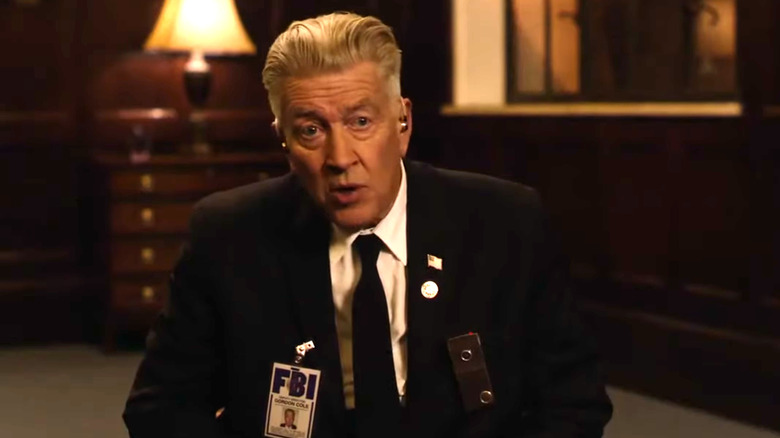
Although the late David Lynch is now widely beloved by cinephiles, there was a time where his reputation wasn't so positive. After "Twin Peaks" crashed and burned, people were quick to dismiss the guy as someone who'd lost his edge. And for famous film critic Roger Ebert, Lynch never really had an edge in the first place.
Ebert criticized Lynch's second movie, the critically-acclaimed historical drama "The Elephant Man," for its "shallow" philosophy, its "inexcusable opening scene" and its "equally idiotic closing scene." But although Ebert had some nice things to say about that film, offering it a decent 2 out of 4 stars, he absolutely hated Lynch's 1986 masterpiece "Blue Velvet." The neo-noir thriller appalled Ebert with its treatment of Isabella Rossellini's character, Dorothy. "She is degraded, slapped around, humiliated and undressed in front of the camera," he wrote. "And when you ask an actress to endure those experiences, you should keep your side of the bargain by putting her in an important film."
Ebert wasn't impressed much by Lynch's next movie, "Wild at Heart," and described his "Twin Peaks" prequel film as "shockingly bad." He also disliked Lynch's 1997 movie "Lost Highway," writing in his review, "We keep thinking maybe Lynch will somehow pull it off, until the shapeless final scenes, when we realize it really is all an empty stylistic facade."
By '97, it seemed like there was nothing David Lynch could do to win Ebert over, but two years later, Lynch would earn his first-ever four-star review from him, and then a second soon after. The first was for "The Straight Story," the second for "Mulholland Drive." So what was it about them that won Ebert over?
Ebert loved the kindness imbued in The Straight Story
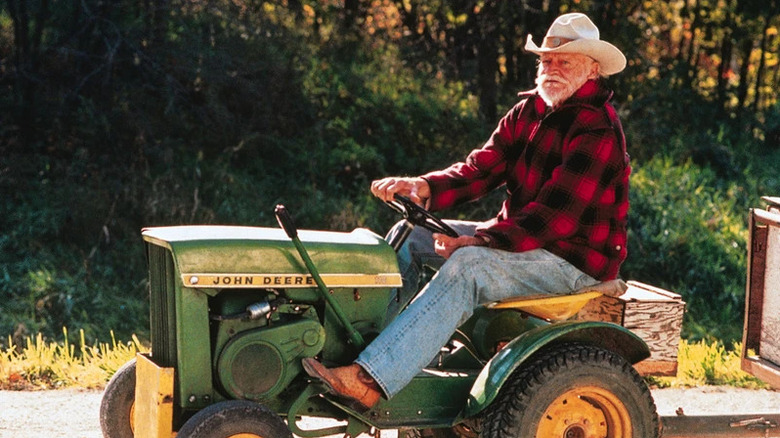
A G-rated story about a man who rides his lawnmower from Iowa to Wisconsin to see his brother, this 1999 film is bafflingly straightforward and accessible.
"Because the film was directed by David Lynch, who usually deals in the bizarre," Ebert wrote in his review, "we keep waiting for the other shoe to drop — for Alvin's odyssey to intersect with the Twilight Zone. But it never does."
The movie was disarmingly sweet, embracing small-town like without a hint of irony. As Ebert wrote:
"The first time I saw 'The Straight Story,' I focused on the foreground and liked it. The second time I focused on the background, too, and loved it. The movie isn't just about the old Alvin Straight's odyssey through the sleepy towns and rural districts of the Midwest, but about the people he finds to listen and care for him. You'd think it was a fantasy, this kindness of strangers, if the movie weren't based on a true story."
It's here that I think Ebert came to appreciate an aspect of Lynch's work that's often overlooked: this man truly loves small-town America. When he showcased the sunny innocence of the town in "Blue Velvet" or the quirky charms of Twin Peaks, this was not Lynch being sarcastic, as many may assume.
In his "Blue Velvet" review, Ebert wrote, "What are we being told? That beneath the surface of Small Town, U.S.A., passions run dark and dangerous? Don't stop the presses." But the dark side of the town in "Blue Velvet" was not intended to paint the light side of the town as hollow or hypocritical. Lynch genuinely finds small-town America admirable, and his work becomes a lot more interesting when one understands he's being sincere.
Mulholland Drive made Ebert forgive Lynch's previous works
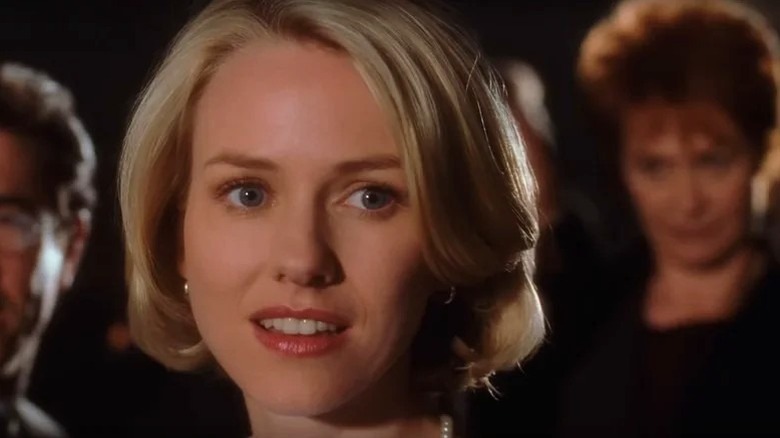
"David Lynch has been working toward 'Mulholland Drive' all of his career, and now that he's arrived there I forgive him 'Wild at Heart' and even 'Lost Highway,'" Ebert wrote in his review for this 2001 masterpiece. "At last his experiment doesn't shatter the test tubes. The movie is a surrealist dreamscape in the form of a Hollywood film noir, and the less sense it makes, the more we can't stop watching it."
It's not clear exactly why the surreal nature of this movie works for Ebert while "Lost Highway" doesn't. The two movies are spiritual twins, each dealing with similar themes of guilt and escapism. Ebert says "Mulholland Drive" is great because "[Lynch] takes what was frustrating in some of his earlier films, and instead of backing away from it, he charges right through." But again, I'm not sure how this movie "charges right through" anything in a way that "Lost Highway" doesn't.
For many fans of both Ebert and Lynch, the reason they think this movie wins out for Ebert is because it doesn't feature a violent scene where a man sexually assaults a woman. Female characters are constantly being brutalized in Lynch's work, and it's easy to interpret this as Lynch being callous or exploitative. Most Lynch fans today believe this recurring plot point has to do with one particular traumatic experience Lynch had as a child, but that's a story Ebert likely didn't know about yet. After some truly uncomfortable sequences in his previous films, this movie was not only absent of explicit violence against women, but was told from a female perspective. Maybe the switch to a female protagonist was the key Ebert needed to understand Lynch's madness.